(Click to enlarge images, click again to zoom.)
Sunrise. It happens every day. Many of us are still in bed or busy rushing to jobs or getting the kids ready for school and don’t notice our sun coming up right on schedule. Then – there are other days.
Our trip to the forest had already been an adventure. Some of those rushing to that job were so excited about getting there the dense fog didn’t slow them down one bit. Ghost vehicles suddenly appeared behind us only to zoom around, swerving back just in time to avoid becoming a grill decoration for an oncoming 18-wheeler.
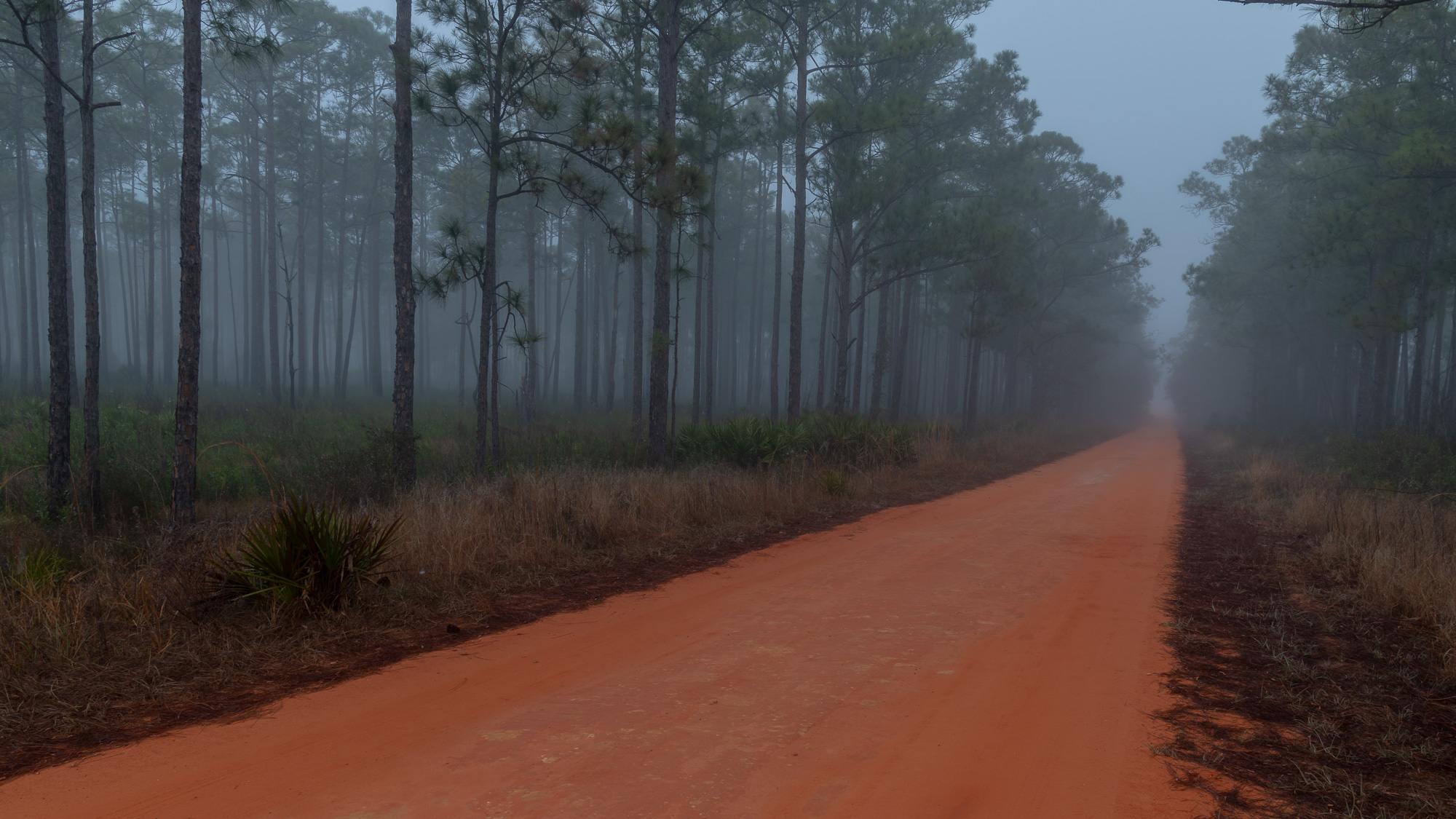
Relief. We left the main highway, made a couple of turns on rural roads and just at “official sunrise time” arrived at the welcome red clay road which runs straight for ten miles through the heart of a portion of the Lake Wales Ridge State Forest. Today we could scarcely see a few dozen yards ahead, much less the sun. Perfect!
Longleaf pines on either side of us faded into gray apparitions before disappearing altogether. The air was damp and normal sounds of the forest were absent. No birds or insects at all. Standing still, the silence was ethereal and quite pleasant.
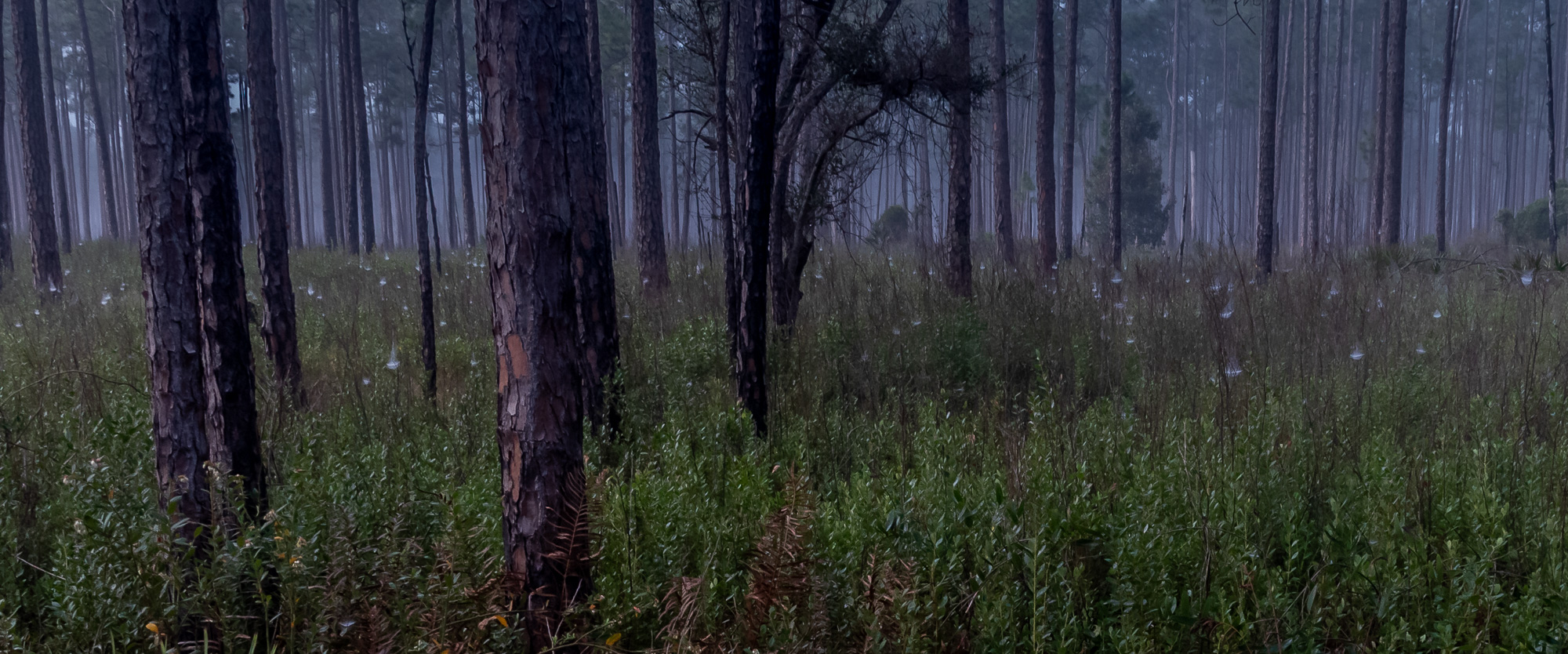
It was the third week of February. Cold weather had taken a break and the day began a bit cool and became comfortably warm by 10:00. The forest understory was littered with small white decorations Gini declared fairies had created during the night. Close. Little sheetweaver spiders could be considered fairies. Right?
Imperceptibly, the low ground-hugging cloud layers disappeared to reveal bright blue skies dotted with a few pure white clouds. Bird calls and songs seemed to be all around us. Insects scattered with each footfall. A fox squirrel scolded loudly at our intrusion into its domain. Flowers. In February.
See for yourself……
Fairies. Worldwide there are nearly 5,000 species of sheetweaver and dwarf spiders (Family Linyphiidae). I don’t think we saw that many webs, but we didn’t actually count them all.
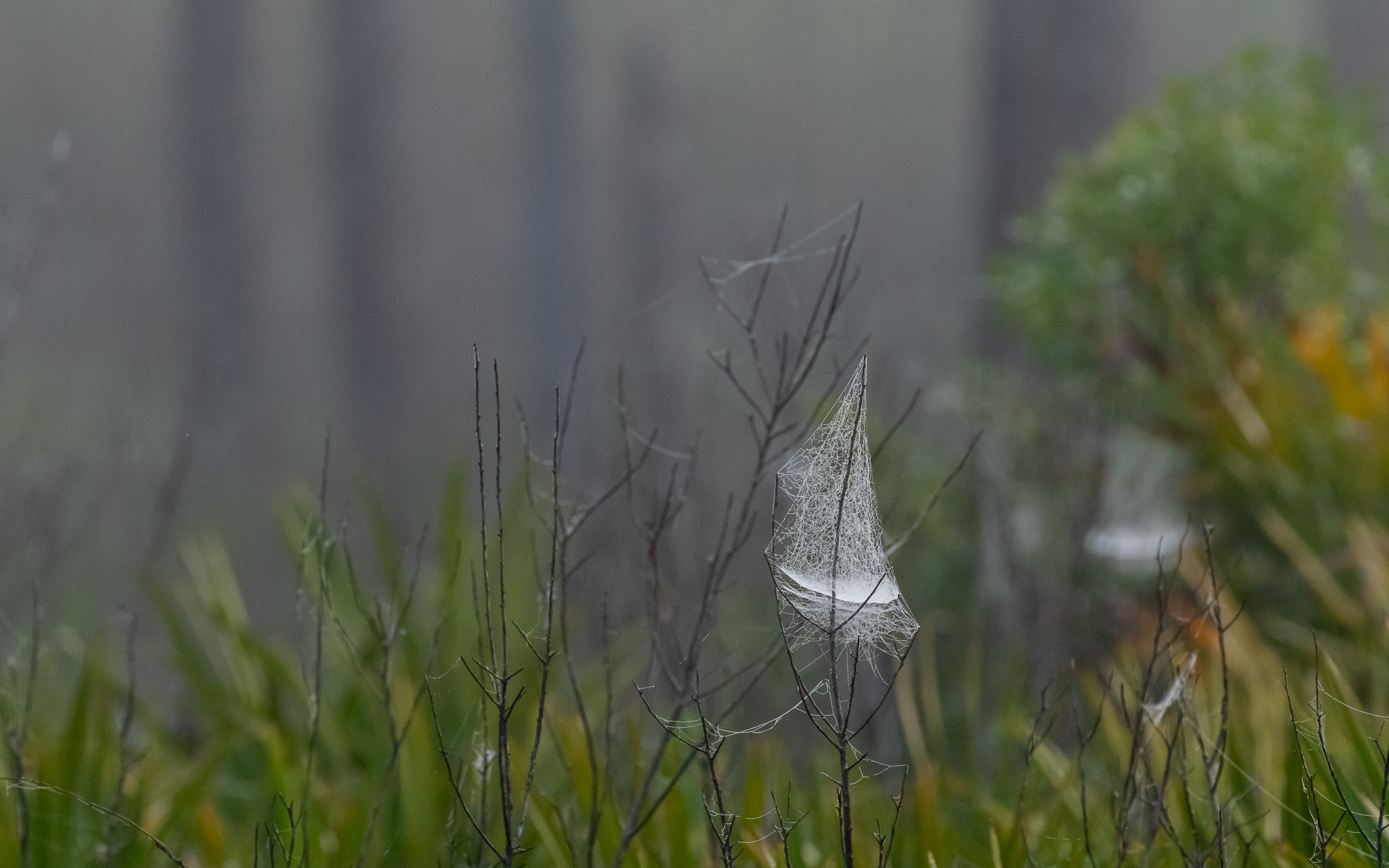
One of the members of this large family is called a Bowl and Doily Weaver Spider (Frontinella communis). Pretty distinctive web.
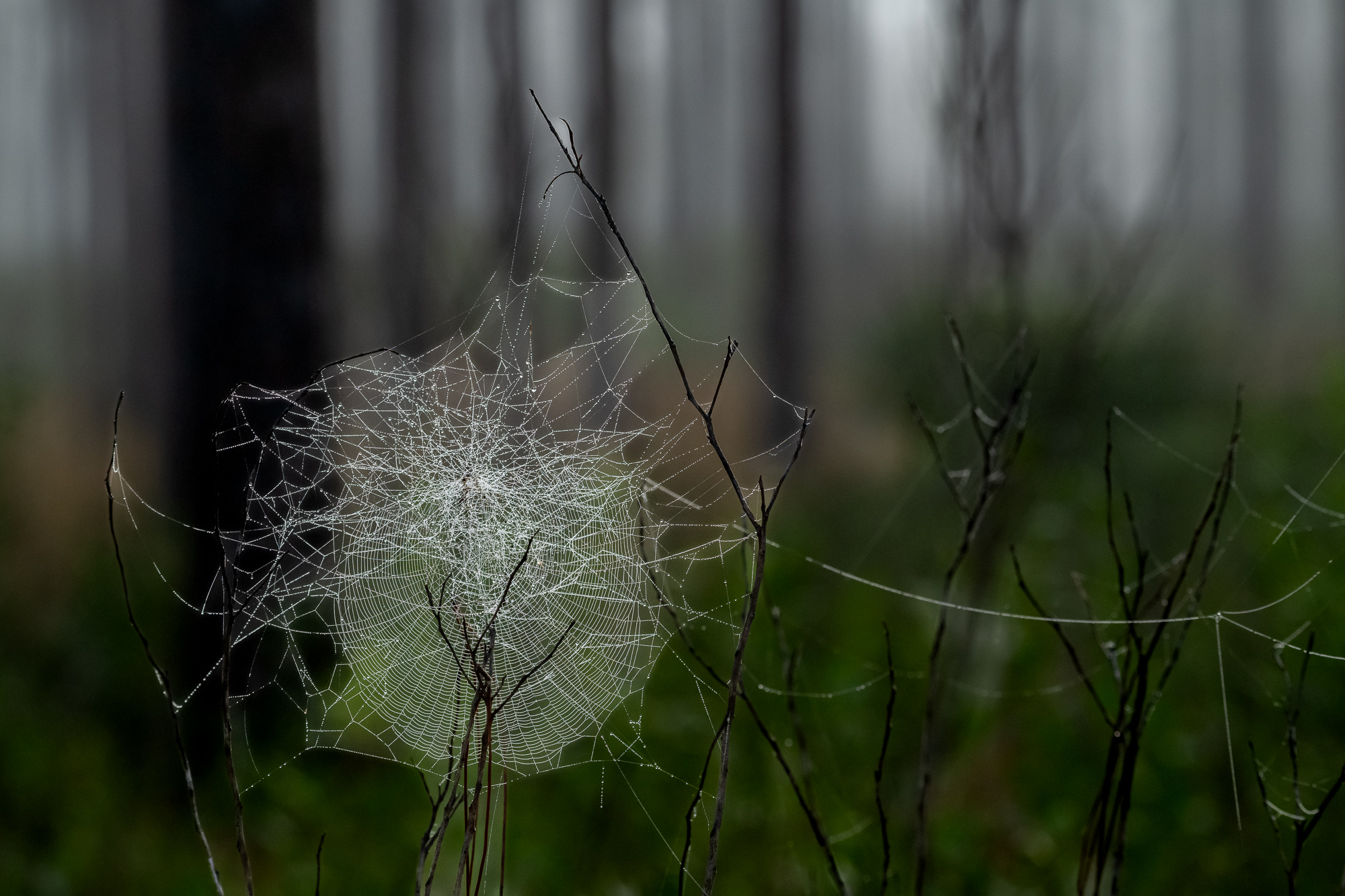
This looks like there may have been a web-building contest between a sheetweaver and an orbweaver.
The sun began making an effort to burn through the fog at our favorite breakfast spot on the shore of a small lake.
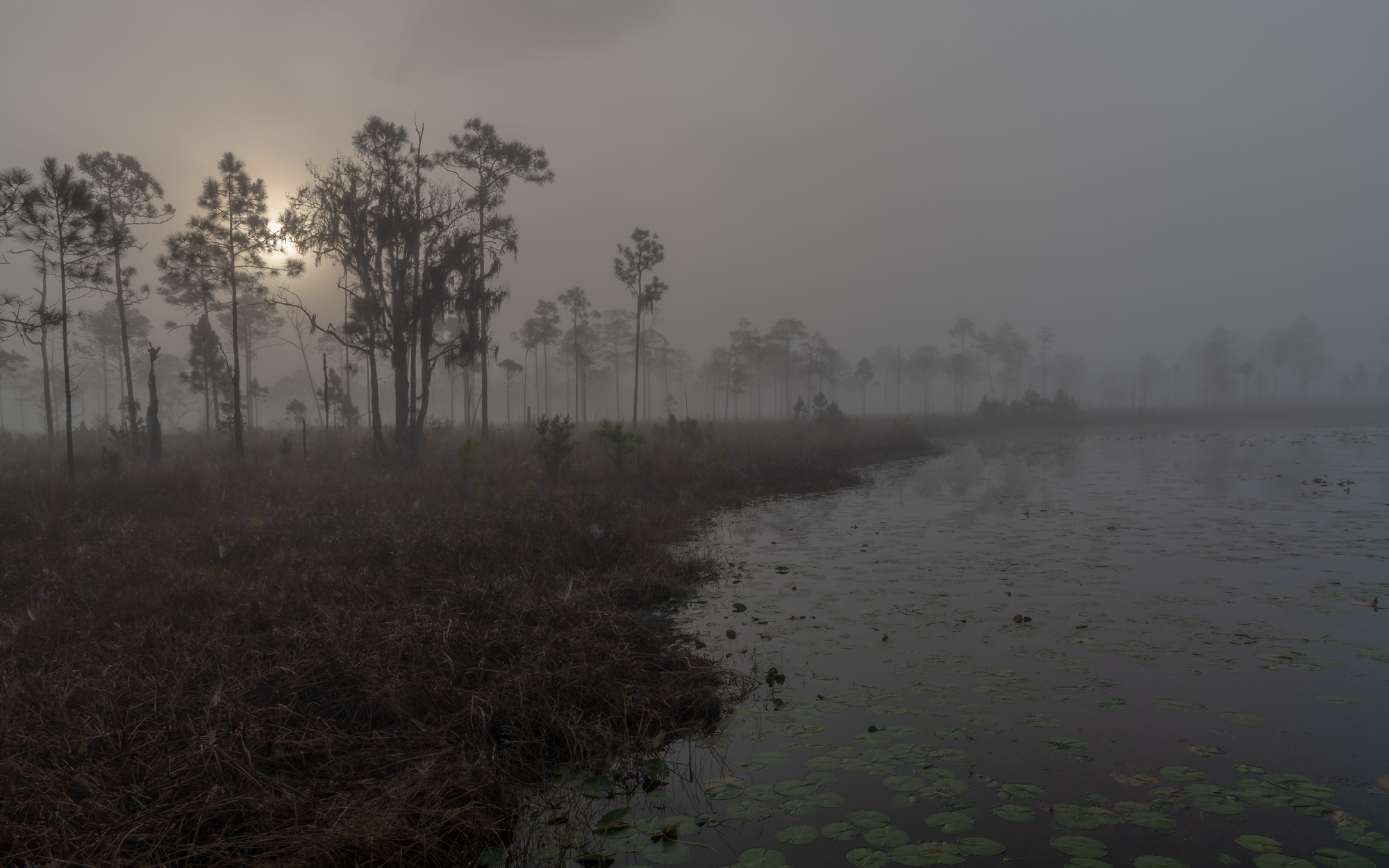
The support structure of a boat dock made a fine spot for an orbweaver to showcase her talents. Morning dew added a few jewels to her creation.
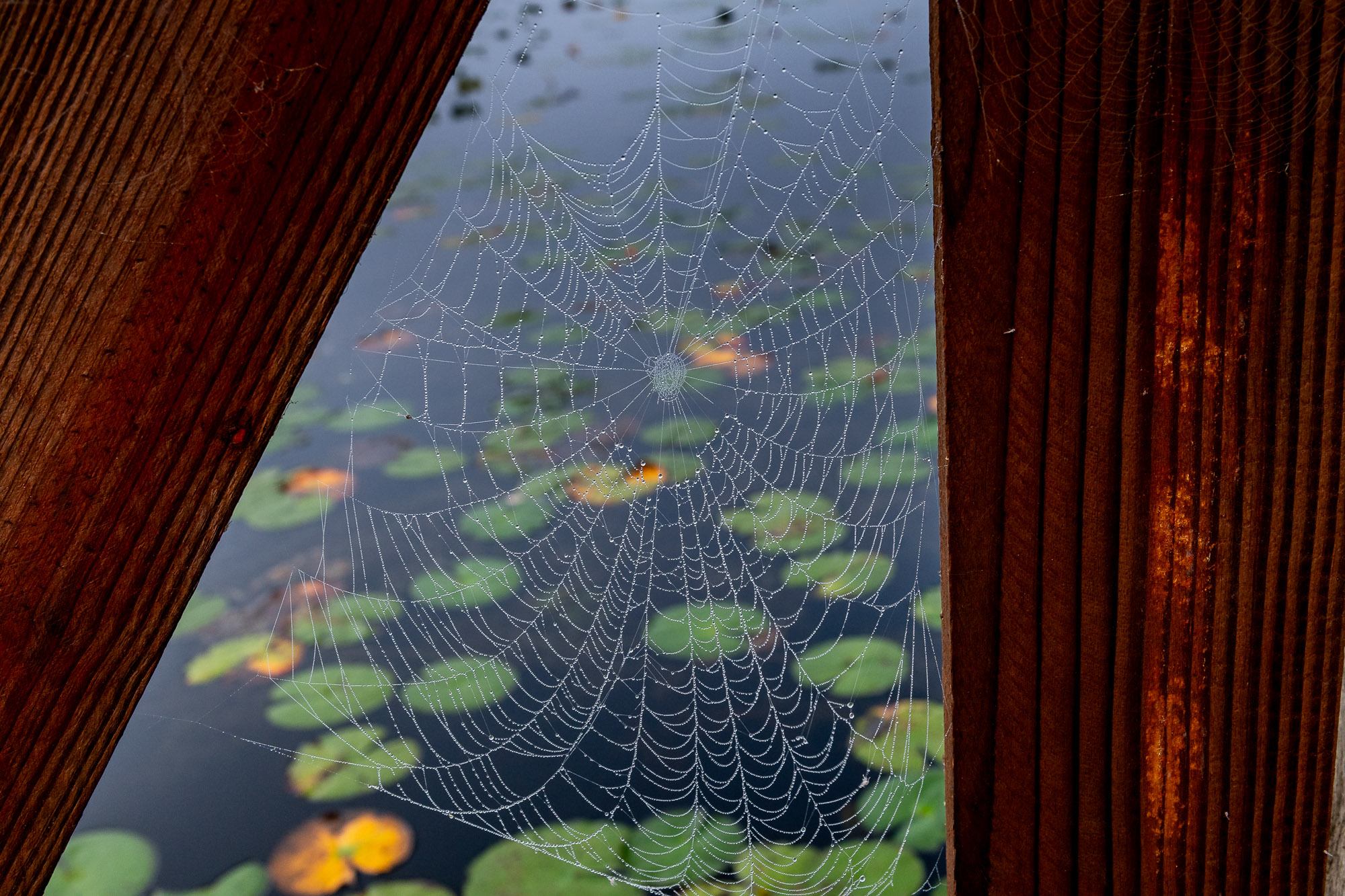
As the fog lifted, the woods and scrub became active and loud. A Northern Mockingbird stopped singing long enough to glance our way just to be sure we were no threat.
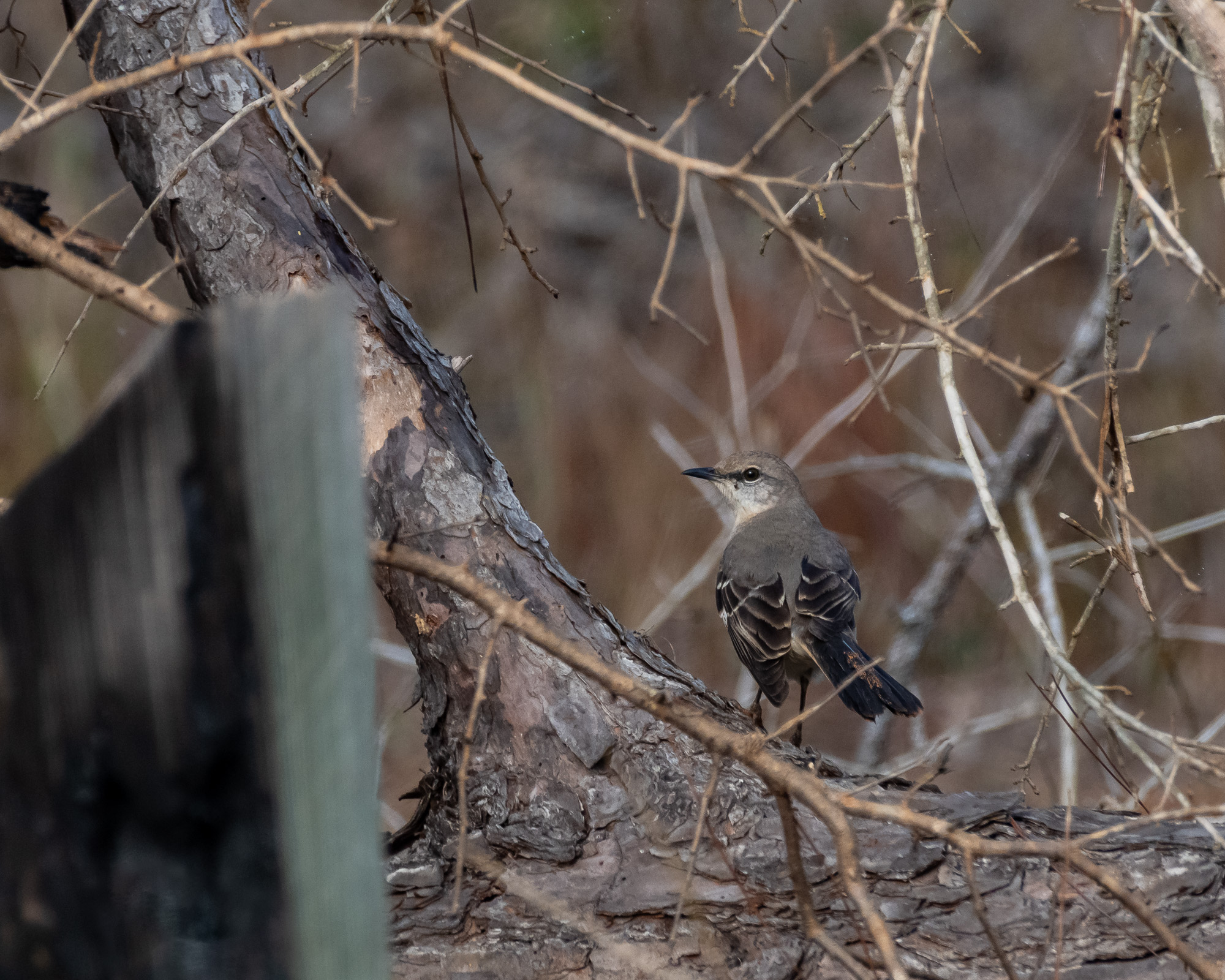
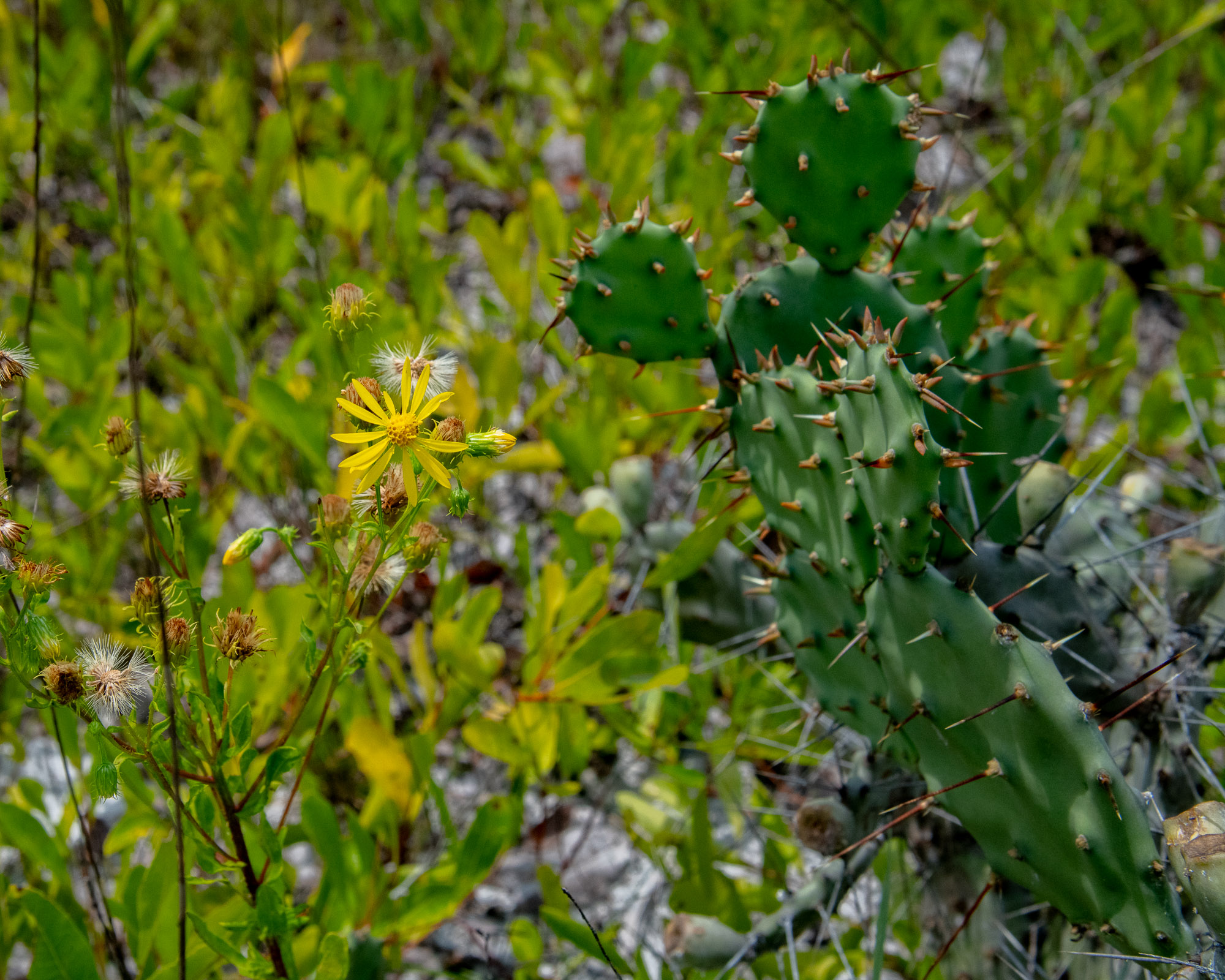
Some areas were littered with Florida Pricklypear (Opuntia austrina) and Deer Moss Lichen (Cladonia spp.).
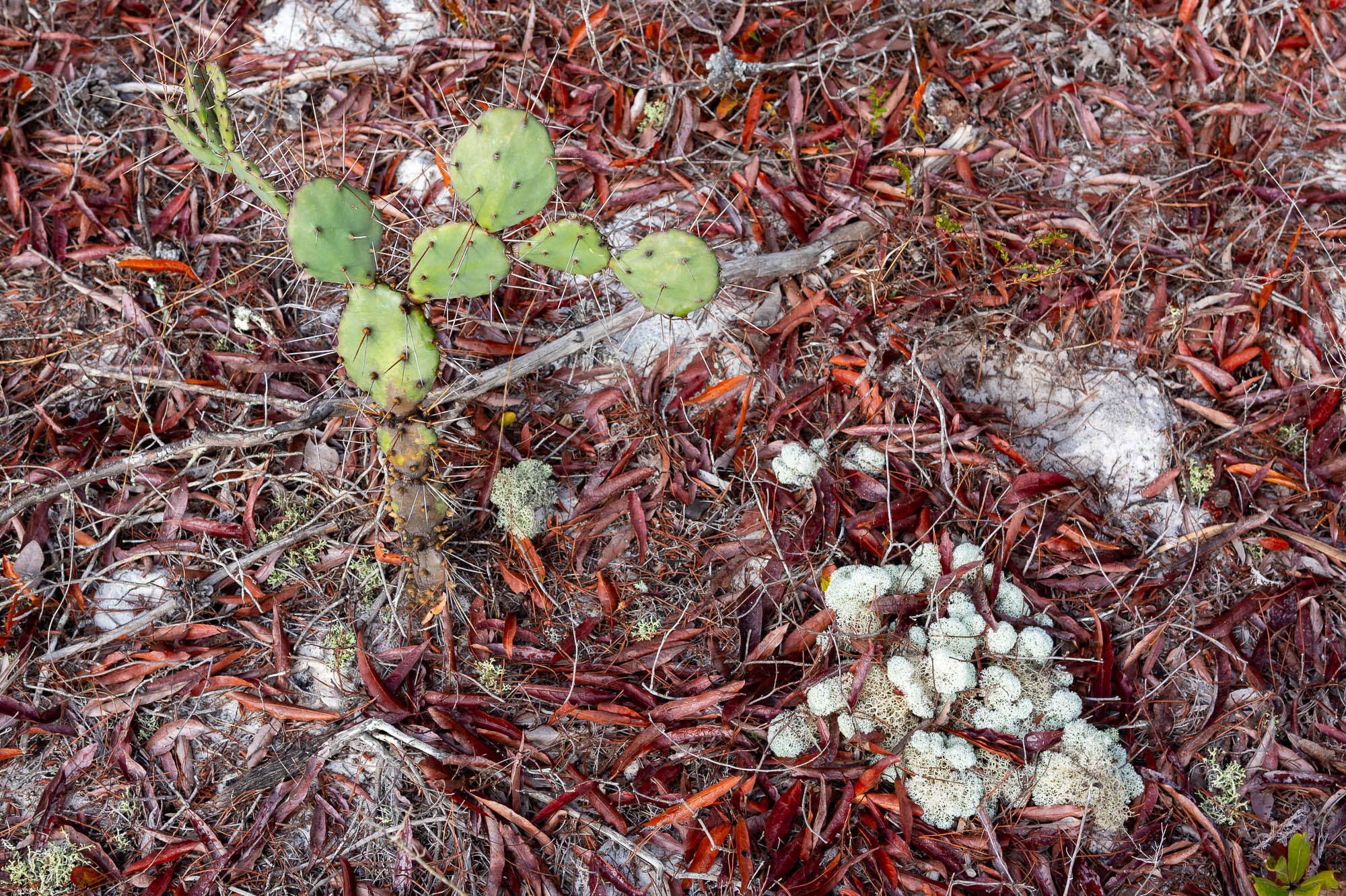
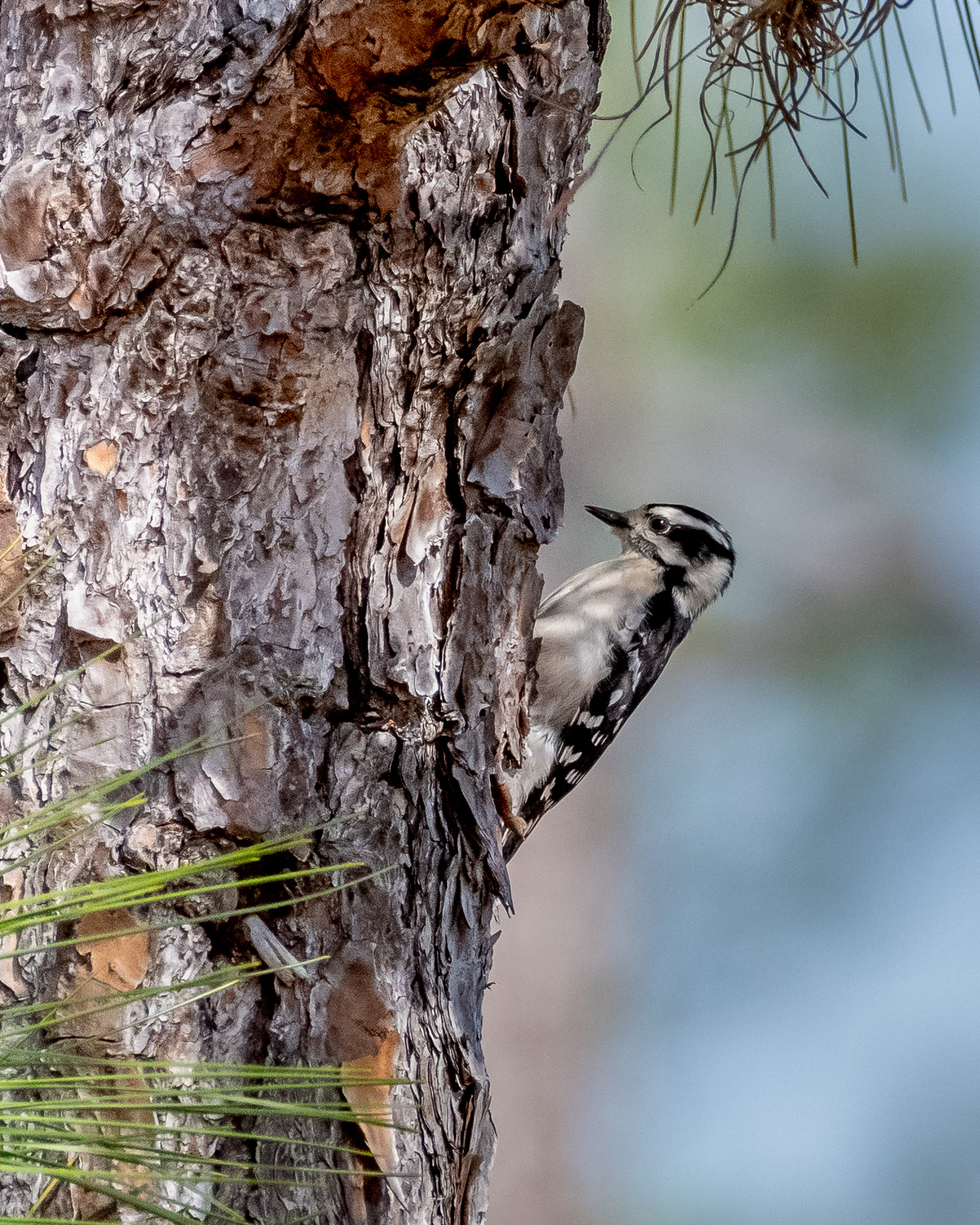
A small female Downy Woodpecker busily probed for breakfast.
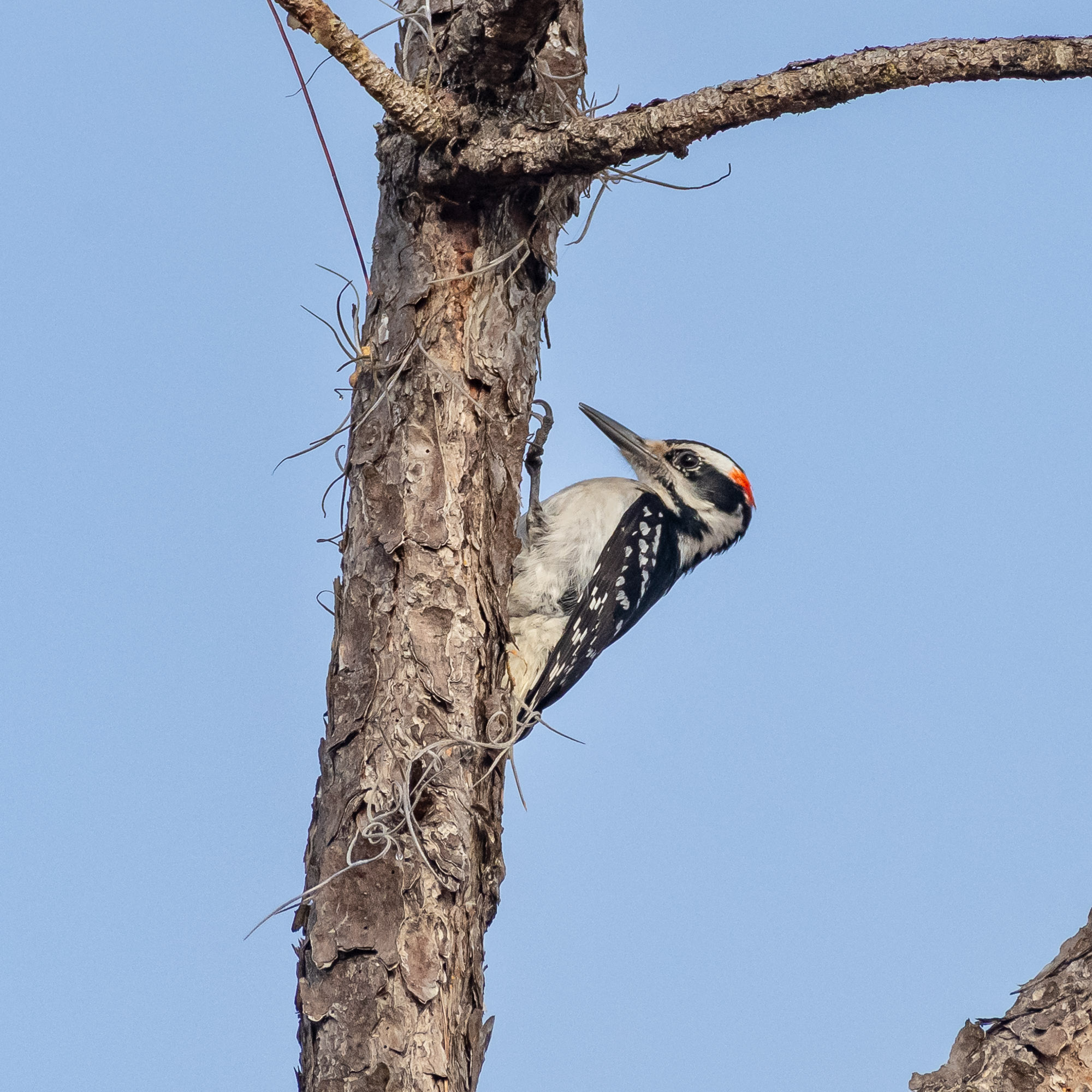
Slightly larger than its cousin, the Downy, a Hairy Woodpecker has a noticeably larger bill. This species is not very common throughout Florida.
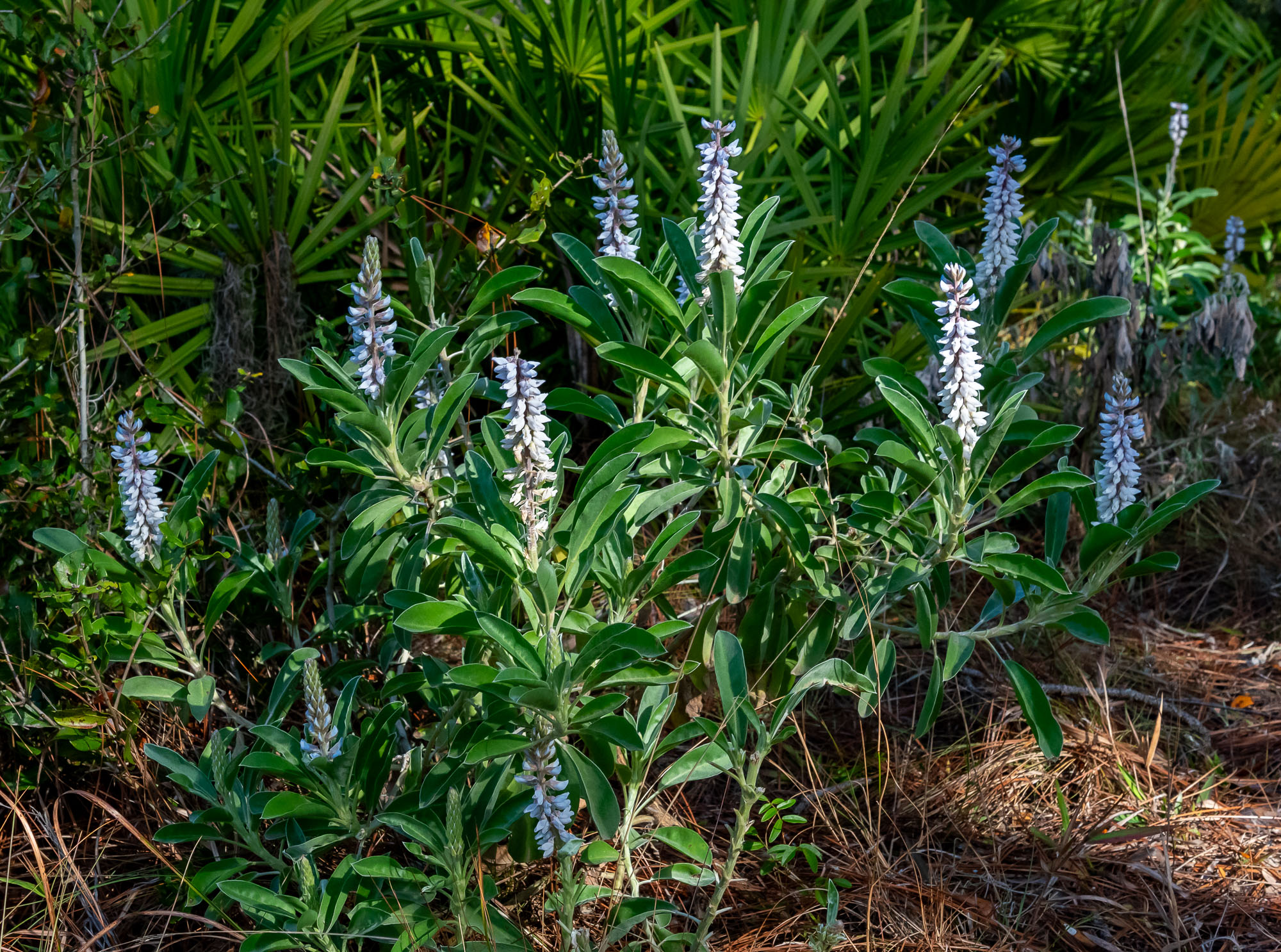
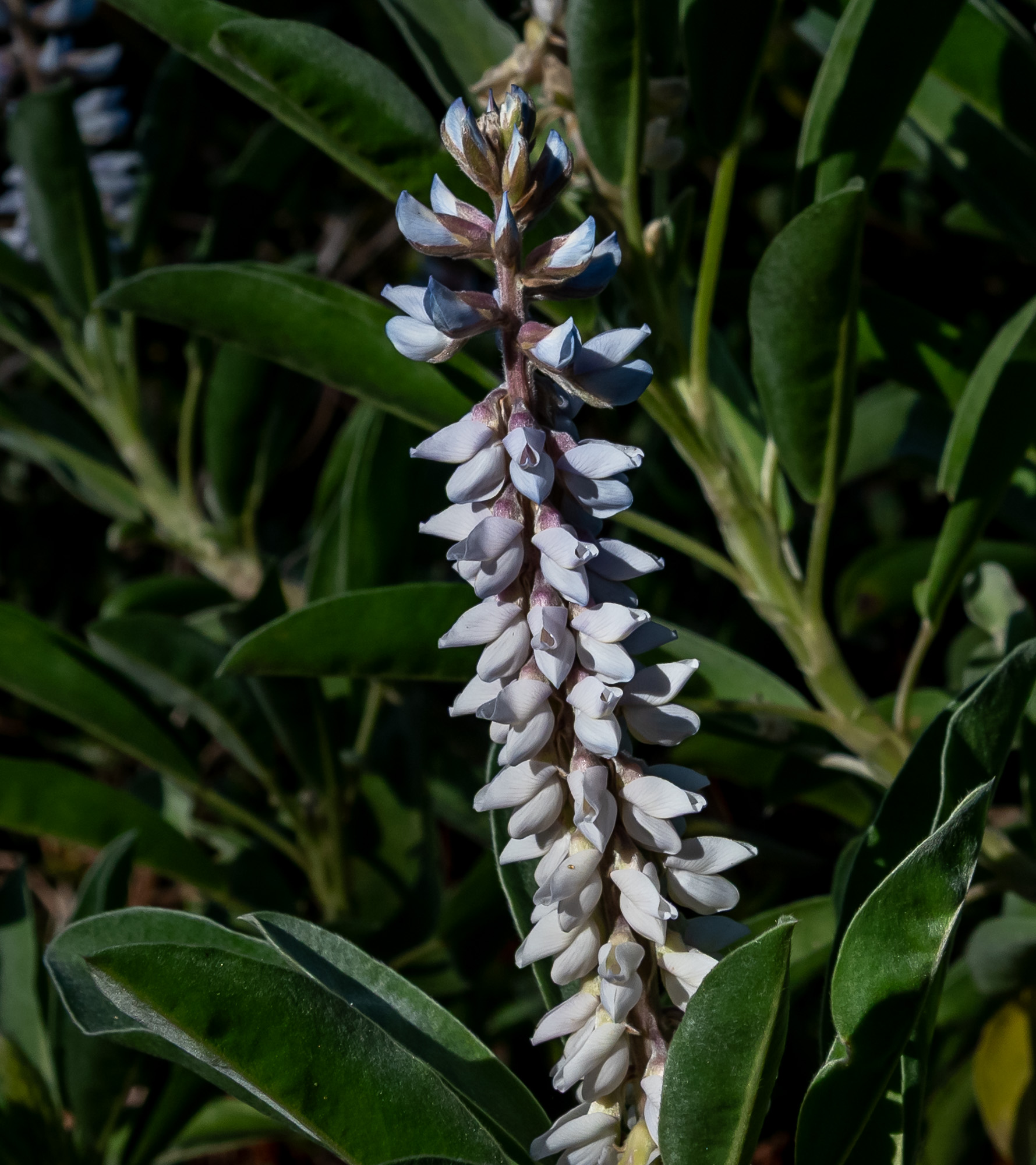
We did not expect to see much in the way of blooming flora at this time of year, and we didn’t. A nice surprise were several patches of Florida Lupine (Lupinus floridanus). Different from other Lupine species by less intensely-colored blooms, this plant is endemic to Florida and only occurs in a few counties.
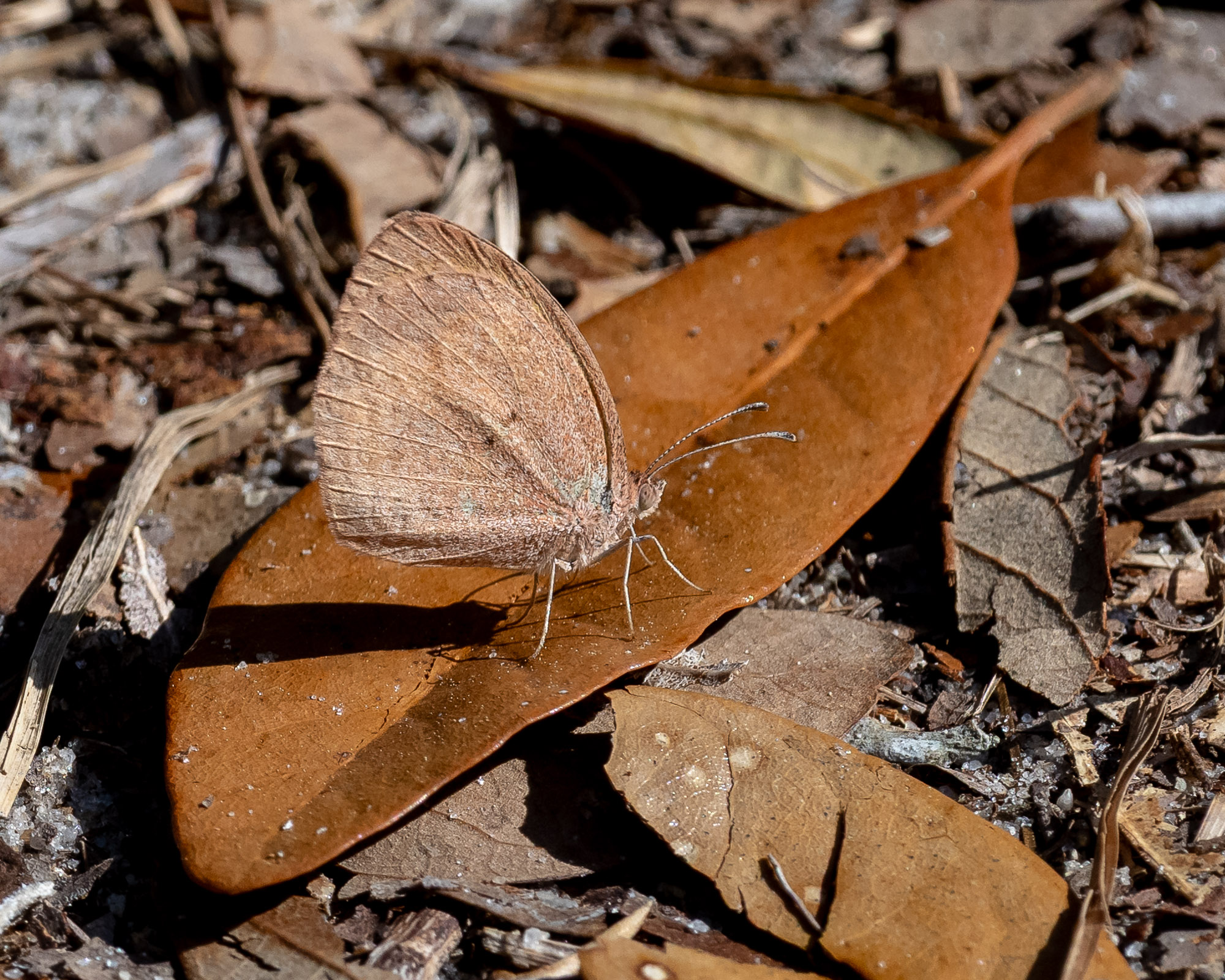
Another unexpected pleasure was finding several butterfly species searching for something with nectar. (“Hey – over there – Lupine juice!”) This small Barred Yellow (Eurema daira) is in its winter form and as summer approaches the underside will turn satiny white.
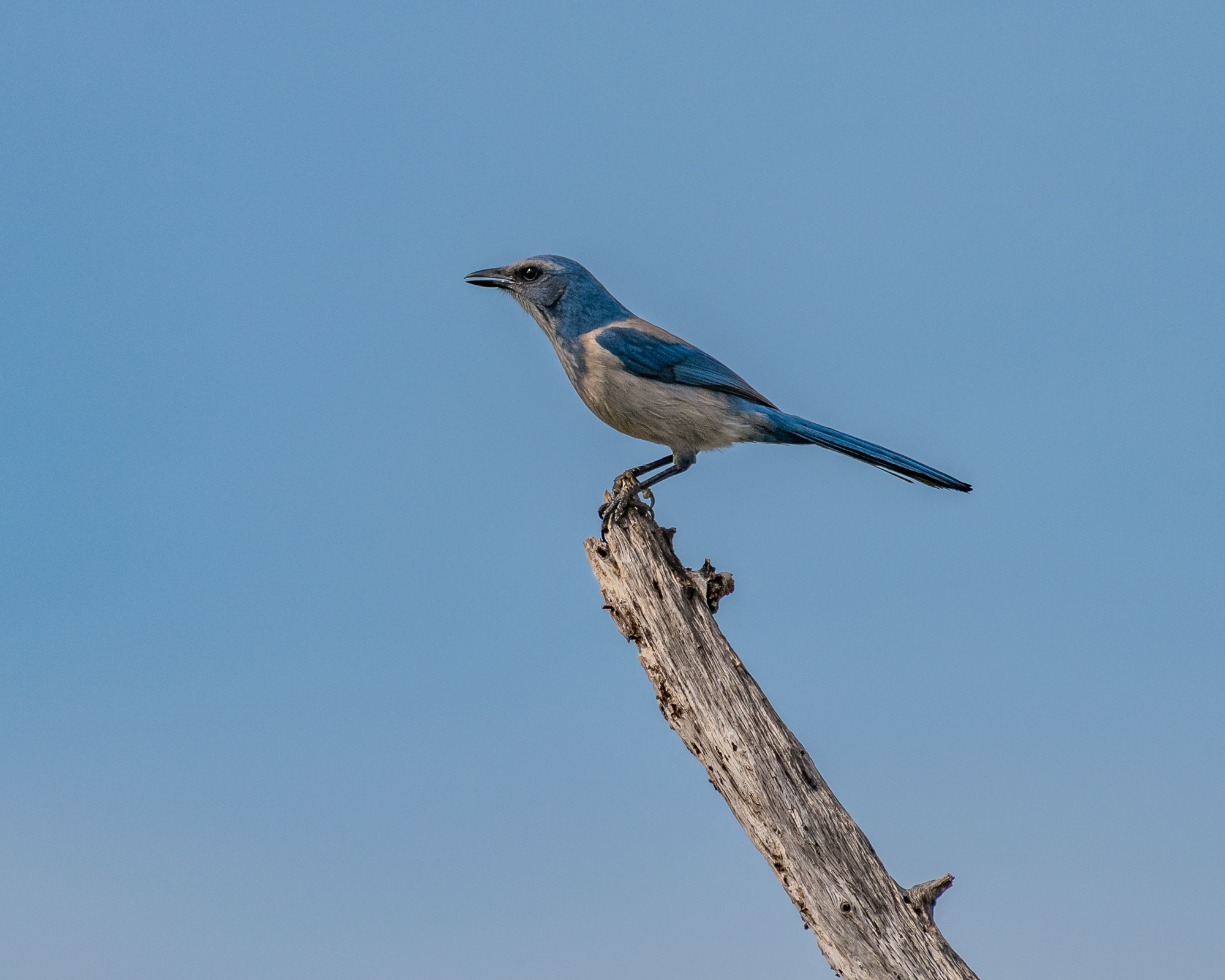
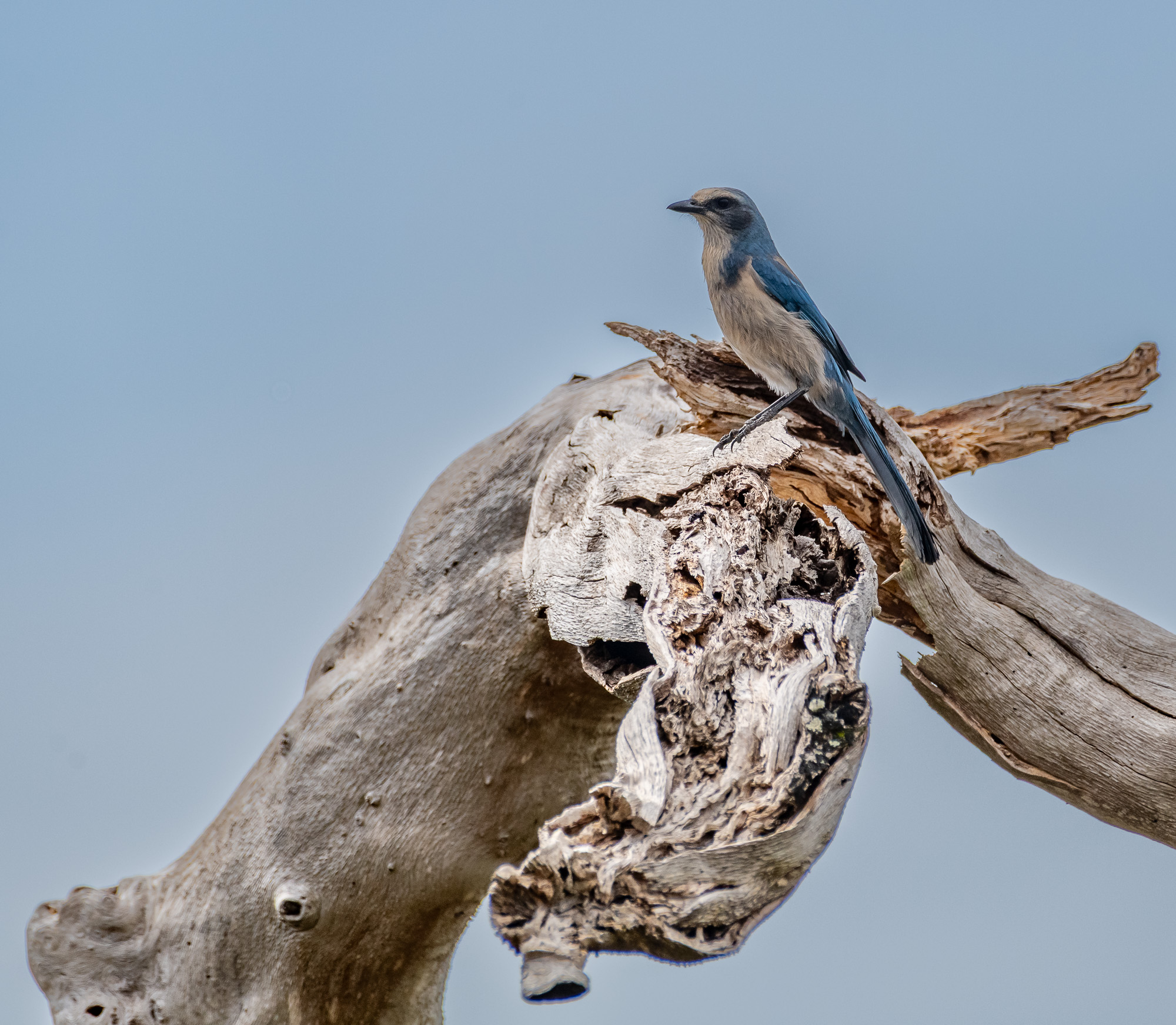
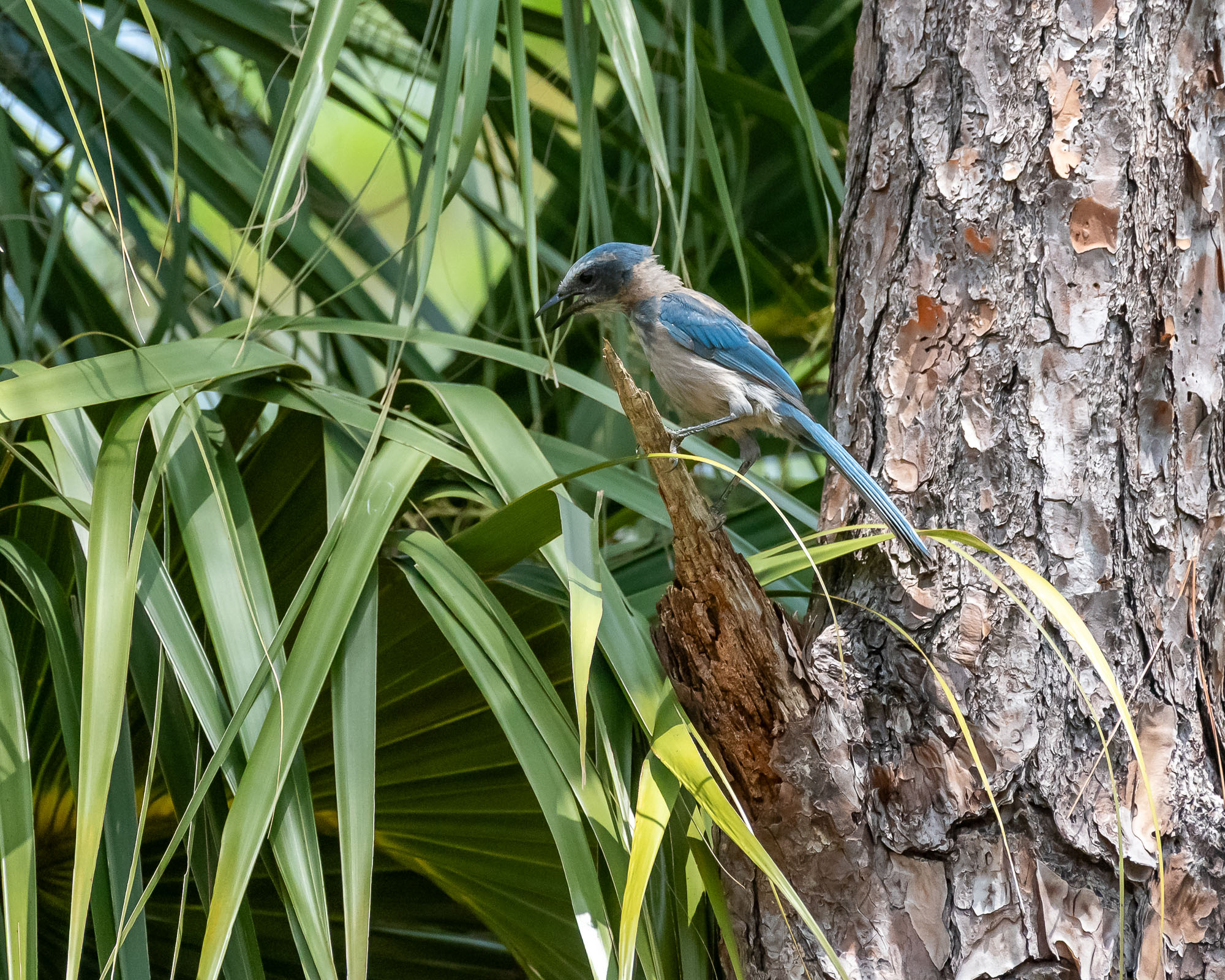
Found only in scrub areas in Florida, the Florida Scrub Jay remains in loose family groups throughout the year. As breeding season kicks in, first-year birds from the previous season will help take care of newly hatched jays this year. Typical of jays, once one spotted us, he raised the alarm and a half-dozen soon surrounded us yelling and pointing.
From thick fog-soaked forest to sunny skies and singing birds, our morning in the pine woods was incredibly enjoyable. We can’t wait to get back. Gini is itching to get her feet in that red clay and dance, dance, dance.
We hope you enjoy your search for a natural place and come back for a visit!
(Click on images to enlarge, click again to zoom.)
A few very cold mornings are uncomfortable events for these native Floridians. Ever the optimist, Gini opined that the below freezing temperatures will help “set” the sweetness for our local strawberry farmers who run sprinklers all night to provide a frozen blanket to protect the little red bundles of pleasure.
Today, the thermometer rose sufficiently for us to venture out and explore what used to be our local “patch”, which once was a ten minute drive. Our new home is over 30 minutes away but we braved the onslaught of morning commuters to see how things are at Tenoroc Fish Management Area.
Gini is not up to hiking yet so our sights and sounds were enjoyed mostly from the car. Even so, we found plenty to make us happy.
“If it is your nature
to be happy
you will swim away along the soft trails for hours, your imagination
alighting everywhere.”
(From Morning Poem by Mary Oliver.)
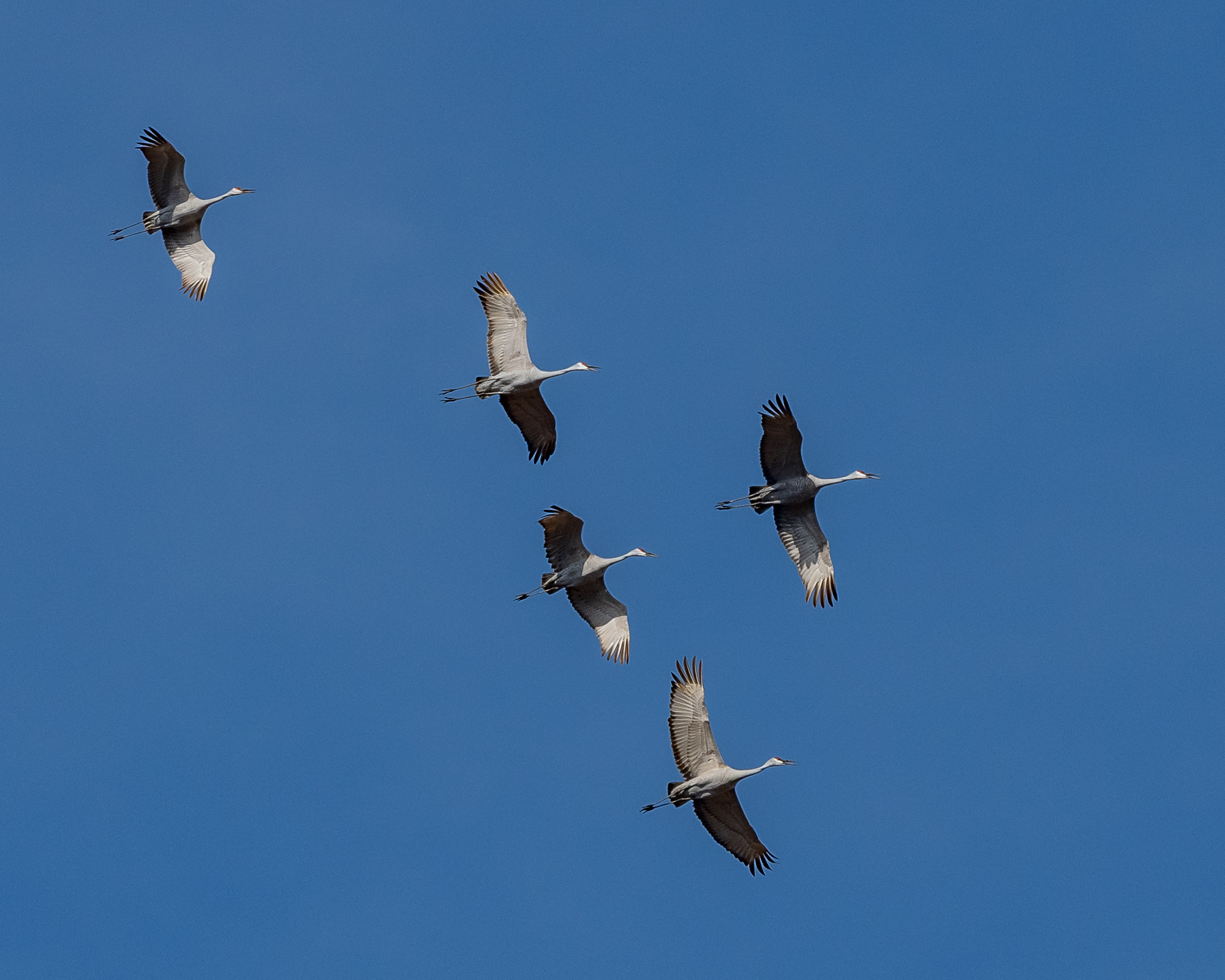
Trumpeting from the skies, a group of Sandhill Cranes headed northeast. They all appeared to be adults which means they are likely winter migrants. Florida has a resident subspecies but it is rare to see more than three or four individuals (family group) together.
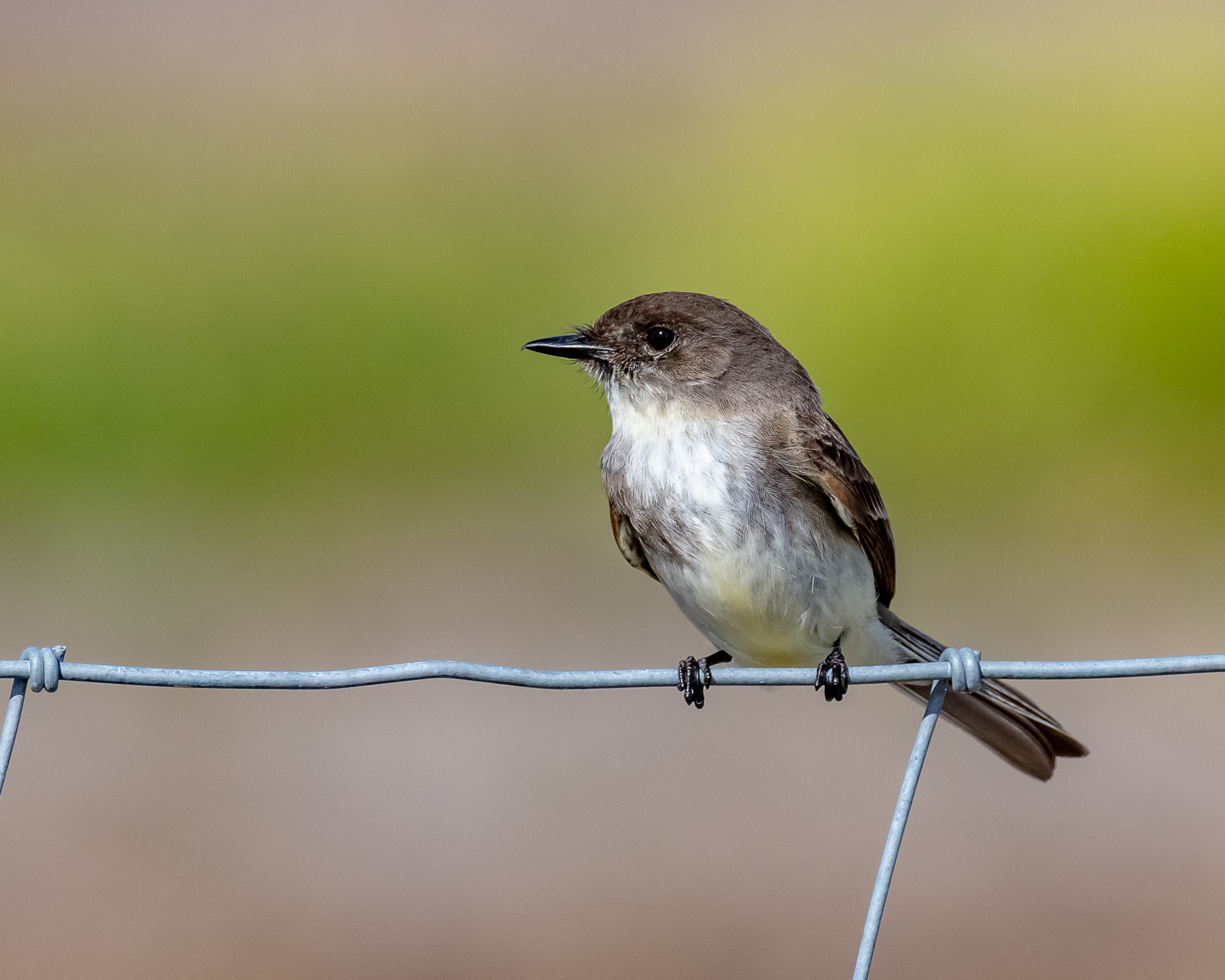
Another winter visitor, an Eastern Phoebe. These little flycatchers are fairly abundant at this time of year.
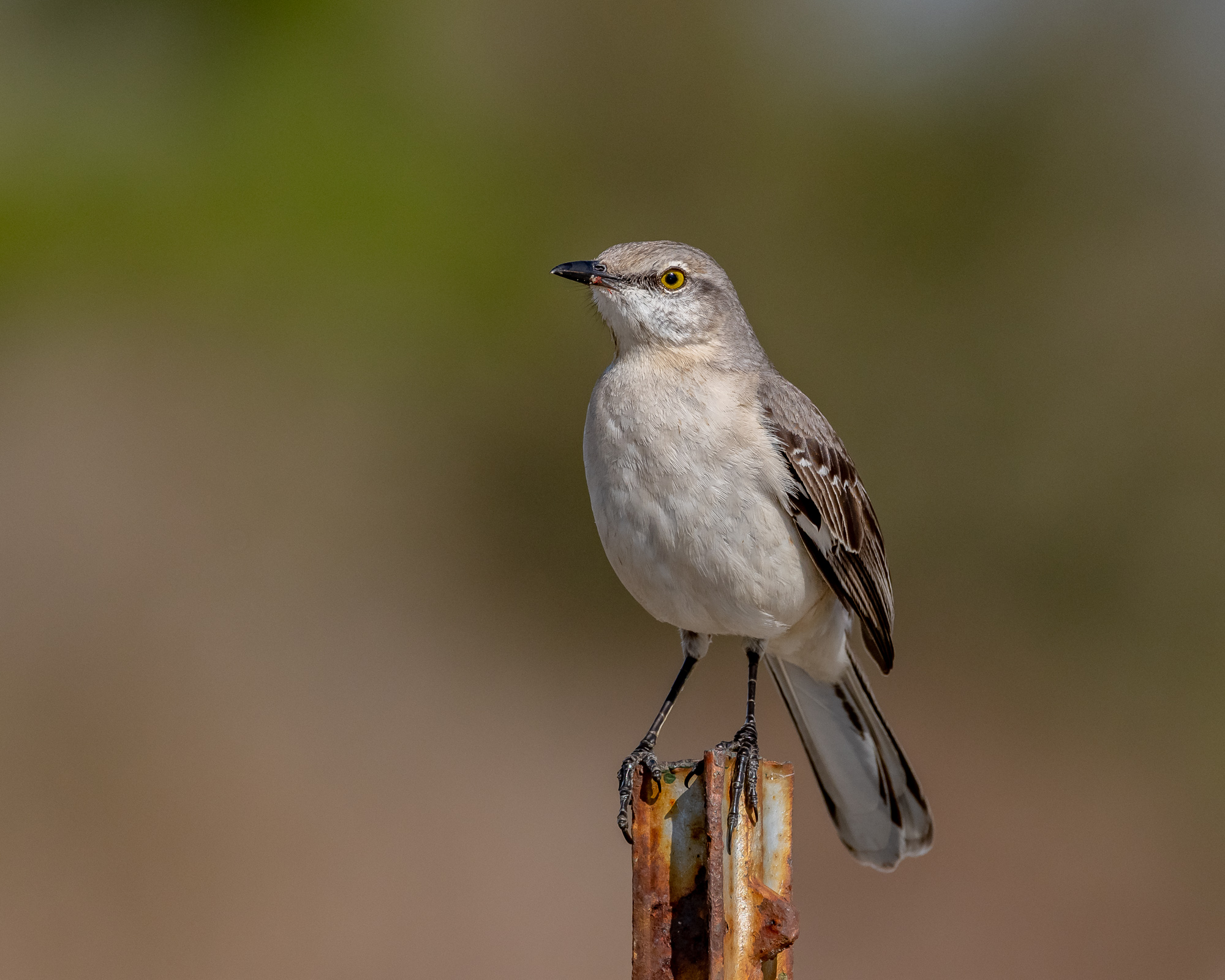
Florida’s state bird is the Northern Mockingbird. They are so common it is easy to pass them by without taking their picture. I’m trying to rectify that sad habit. Those eyes!
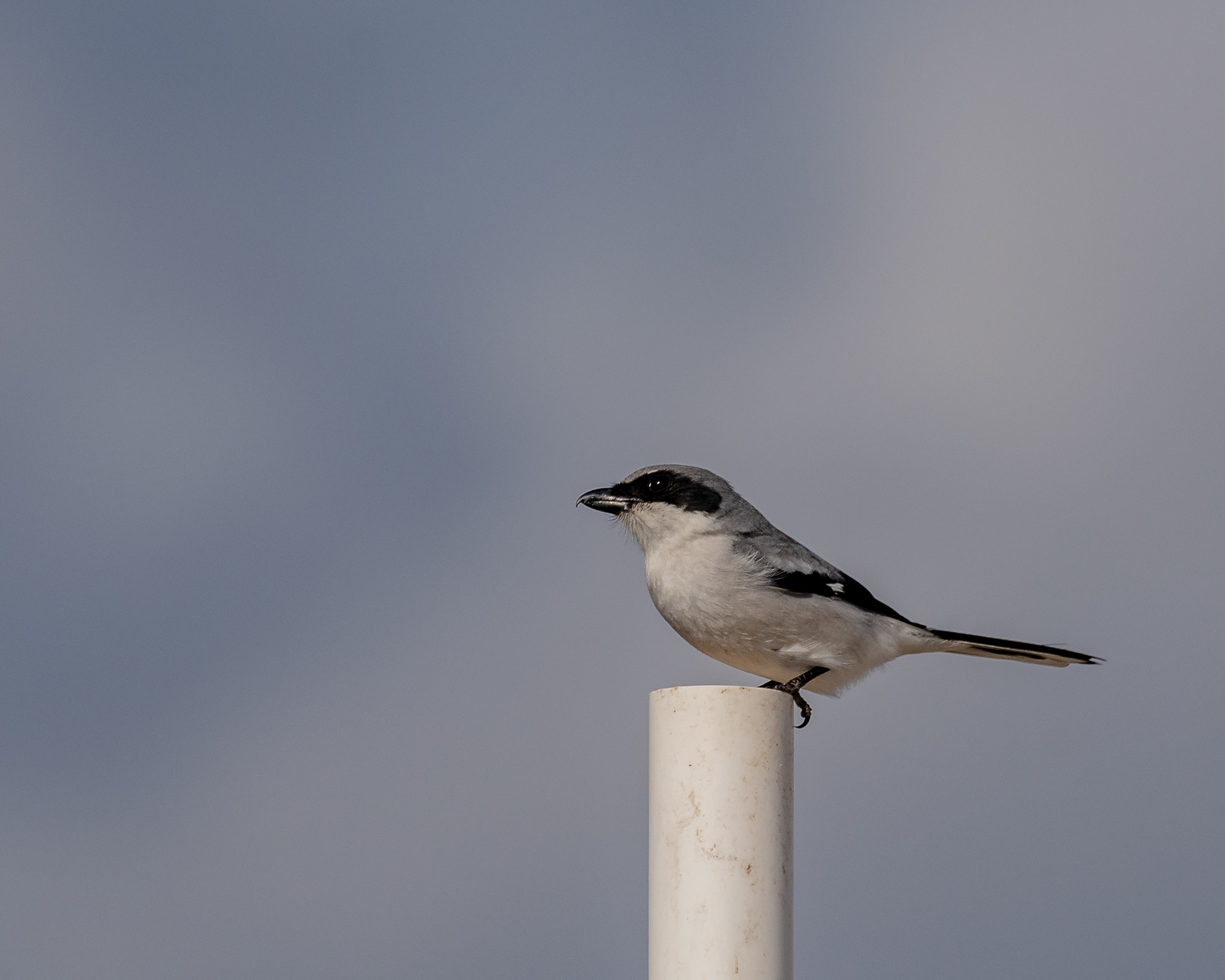
Butcher Bird! The Loggerhead Shrike will use any sharp object to impale its prey thus making it easier to eat. They have been known to store prey in a convenient crook of a branch for eating later when food might be scarce.
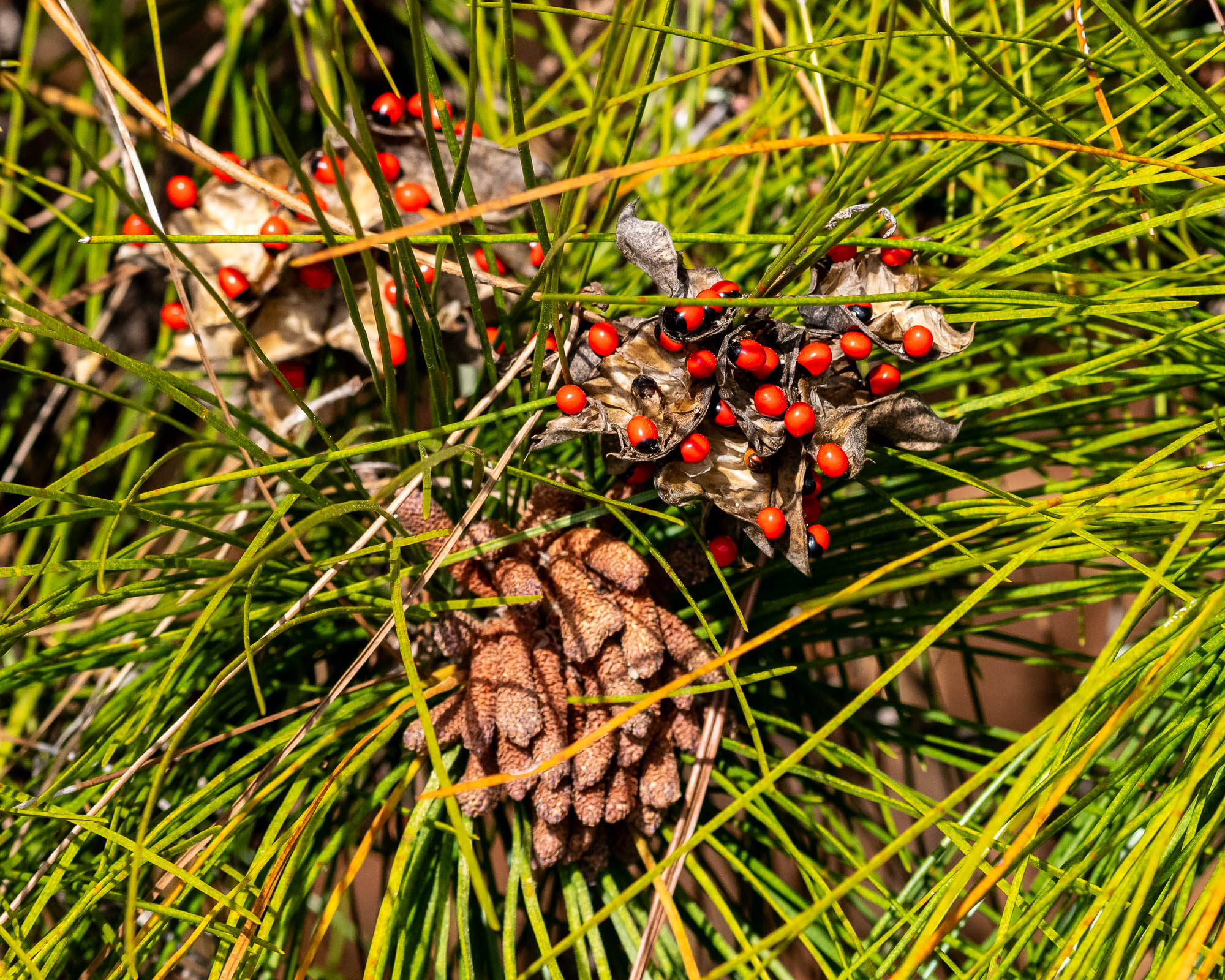
Lovely to look at, especially with bright green pine needles as a backdrop, the Rosary Pea (Abrus precatorius) has bright red seeds in a brown pod. Pretty lavender flowers will begin blooming in a few weeks. Caution. Those shiny seeds contain the deadly toxin abrin and can be fatal if swallowed. This is a non-native plant from India/Asia.
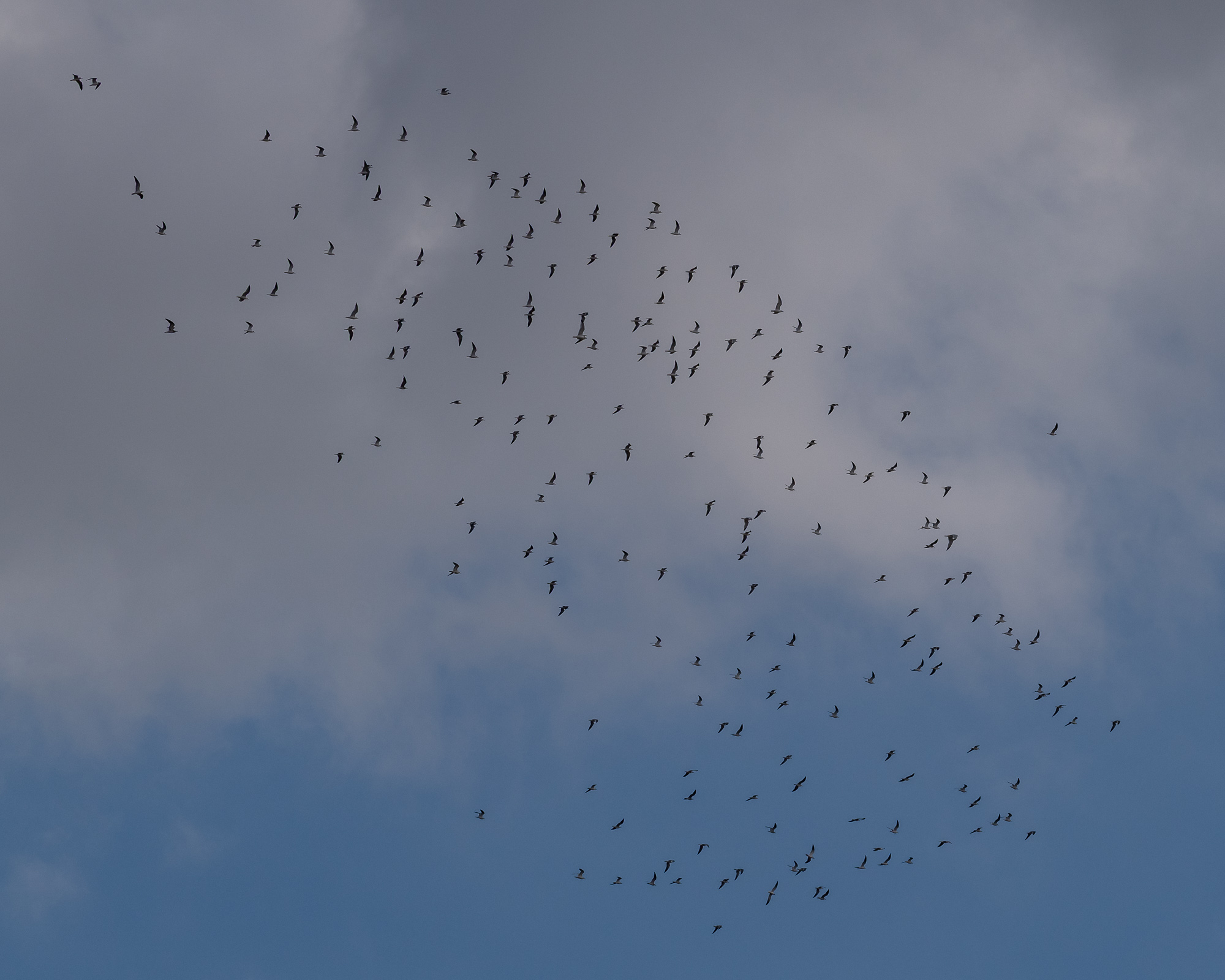
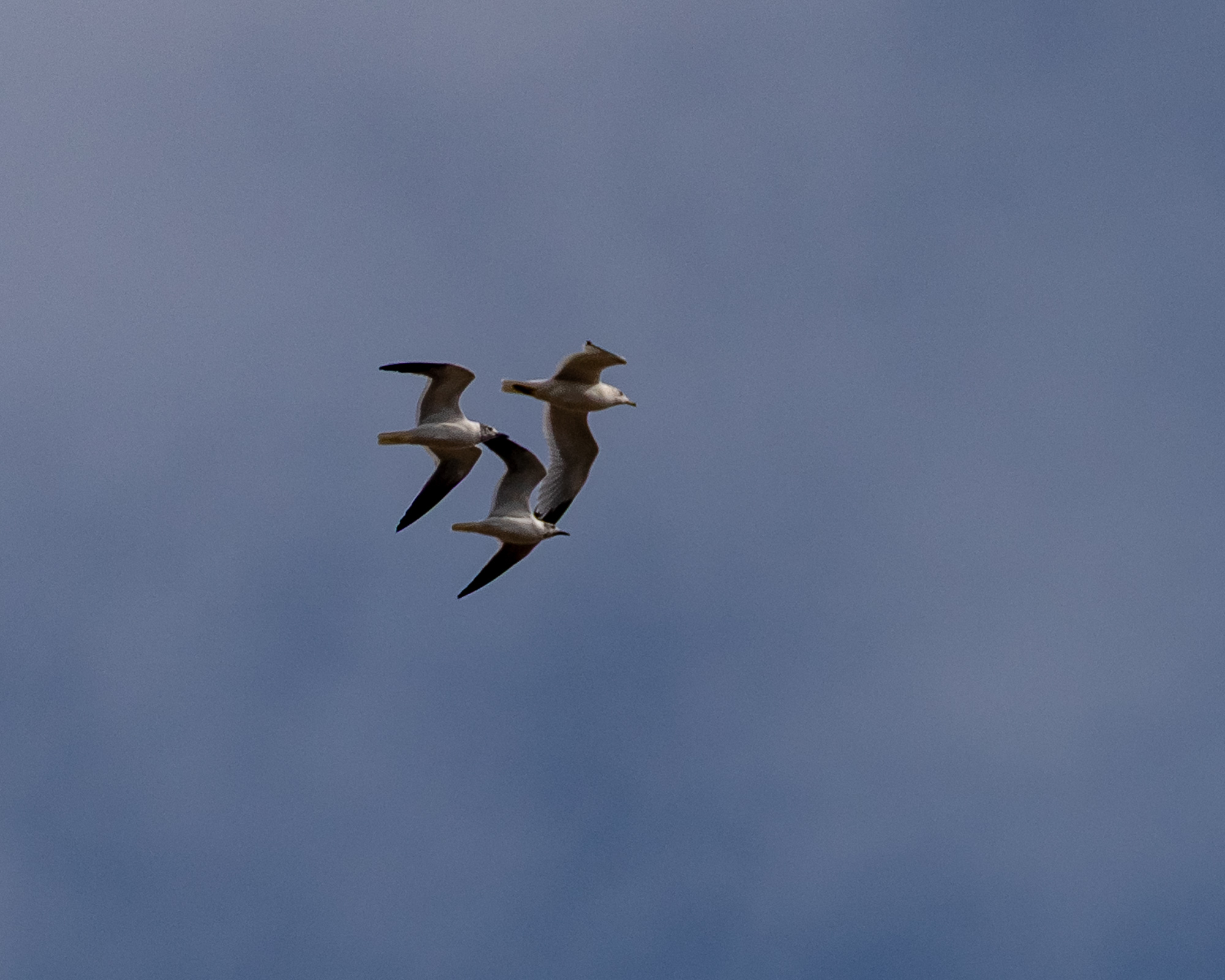
“Look straight up!” I was getting out of the car to chase a warbler, but her shout revealed a huge flock of birds high overhead. From several photos I estimate there were 220-250 Laughing Gulls in the group. There was a mix of mature/immature birds in breeding and non-breeding plumage. Never seen a flock of gulls that large.
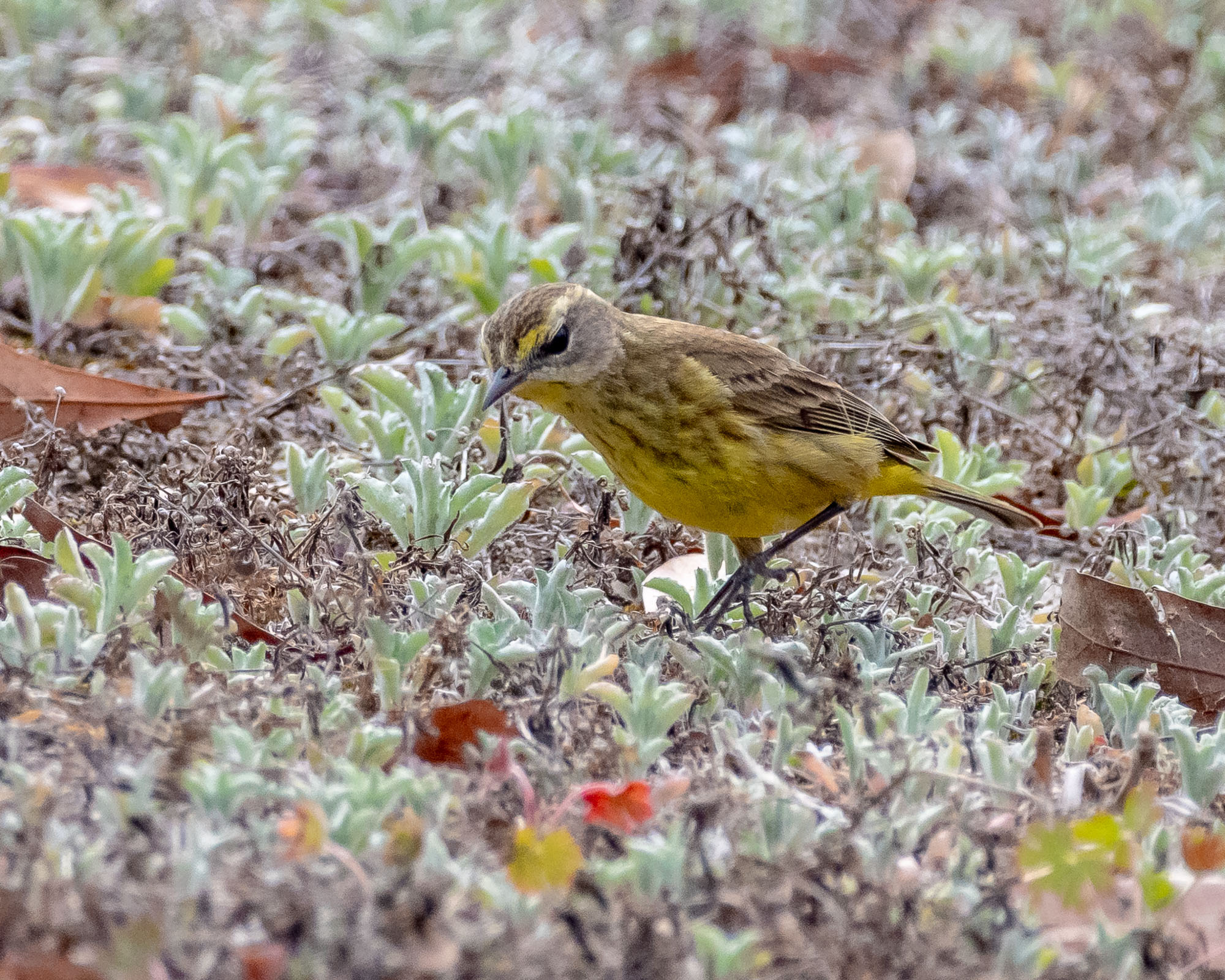
Speaking of that warbler. We found around three dozen Palm Warblers in various size groups throughout the morning.
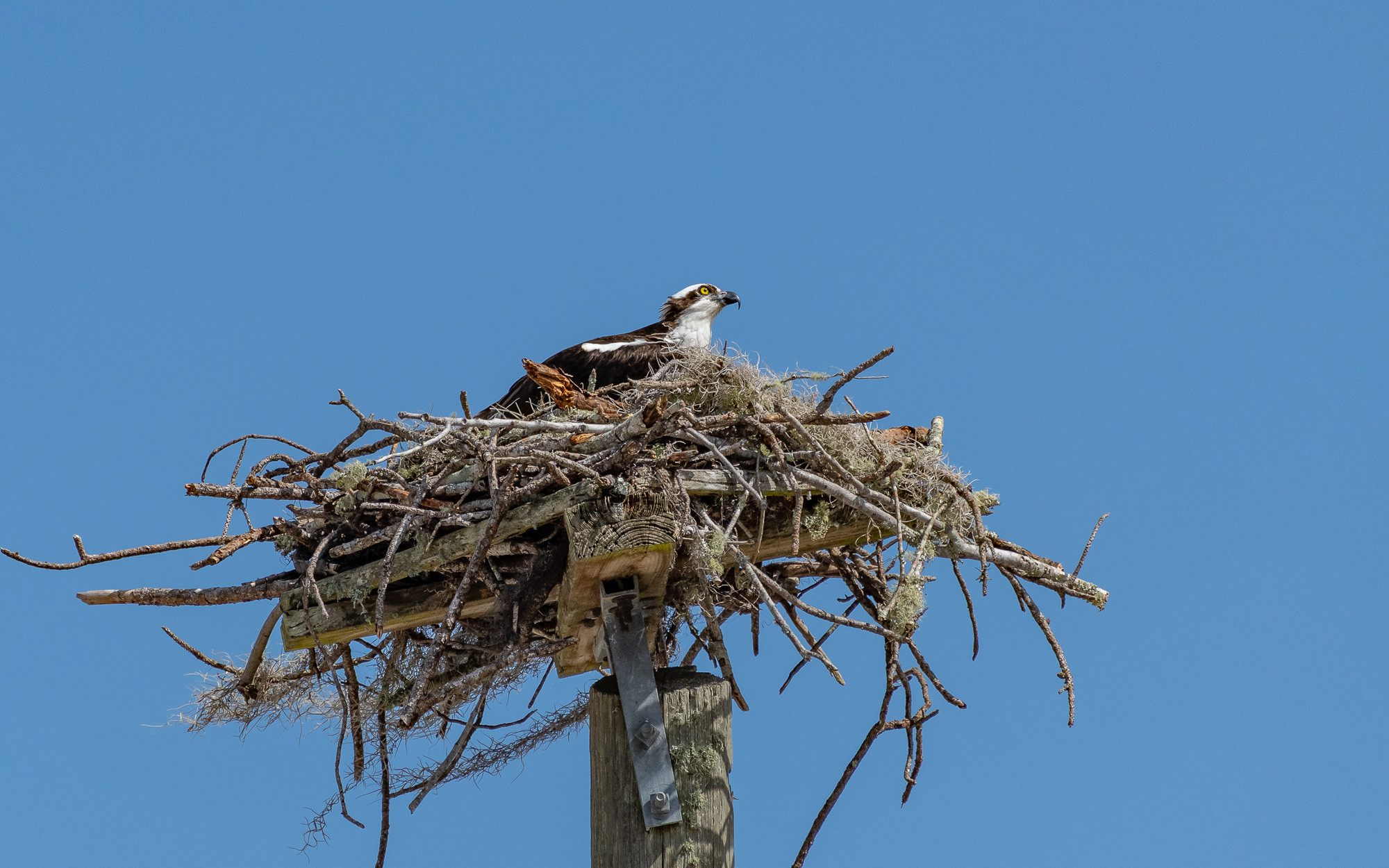
This area consists of many lakes filled with fish. Naturally, Ospreys like the proximity to all those groceries and nests abound at this time of year.
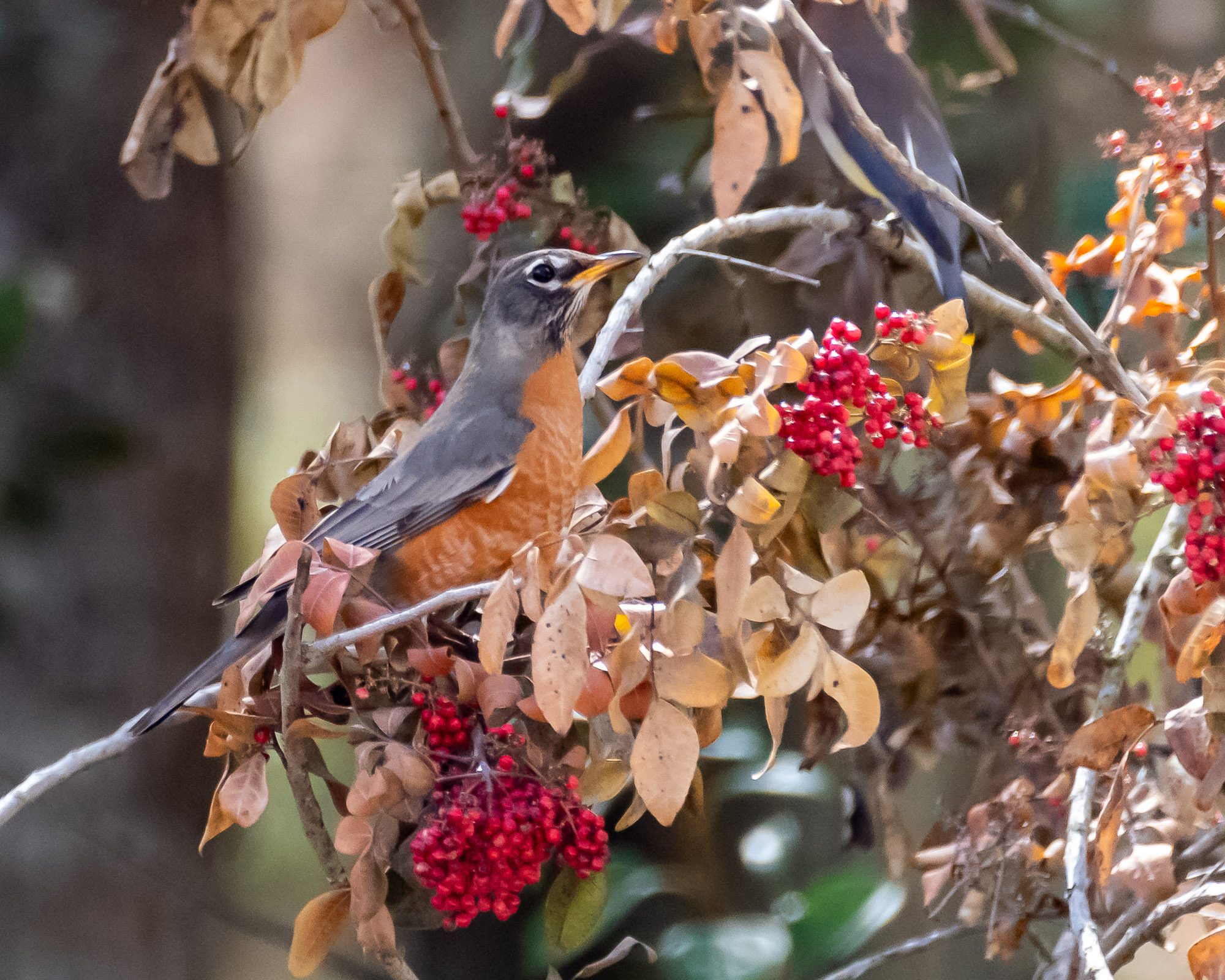
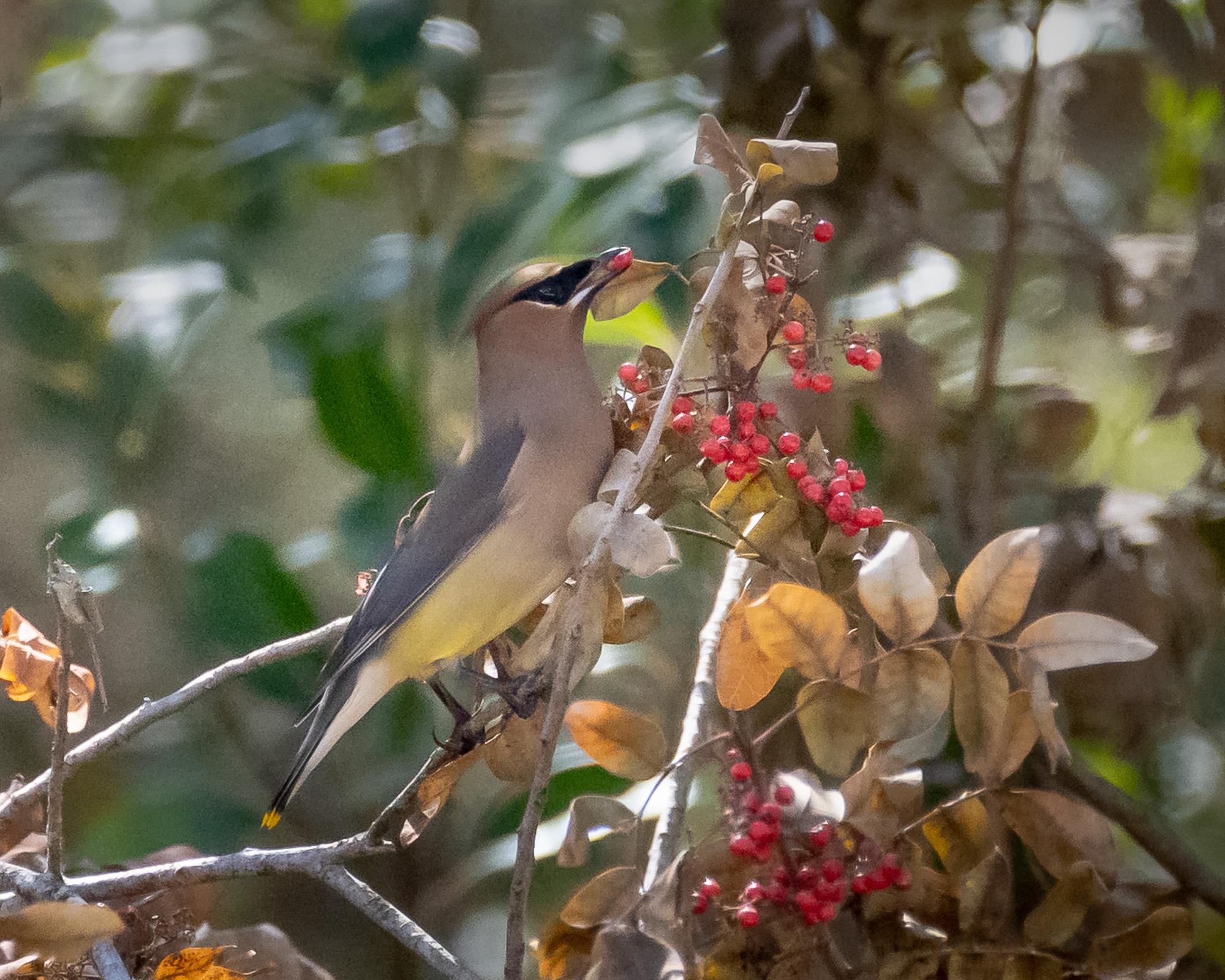
Another very invasive plant, the Brazilian Pepper (Schinus terebinthifolia) is a native of South America and displaces native species if allowed to thrive. It is very difficult to eradicate. One reason it’s so hard to control is those darned birds love the juicy red fruit and spread the digested seeds far and wide. Although we were happy to find a group of American Robins and Cedar Waxwings busily consuming the energy-rich berries, we wished there were native plants for them to visit instead.
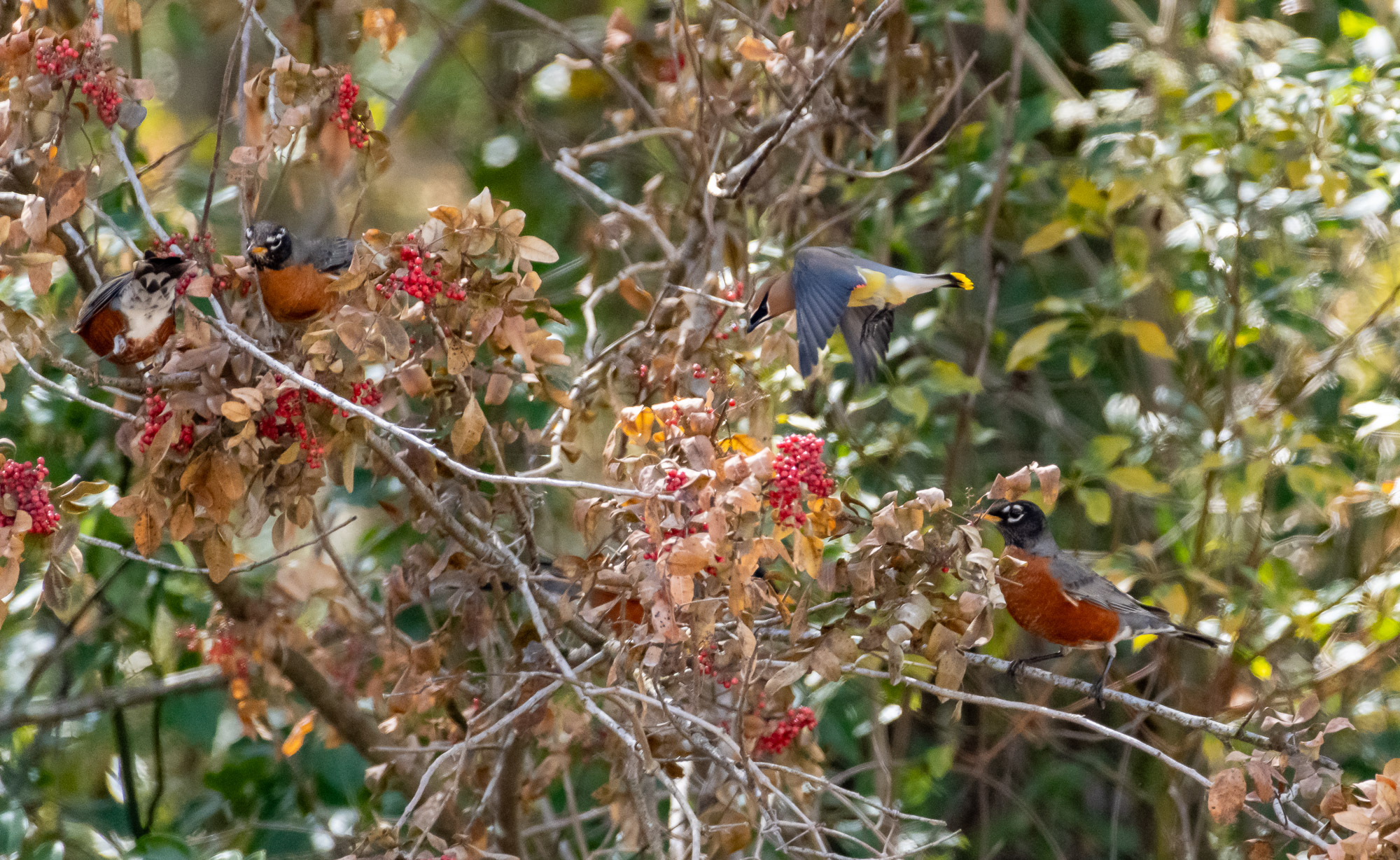
American Robin.
Cedar Waxwing.
This was our first outing of any length since Gini’s second knee operation. She is doing very will with rehab but is not quite ready for walking over uneven terrain. Soon.
Enjoy your search for a natural place and come back for a visit!
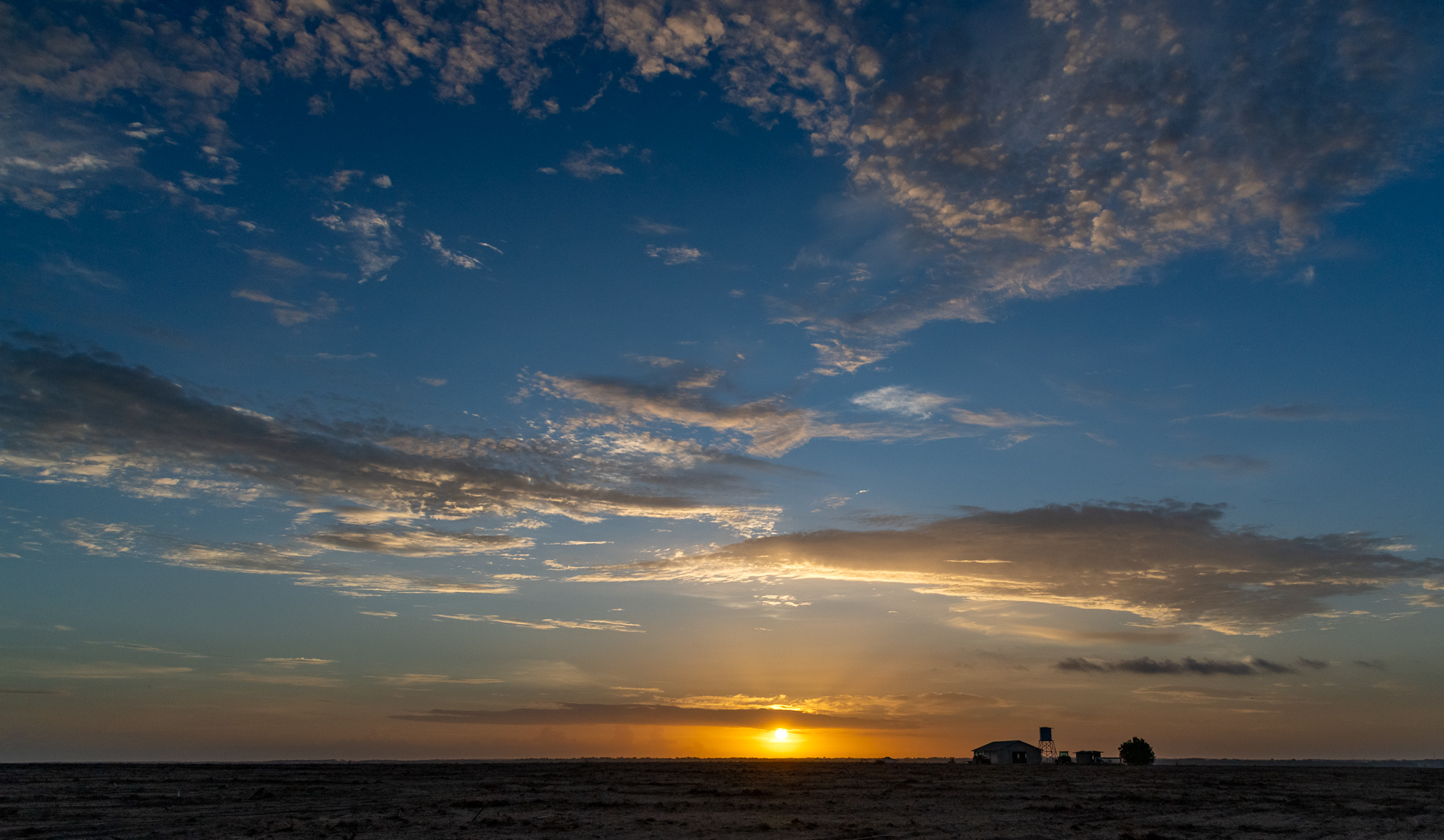
(Click on images to enlarge. Click again to zoom)
The recently plowed ground was unsettling in several ways. There had always been orange trees here. Across the road were ghosts of orange trees. Some dead and withering hulks of their former selves. Some were newly planted and wrapped in plastic giving them an ethereal appearance in the pre-dawn light. Two miles south, about 100 acres of former citrus grove is now filled with tents under which new trees are offered some protection from a devastating greening disease, likely insect borne. The tents are called CUPS (citrus under protective screening) and they are finding some success on a commercial scale.
Will this former citrus grove soon sprout groves under tents? Or new, exposed trees? Or some other crop? Or will we soon see the ominous (in my opinion) shadows of steel and plastic of the rapidly developing fields of solar arrays?
For the moment, we take heart in the fact our sun has decided to rise one more glorious day. Just for us.
As children, we were taught the importance of planning. Lay out our clothes for school tomorrow. Be sure our books and papers are next to the clothes. The complexity of our planning increased with each year. Eventually, we attended formal training on the significance of setting goals. Year-end seminars assessed how successful we were in fulfilling those goals.
Yup. Goal-setting is important. Teach your kids to do it.
However …
Teach them it is just as vital to do stuff that isn’t on their list of goals. Lead them gently outside the box of life as they know it and show them the wonders that might exist out there. Praise them for setting those goals, yes. Encourage them to follow that well-worn path through the forest. Be excited for the one who veers down the lesser beaten path. And should you have one who suddenly tries to claw her way through a bramble to get to a pretty flower – keep a very close eye on her. That rebellious streak is special and needs nurturing.
Gini and I wandered south one morning. We enjoyed that sunrise above, despite the misgivings about the plowed field. Bugs, blooms and birds littered the country roads. We didn’t make a list of anything. We held hands and made eye contact with a vulture.
It doesn’t get much better than that.
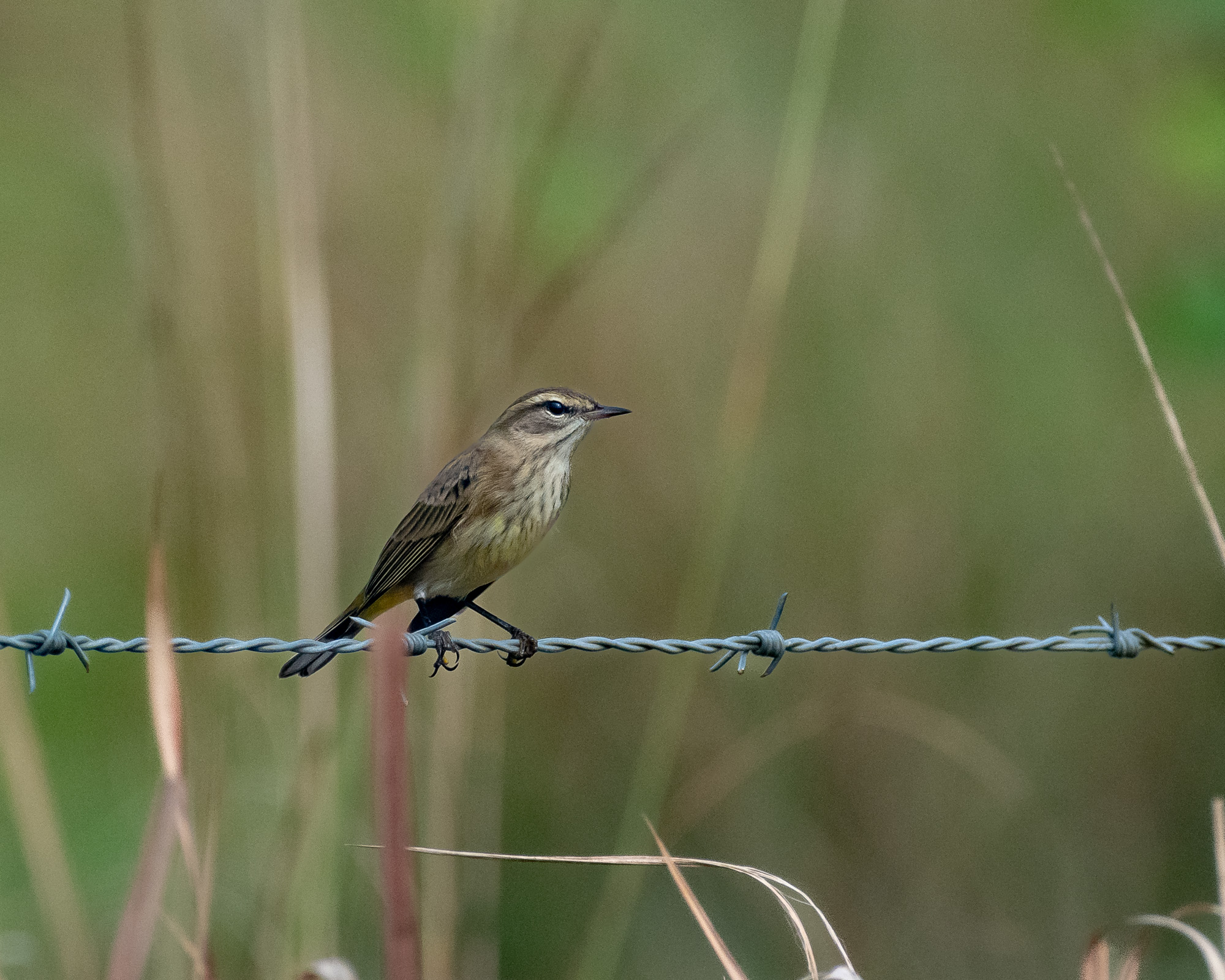
An abundance of fences in open spaces usually means an abundance of perchers. A winter visitor illustrates that premise. The Palm Warbler was part of a gang of a dozen feeding nearby.
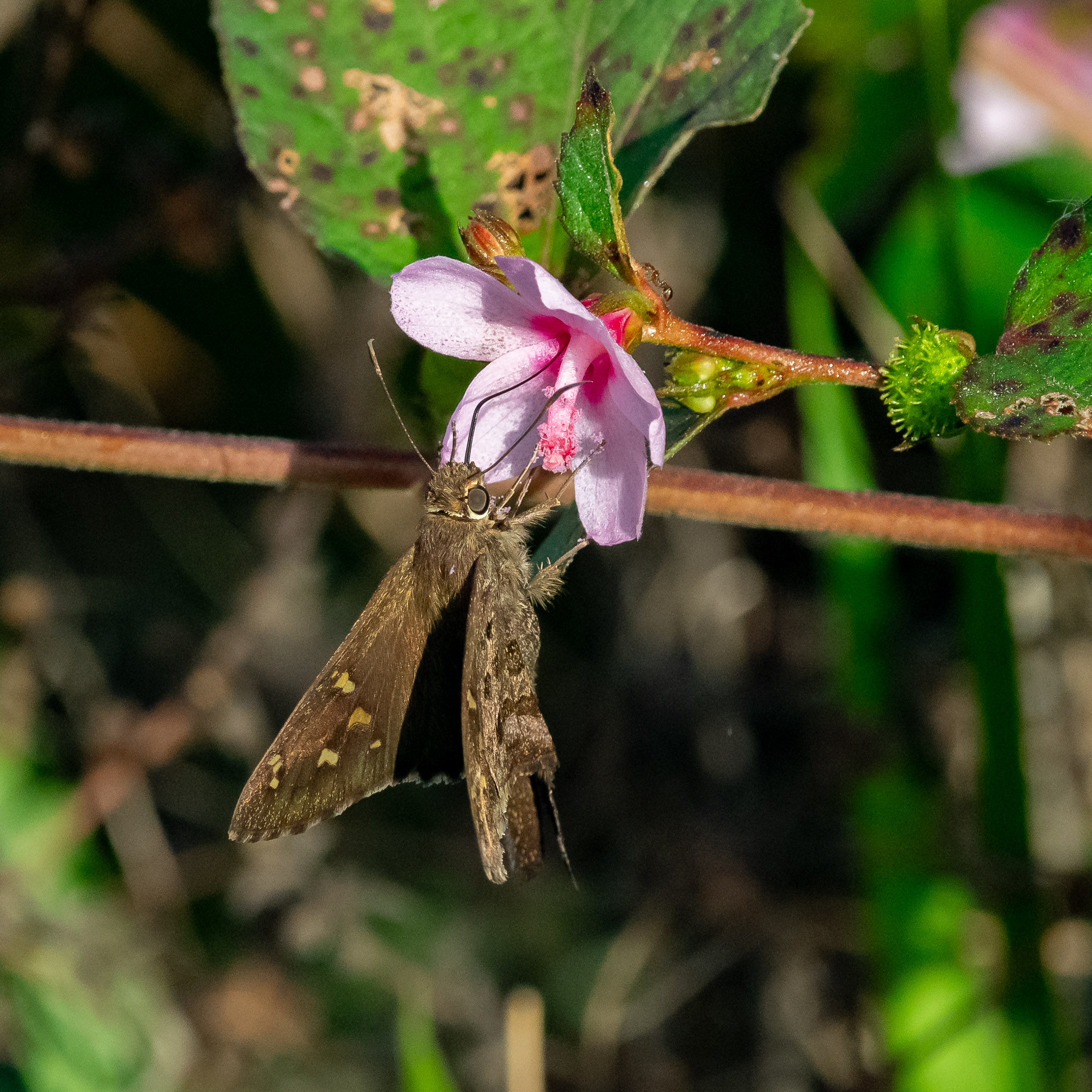
Blooming flowers attract butterflies like those fences attract warblers. Here, a Dorantes Longtail (Urbanus dorantes) sipped breakfast nectar from a Caesarweed (Urena lobata) bloom. The plant is an invasive which crowds out native flora.
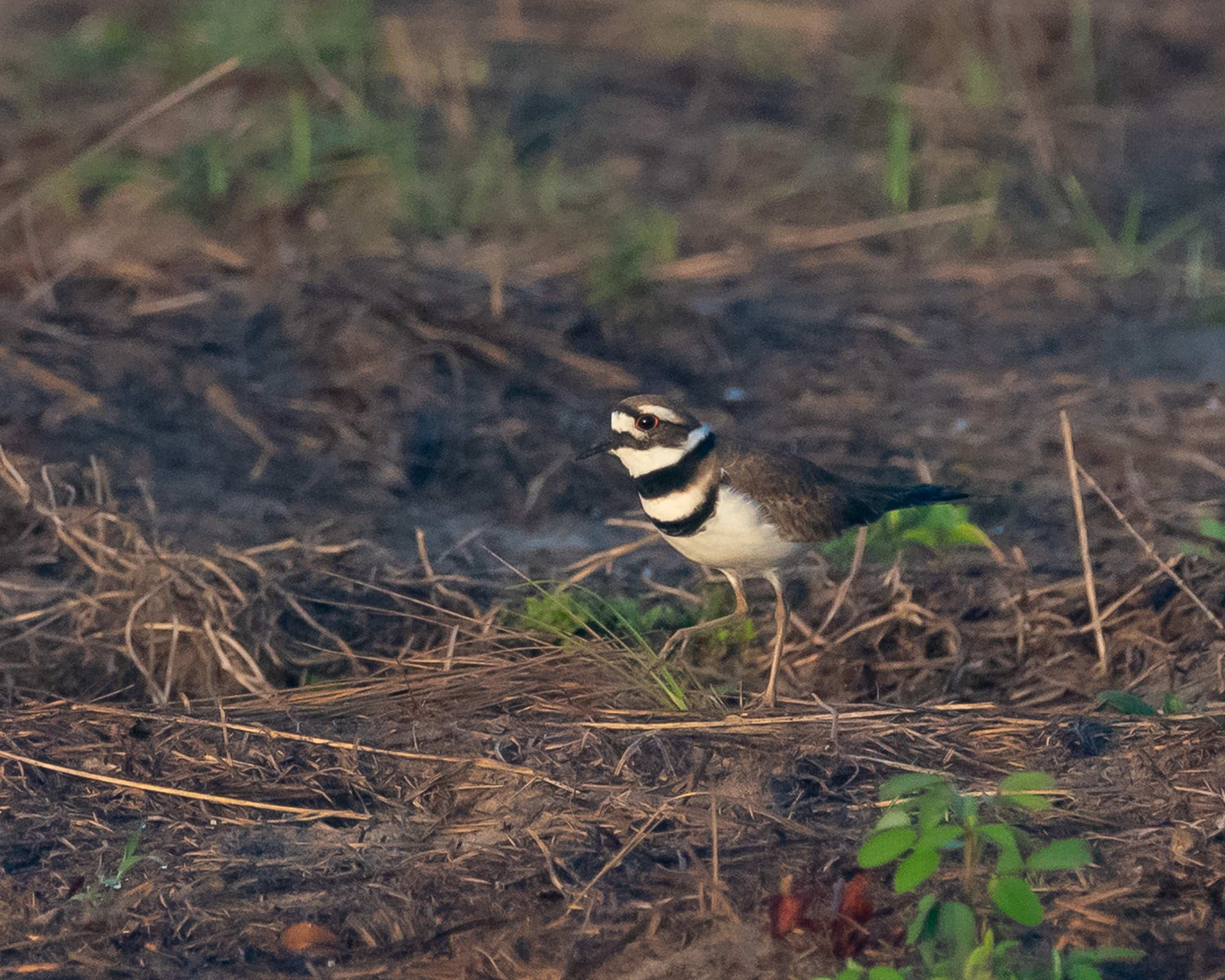
Gini heard the Killdeer calling and we eventually spotted one running across an open patch. If they don’t move, they can be tough to see.
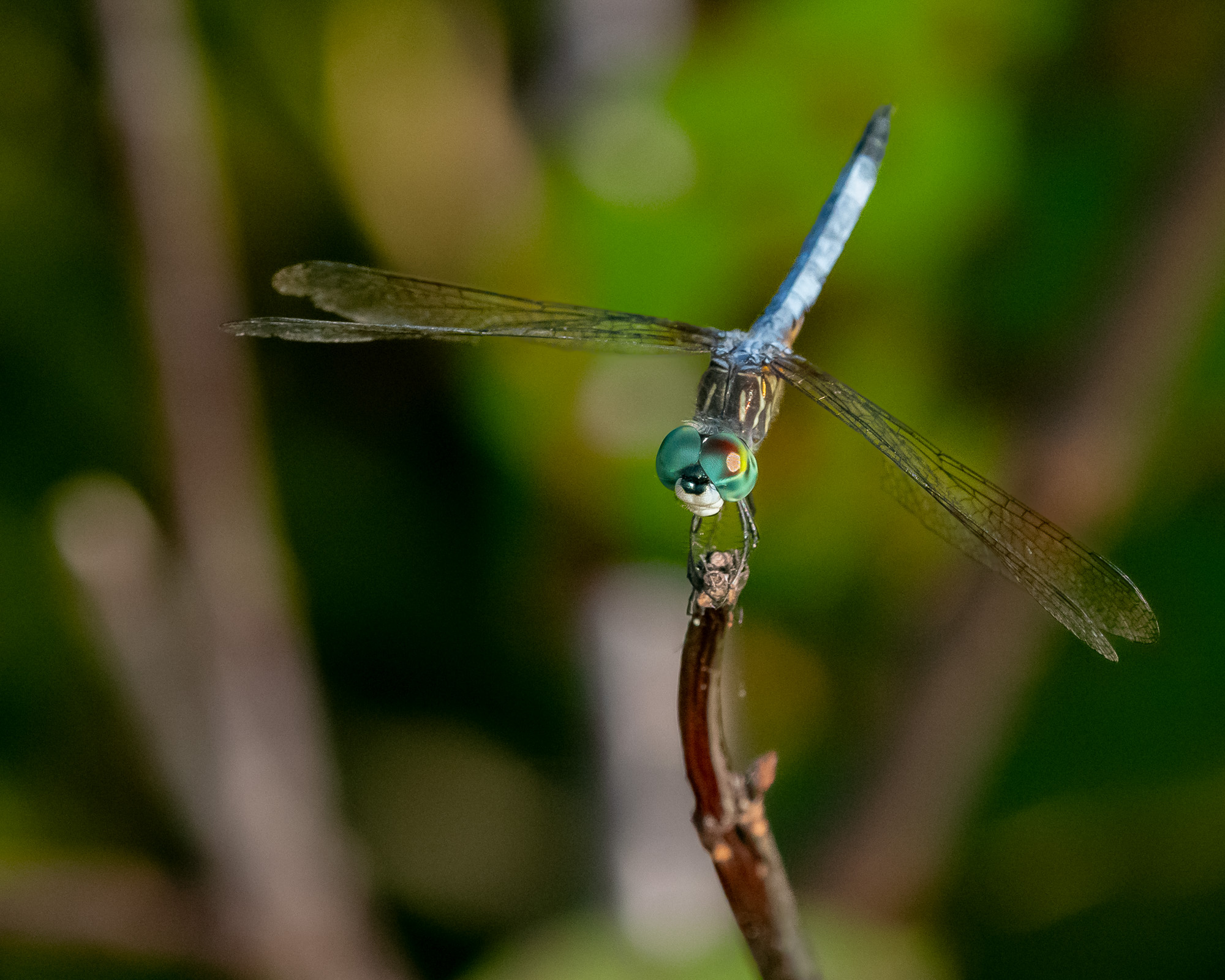
The small Blue Dasher (Pachydiplax longipennis) is one of our more common dragonflies. White face, blue abdomen, racing stripe thorax and those green eyes – identify the male.
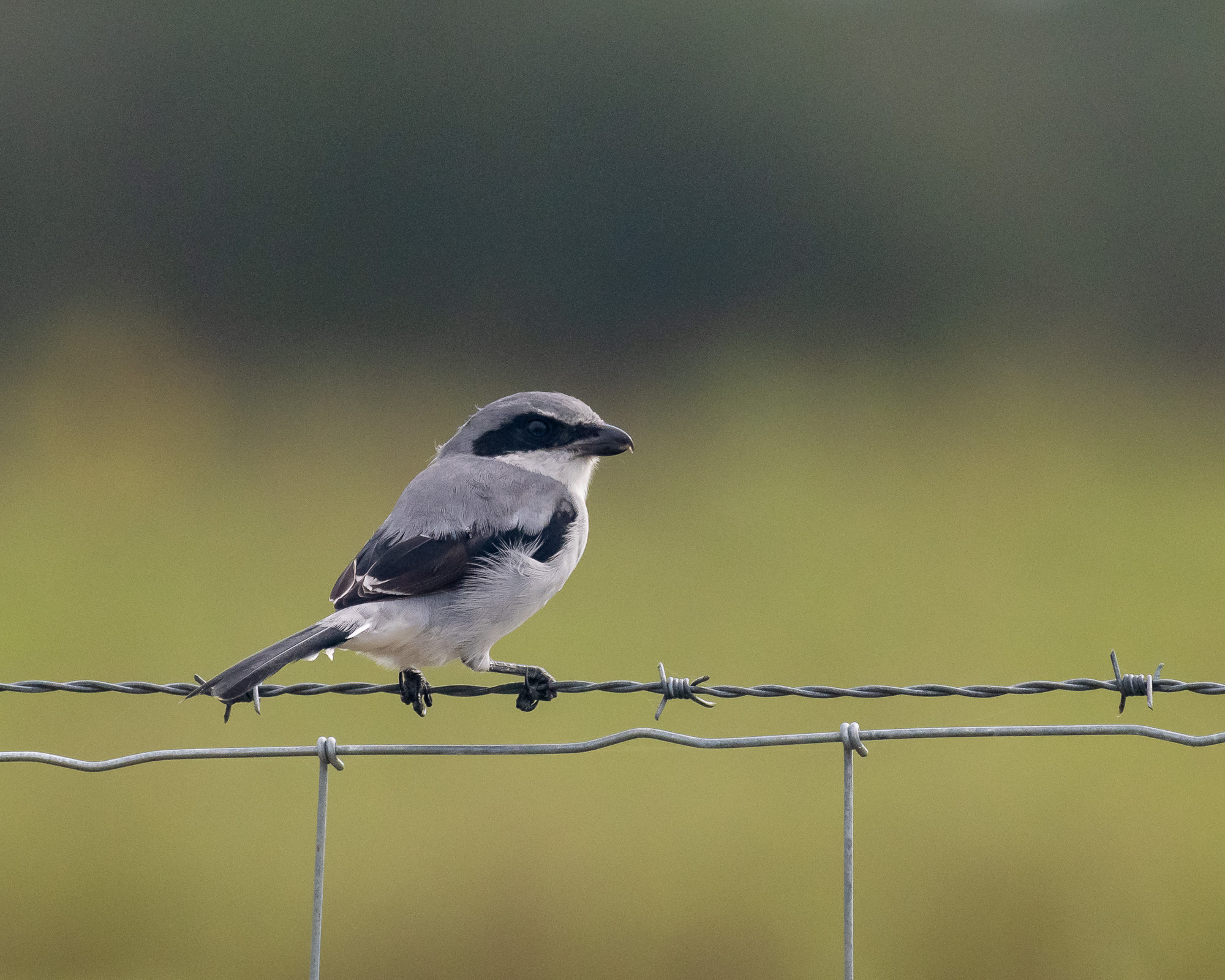
As kids, we called the Loggerhead Shrike “Butcher Bird”. They impale their prey on a sharp object like a thorn or barb of a fence wire where it ripens until perfect for a late lunch.
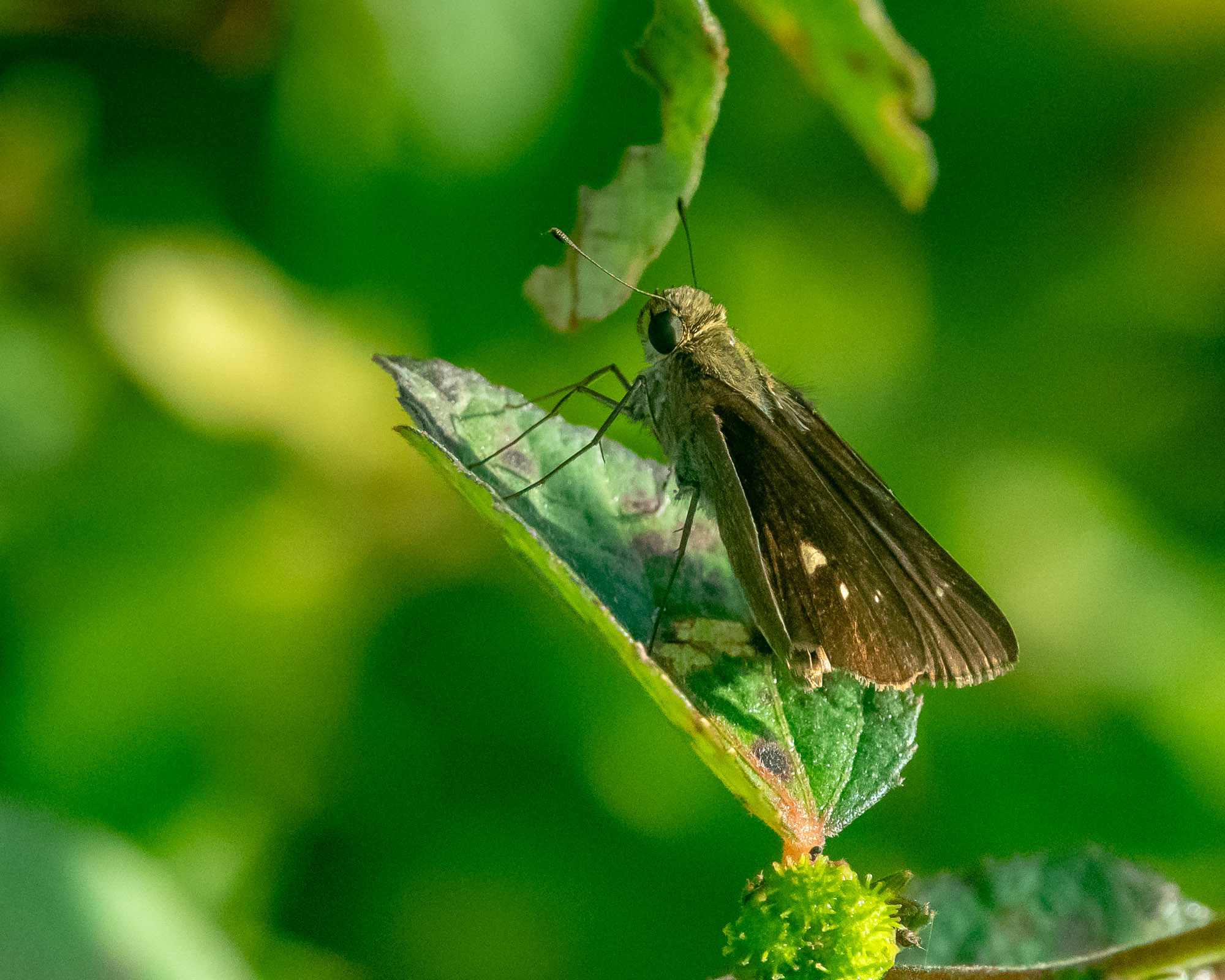
This was only our second sighting of an Ocola Skipper (Panoquina ocola). Don’t tell it that flower is a nasty invasive species. It would just give you that typical butterfly retort: “Hey! Nectar is nectar!“.
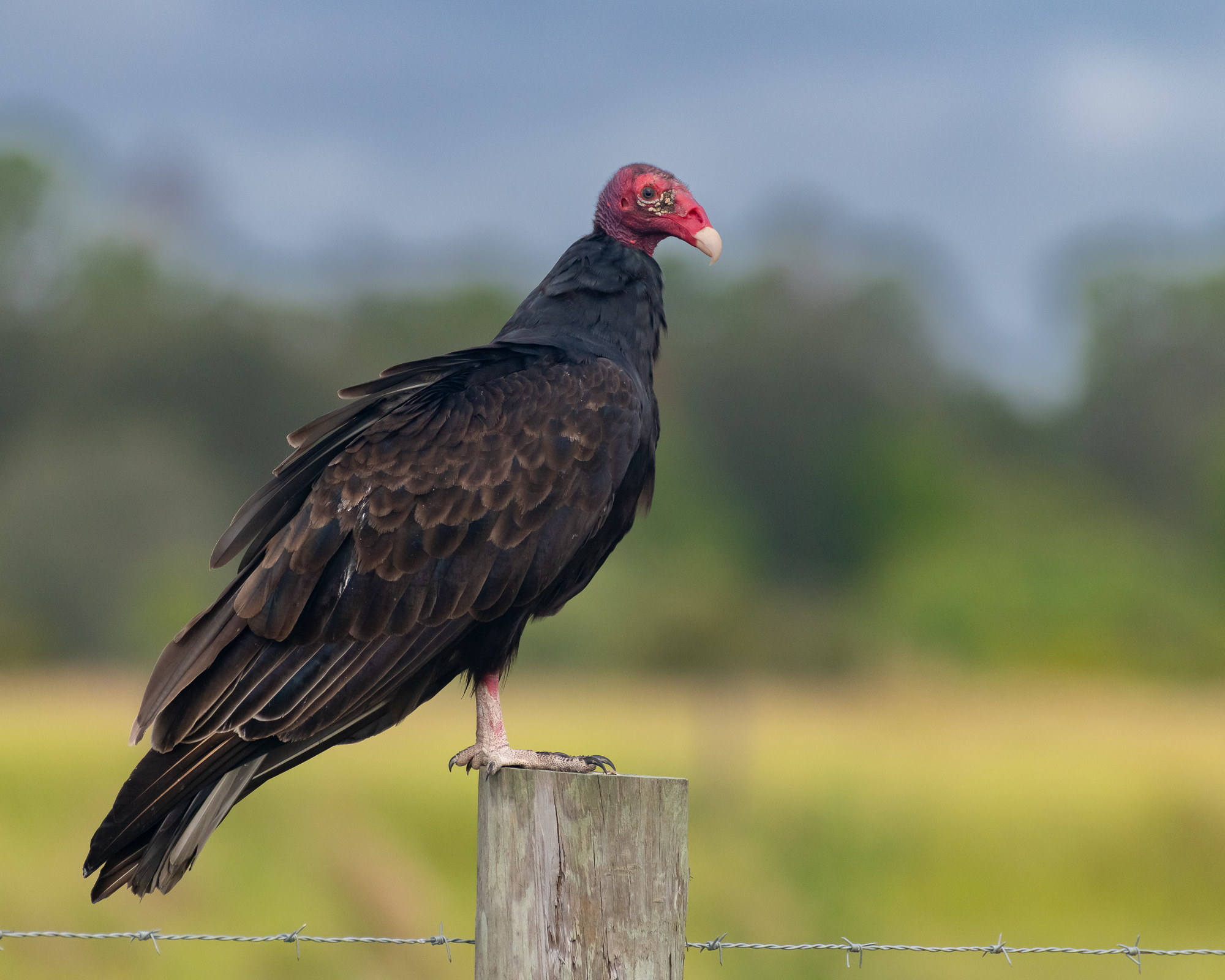
Who couldn’t love that face? Other than the Turkey Vulture’s mother.
Large and in charge. Walking through the web of the Yellow Garden Spider (Argiope aurantia) strung across the path in the morning seems obligatory for yours truly.
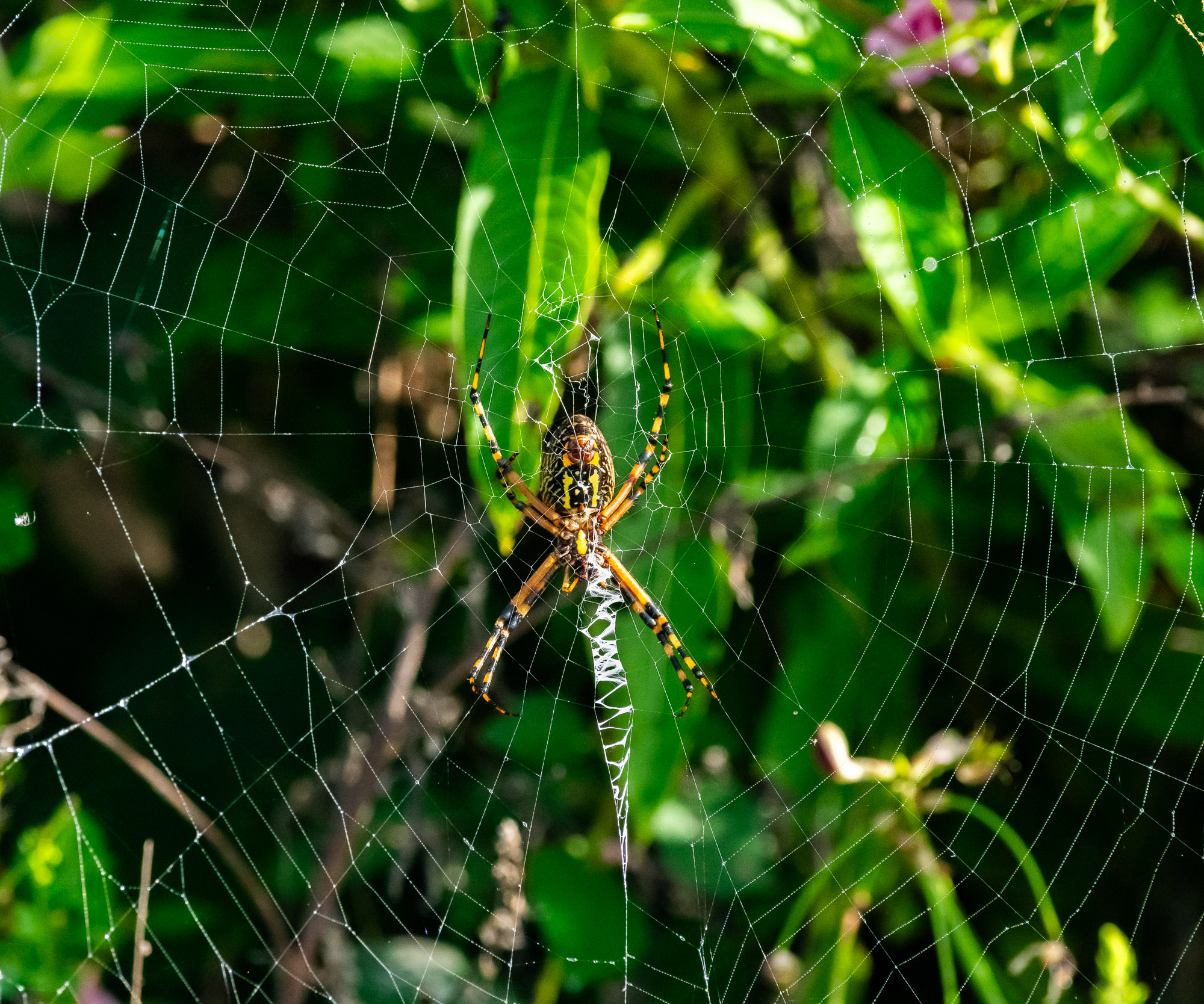
The unplanned morning drive was incredibly refreshing. No list of anything sighted. No disappointment of not fulfilling a goal. Just total relaxation and enjoyment. We may do it again next year.
Enjoy your search for a natural place and come back for a visit!
(Personal Note: Gini had a successful second total knee replacement recently and is recovering. She has scheduled dance lessons for us this spring. Fingers crossed.)
(Today’s post describes our visit to Colt Creek State Park in central Florida on September 26, 2025. Gini had knee replacement surgery 30 days prior. I will have four more sessions to complete 36 visits to the clinic for cardiac rehabilitation. Our last outing in Nature was August 15. Kudos to those who waded through all three blog parts!)
(Click on images to enlarge, click again to zoom.)
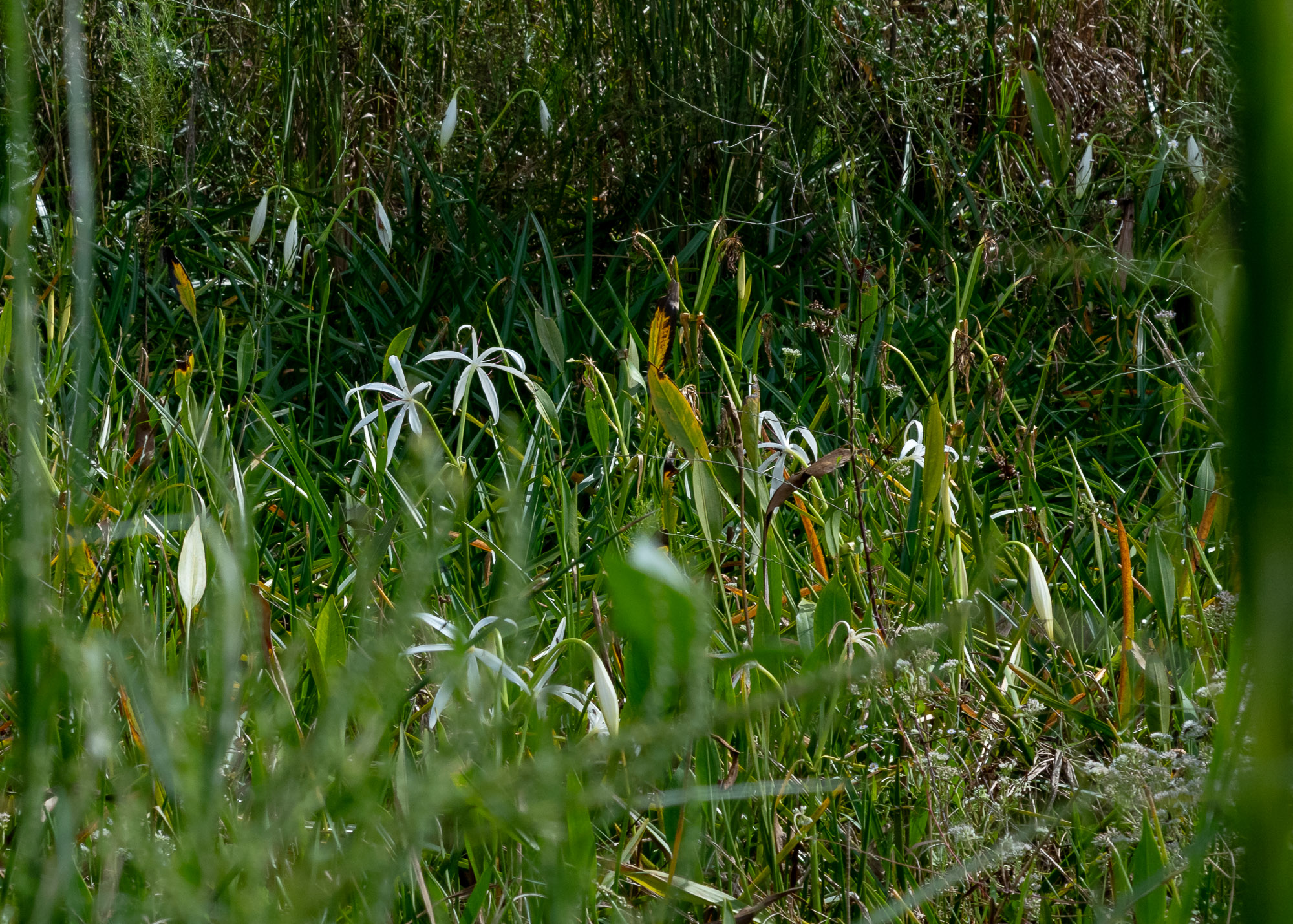
Friday. Late afternoon. No other visitors to the park were visible. Just past the entrance we were greeted by a lovely group of Seven Sisters all dressed in white. The Red-shouldered Hawk was on his pine branch perch at the first bend in the road. A patch of Clustered Bushmint was attracting all sorts of nectar-lovers. We parked at the first trailhead with a specific purpose in mind.
Gini was not quite ready to test her brand new knee on the uneven trail so she volunteered to guard the vehicle while she caught up on her latest novel. I went. I saw. I photographed. Two types of flowers, both bearing the common name of “lily”, but one from the Iris family and the other actually from the Lily family. Mission accomplished. Now what?
Oh, there is a whole park we haven’t yet wandered around in and there are still a couple of hours of daylight left. Lake, creek, forest, fields, bugs, blooms, birds. We took it all in with each breath. Who knew when we would be able to return?
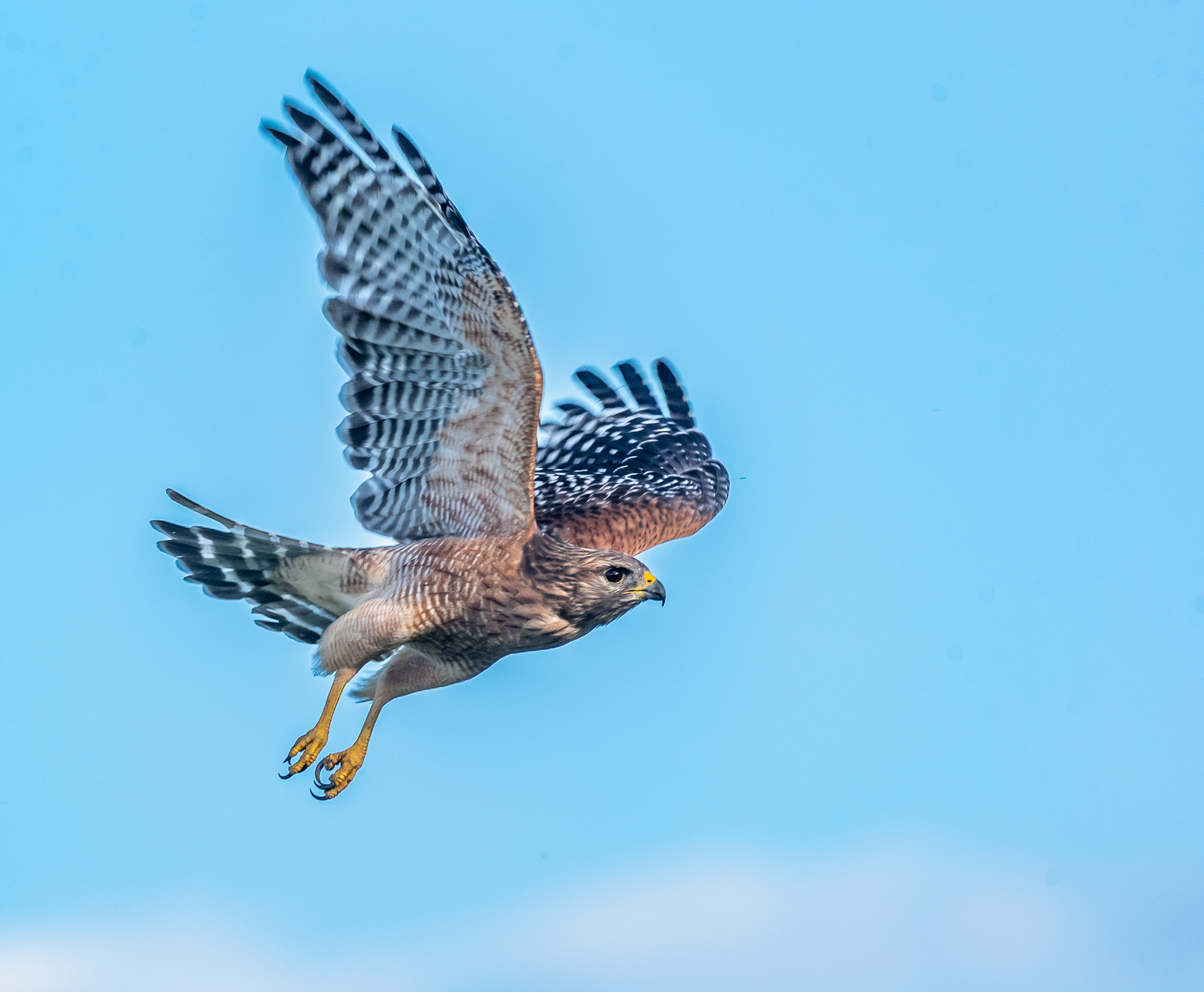
Red-shouldered Hawks are quite common throughout Florida. This handsome adult launched from a small pine tree with its eye on early supper.
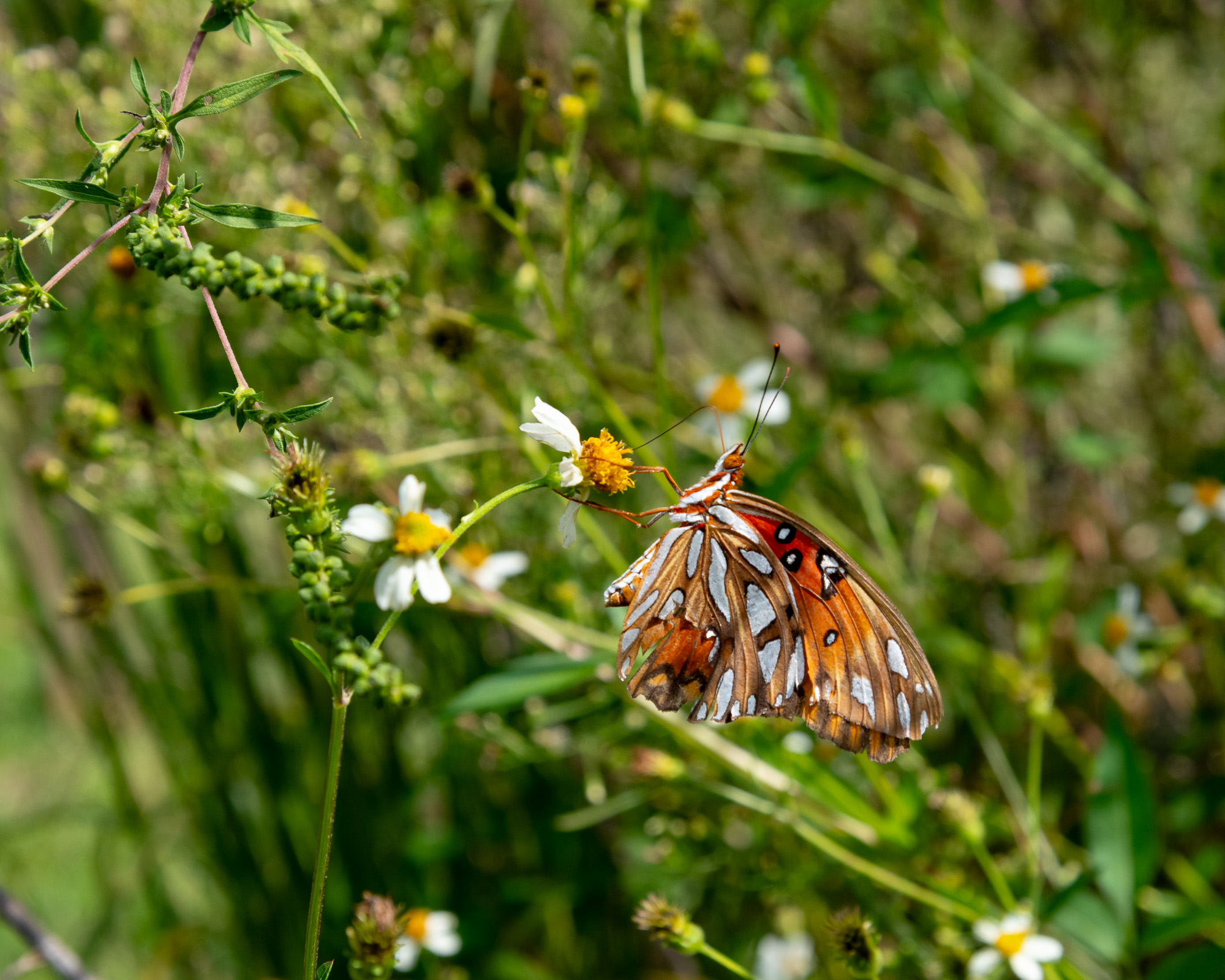
One of our more abundant, and colorful, butterflies is the bright orange Gulf Fritillary (Dione incarnata).
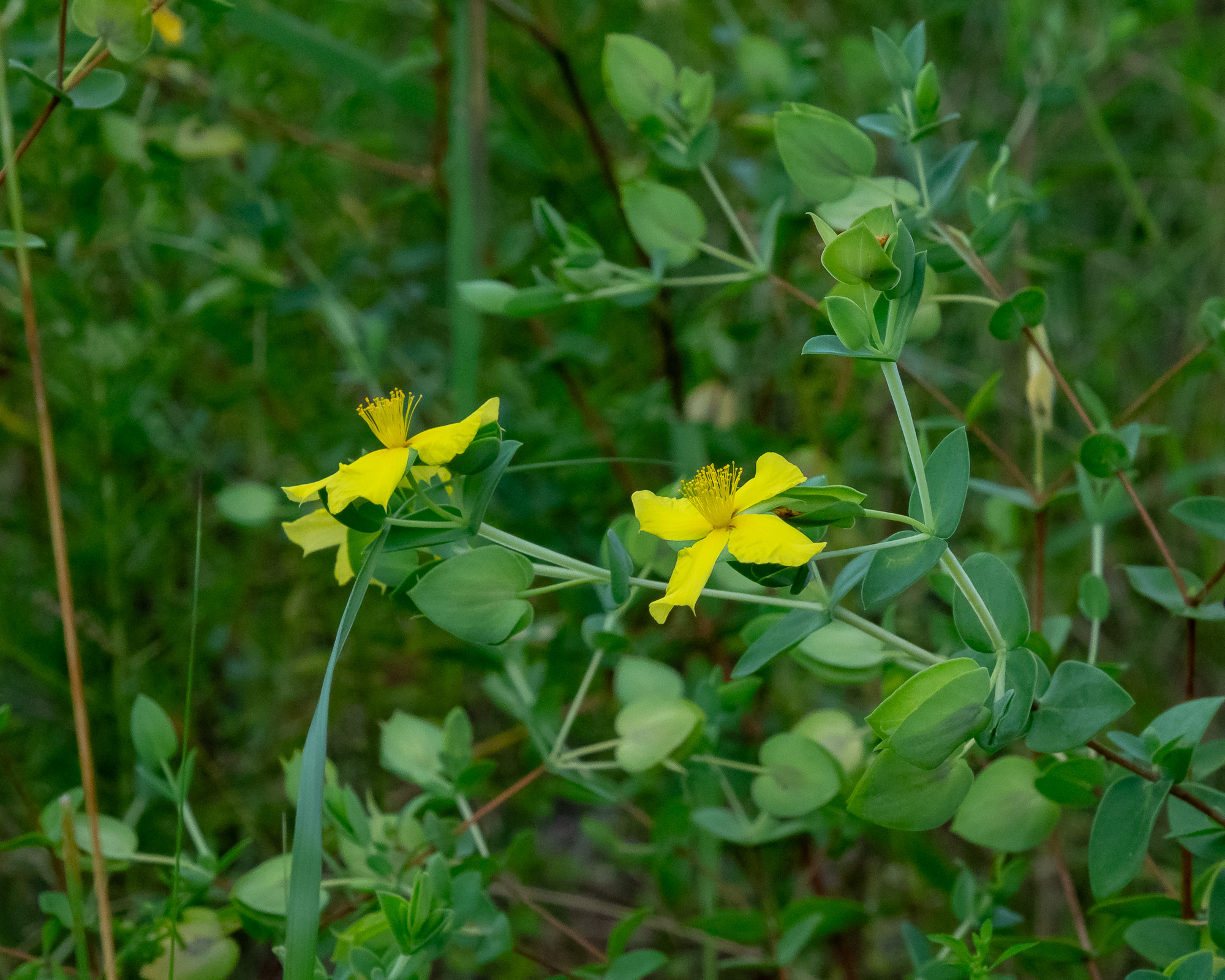
Nearly endemic to Florida, Four-petal St. Johnswort (Hypericum tetrapetalum) blooms profusely in spring and summer but, as we discovered, doesn’t mind showing off even in late September.
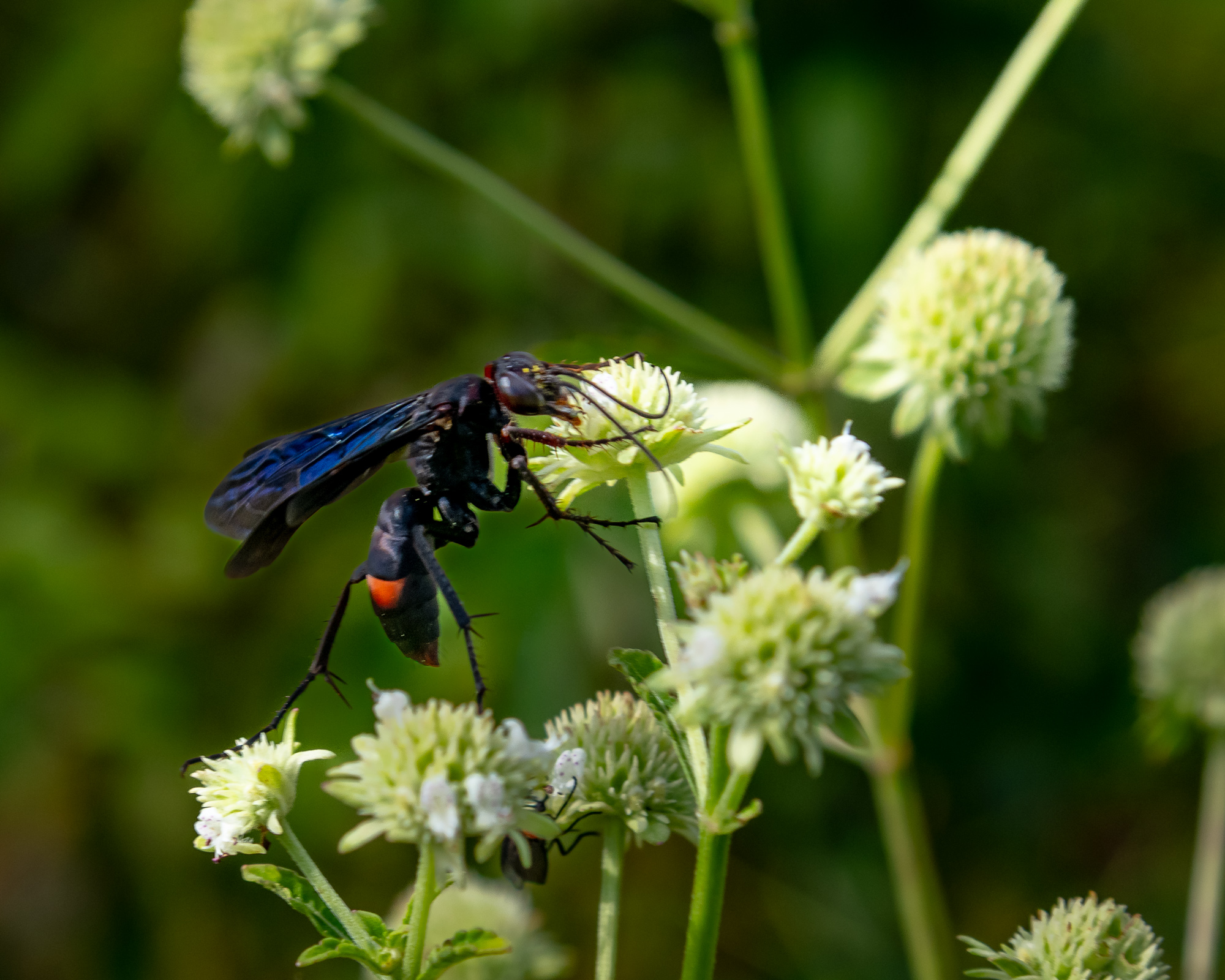
A New Bug! From all our research and queries, we are pretty sure this big specimen is in the Spider Wasp Family (poss. Anoplius semicinctus). Here, it’s on Clustered Bushmint (Hyptis alata).
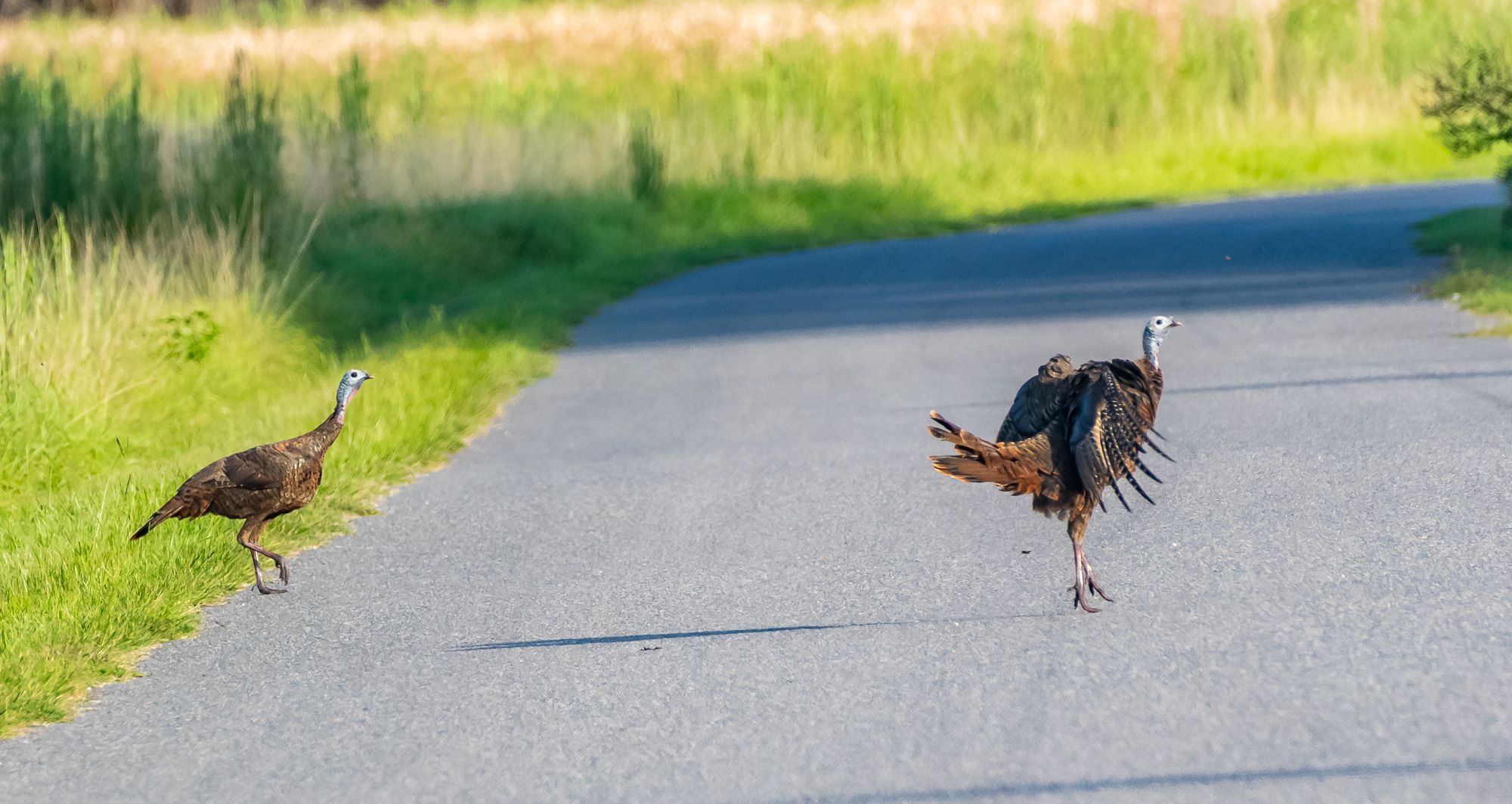
Stop! Wild Turkey crossing. (We watched as these two joined a group of 18 nearby.)
A New Bloom! We have searched for this one for a long time and finally found them today. Rayless Sunflower (Helianthus radula) is quite unique and very different from its cousins with all those yellow petals.
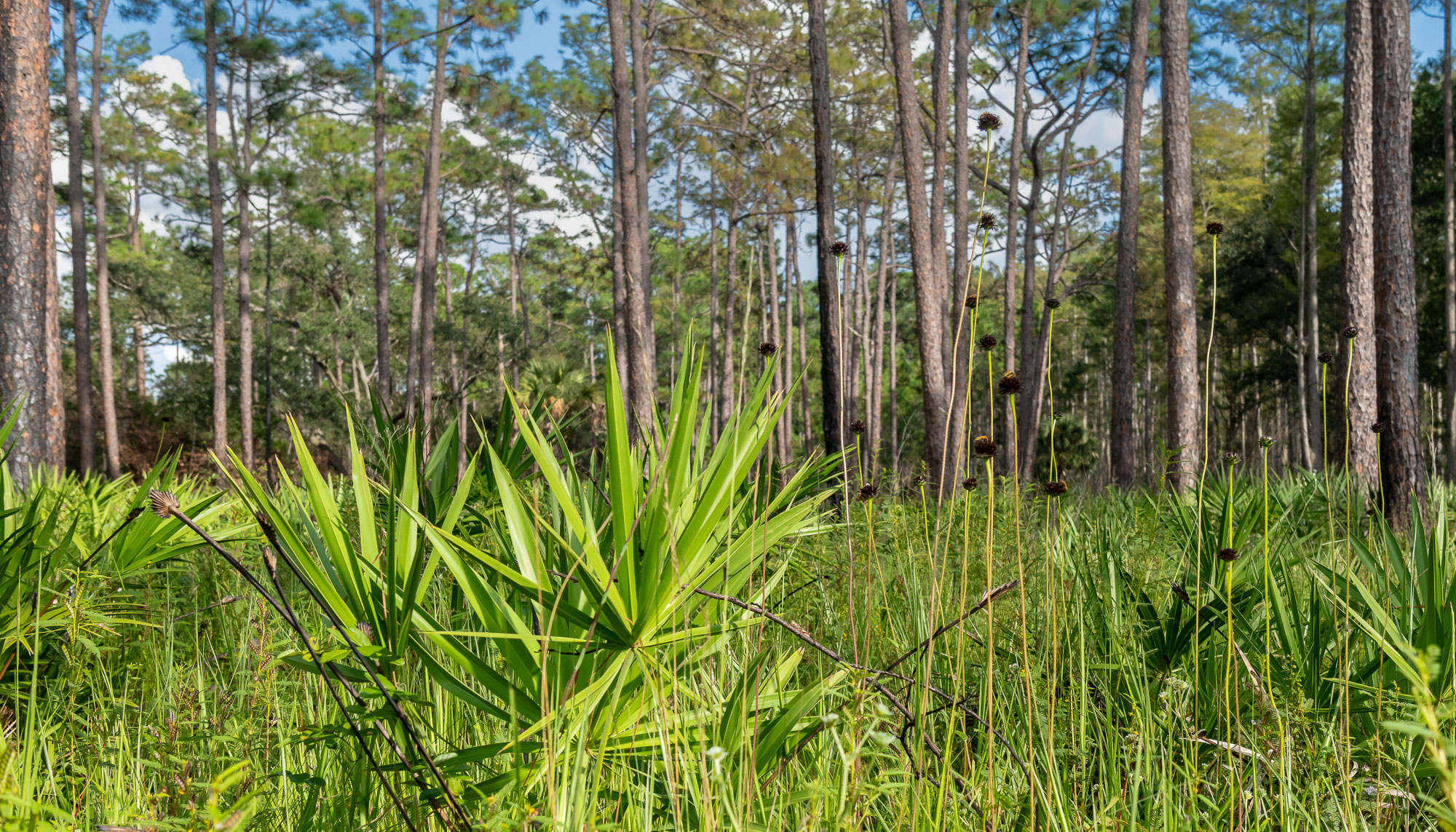
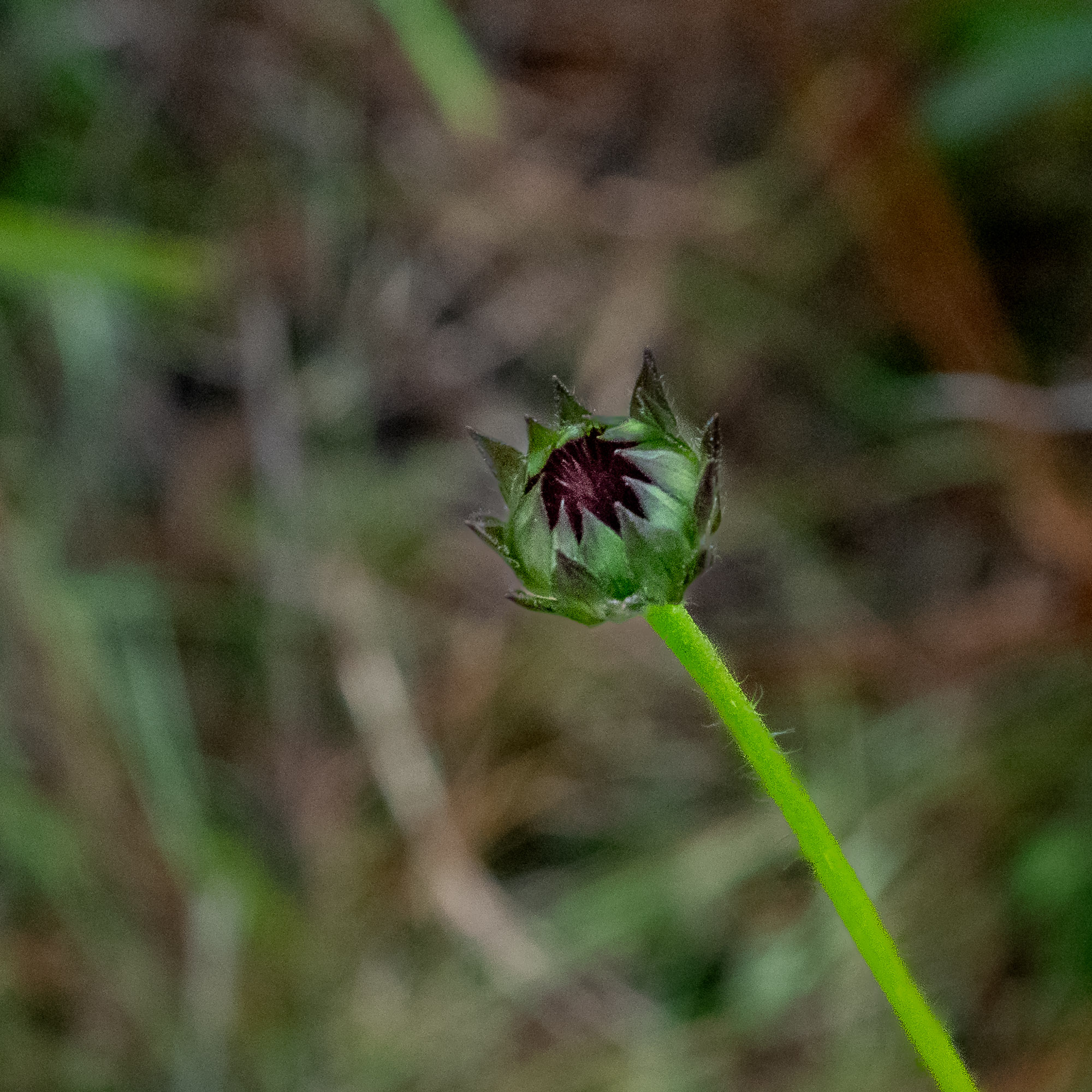
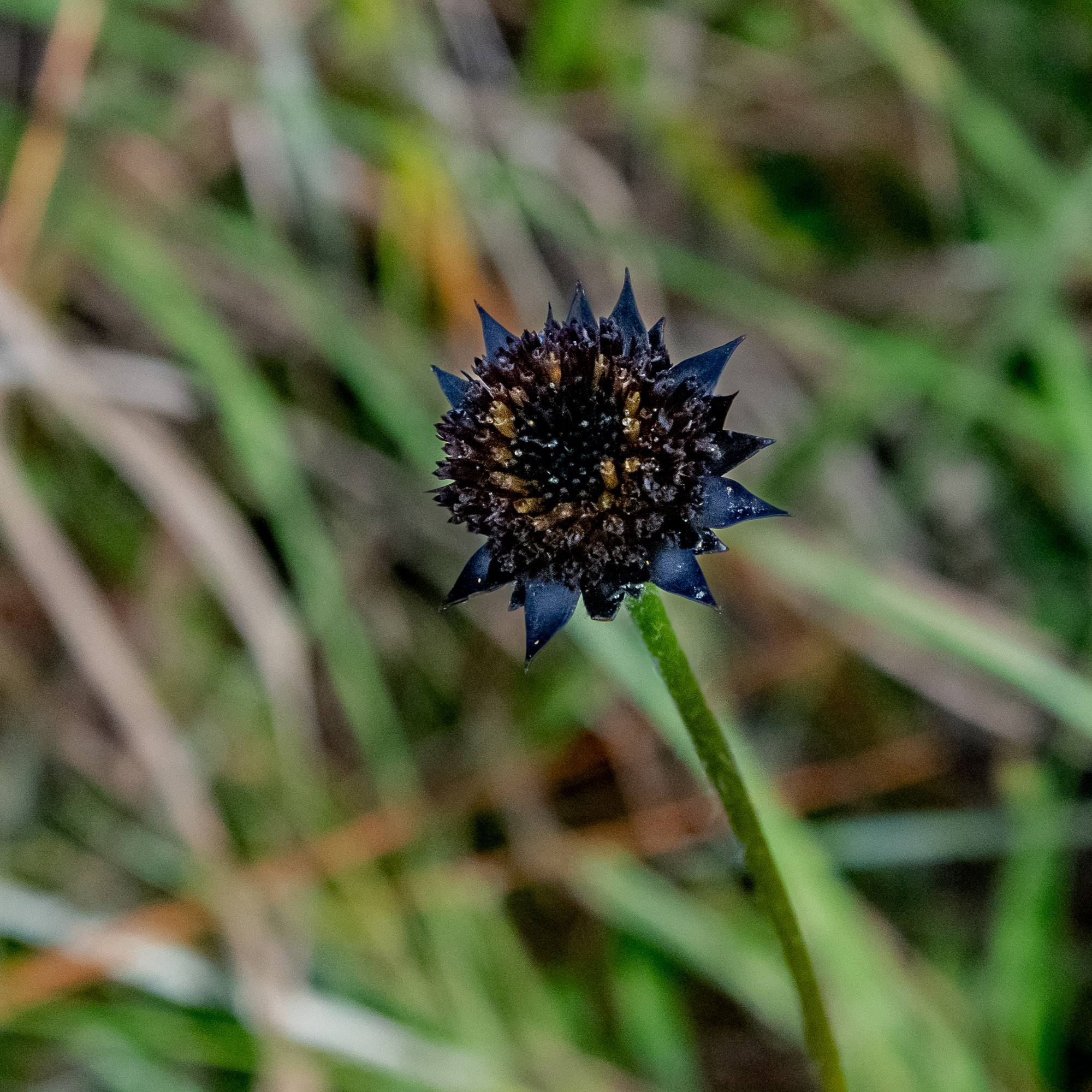
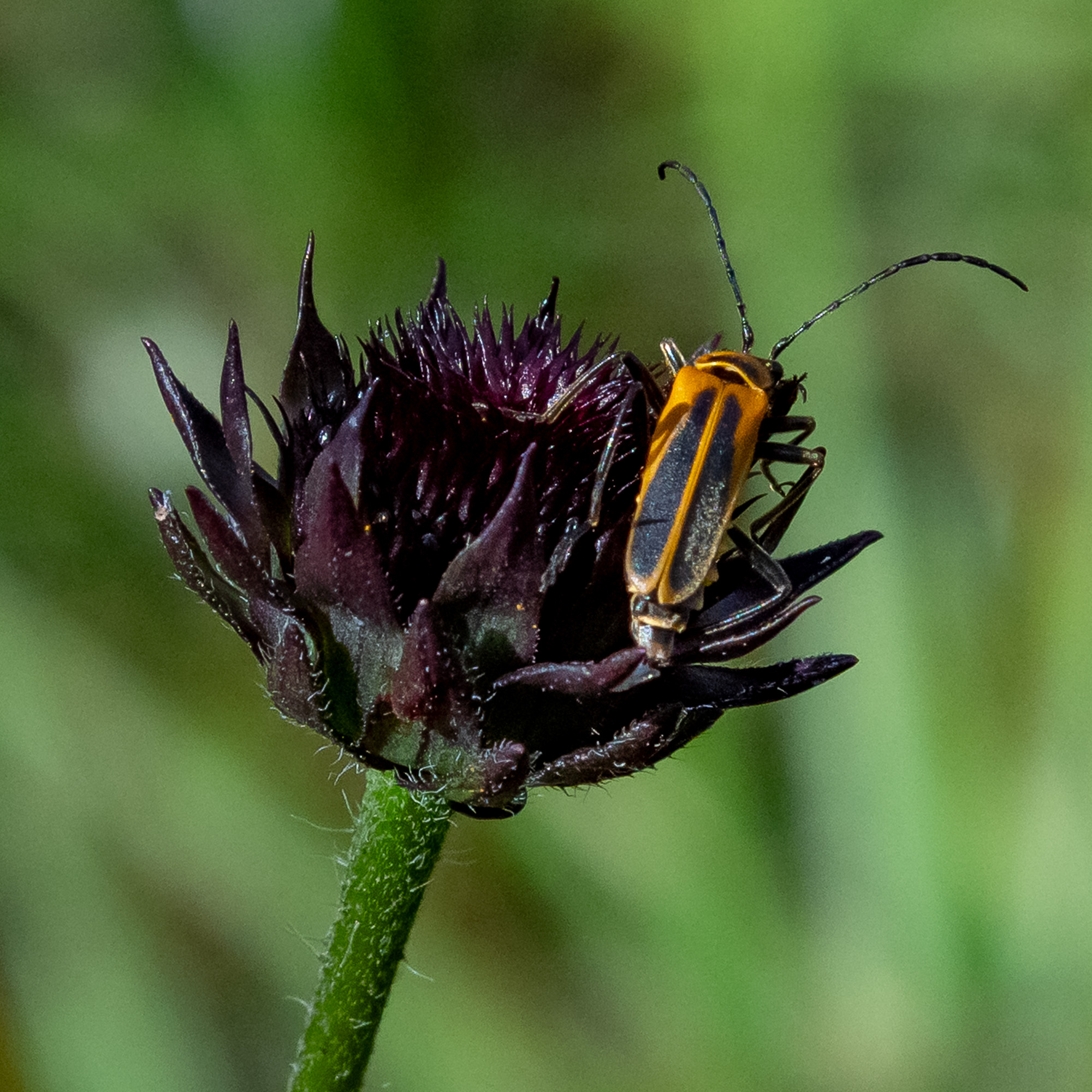
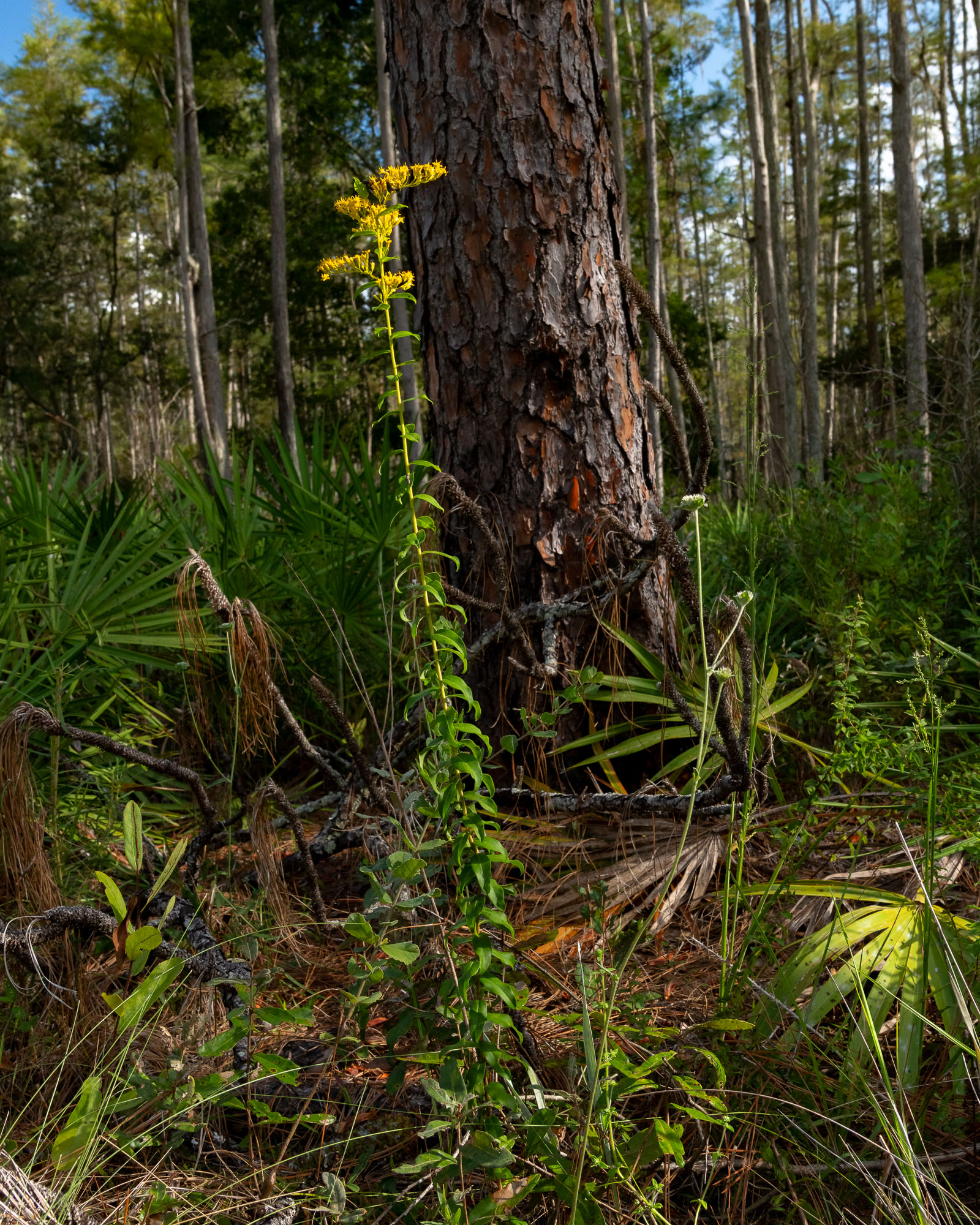
Another species nearly endemic to Florida, Chapman’s Goldenrod (Solidago chapmanii) typically is one of the earliest blooming goldenrods in Florida. This one hung around just for us.
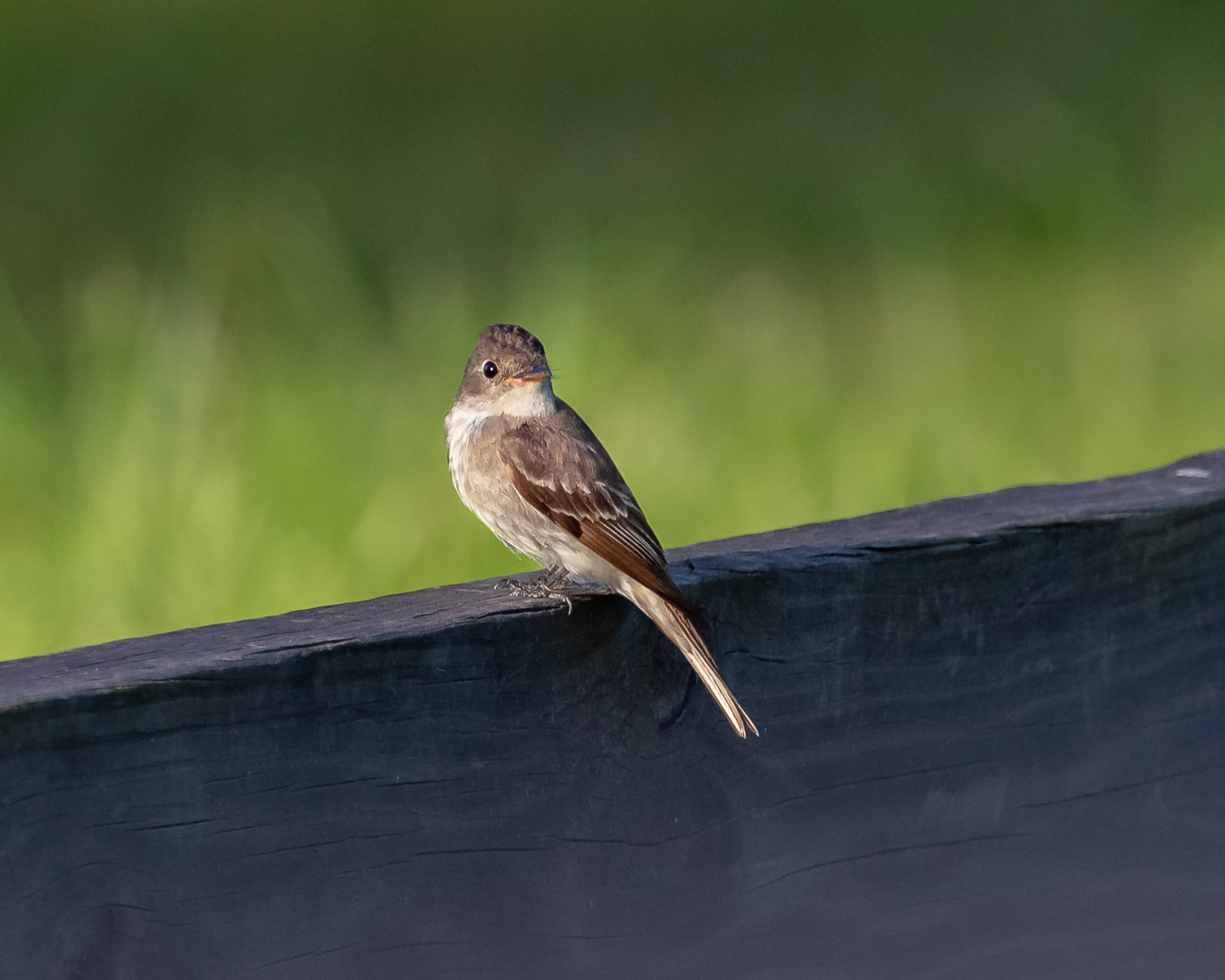
One of our first fall migrants made an appearance. This Eastern Phoebe is quite polite as she constantly yells her name for us: “Pheeee-Beeee“!
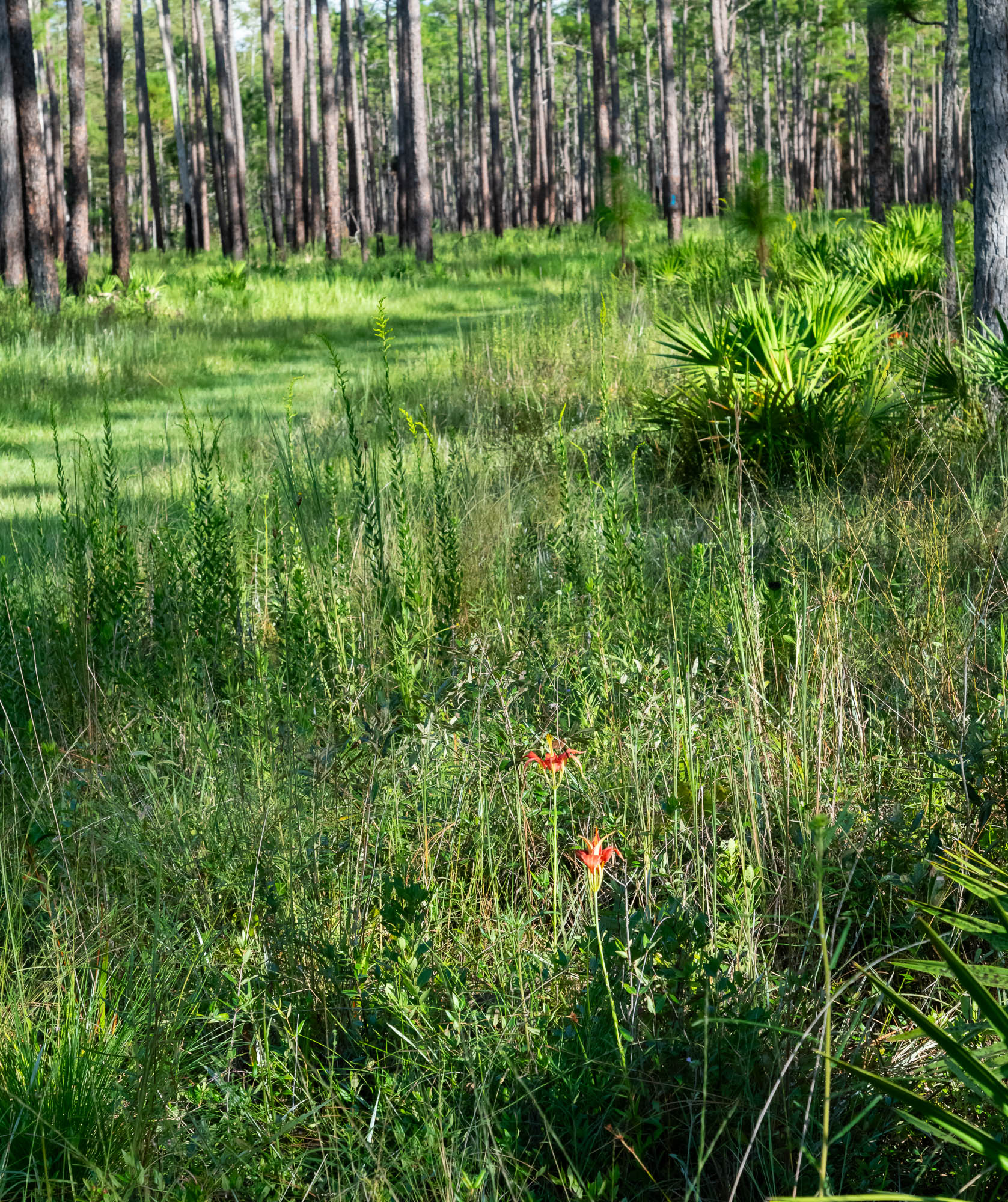
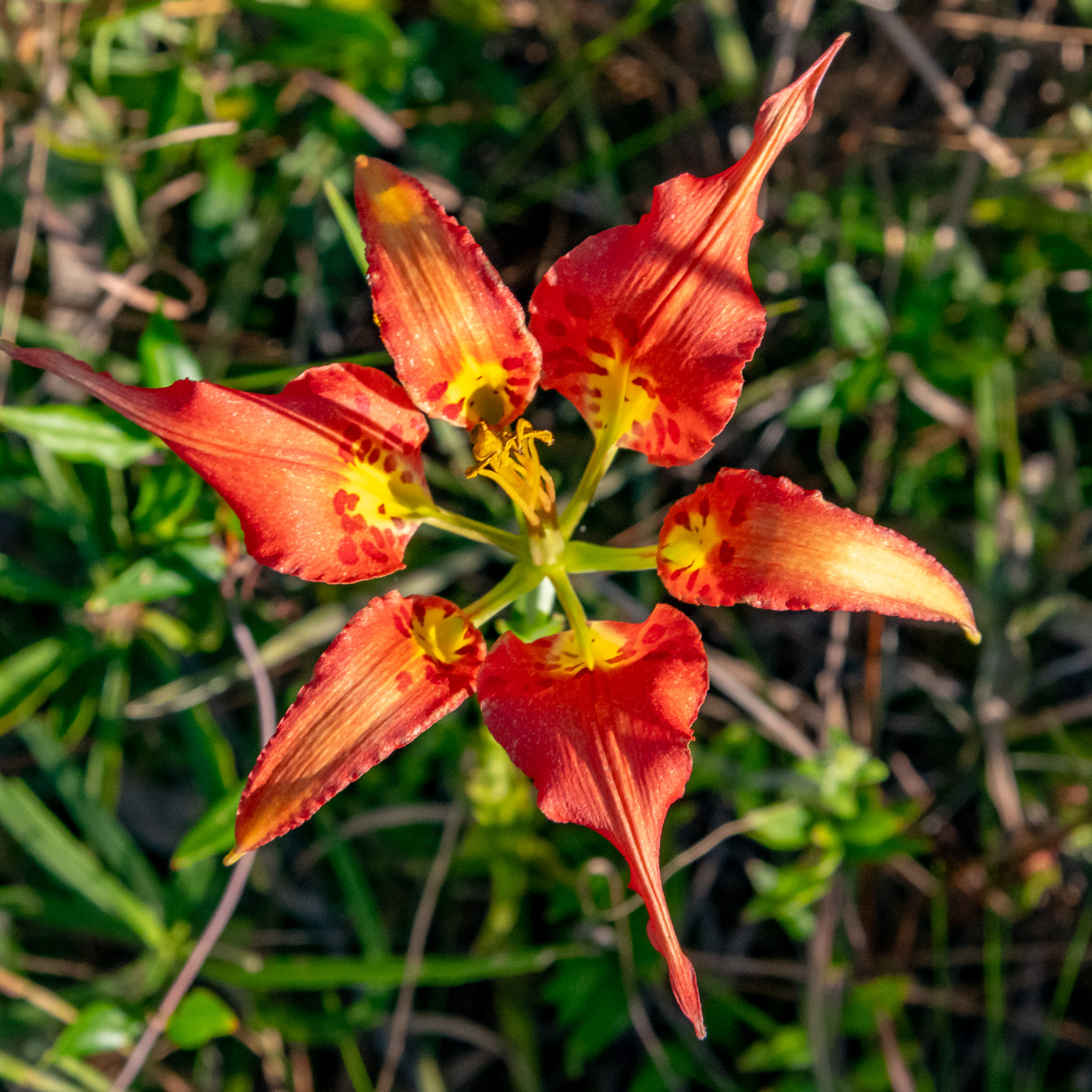
On my short walk when we first arrived at the park, I found the two lilies I had hoped to see. The first, Pine lily (Lilium catesbaei), is also known as Catesby’s lily, Leopard lily, Tiger lily or Southern-red lily. It is the largest lily found in North America.
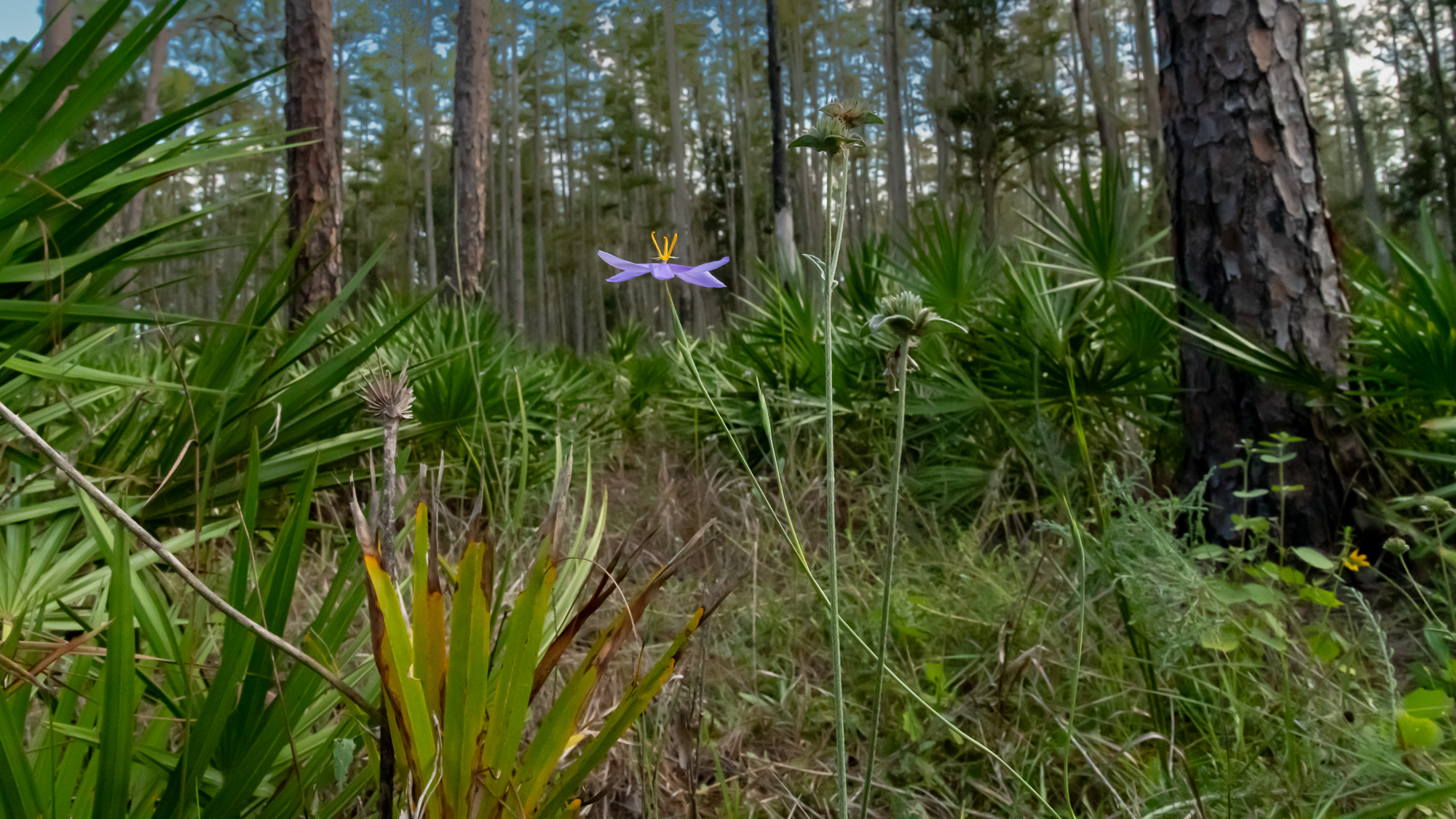
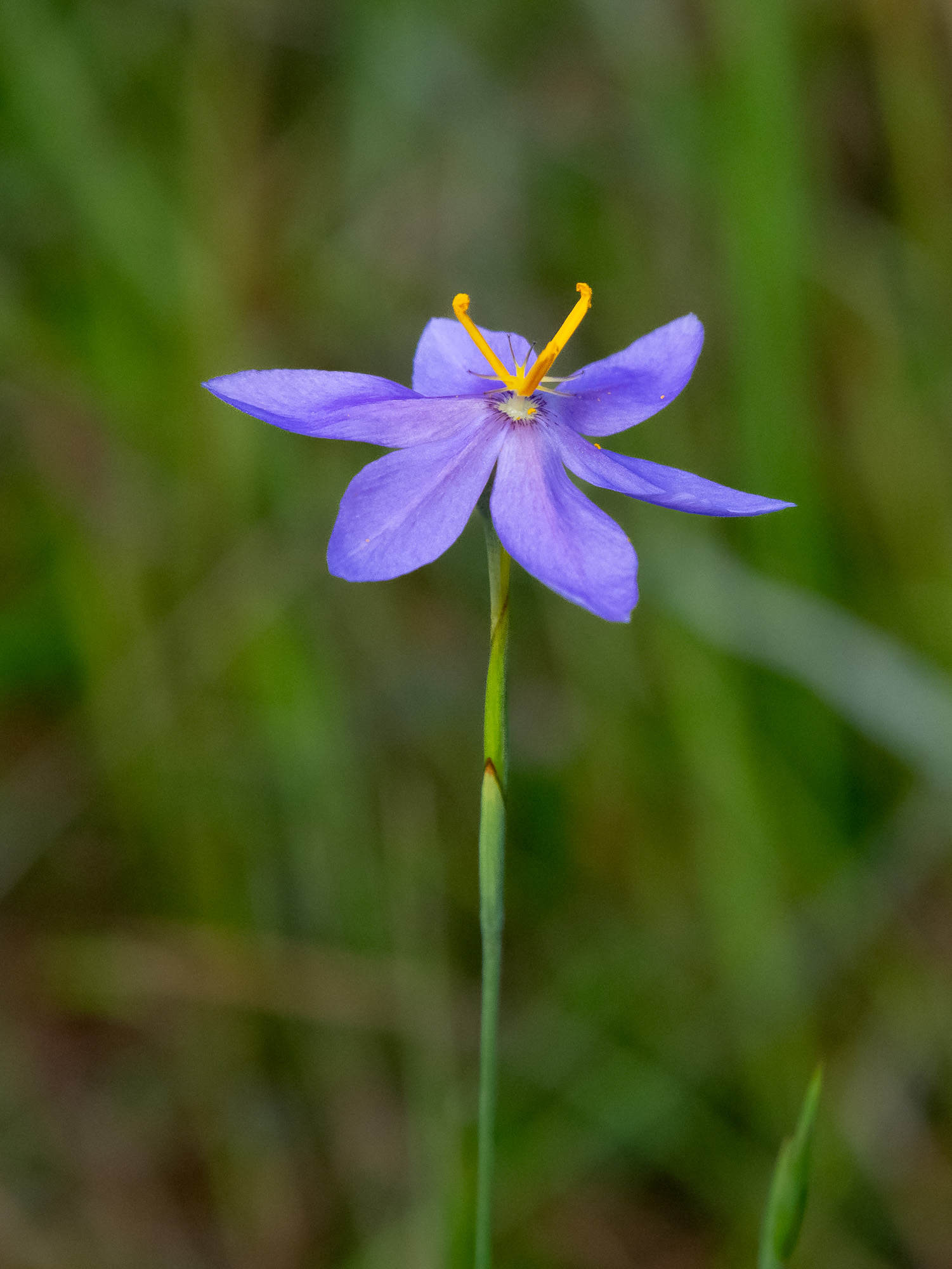
The other “lily”, in the Iris family, is a small delicate flower called Celestial Lily (Nemastylis floridana). It is found only in Florida and it only blooms in the late afternoon.
We had a wonderful therapy session in one of our favorite Natural Places today. Unsure of what the coming months would have in store for us, we were grateful for the opportunity to see so much in such a short span of time.
Enjoy your search for a natural place and come back for a visit!
(Finally. This is the last chapter of reporting on our only day this summer we were able to explore nature. It was August 15 and we were in the Lake Wales Ridge State Forest in central Florida.)

(Click on images to enlarge, click again to zoom.)
It would have been easy to talk ourselves out of this trip. Both recovering from surgeries, horrible curve balls from Life, middle of Florida’s hot and humid summer – stay home, enjoy the air conditioning. What a mistake THAT would have been!
There were so many flowers and trees and birds and insects – heat and humidity were not even noticed. What a glorious time! We were like a couple of kids at an amusement park. Look at that! What is this? (Okay, to be fair, we’re pretty much like that all the time.)
We relaxed, truly relaxed, probably for the first time in a year. Thoughts of hospitals, doctors, rehabilitation, future operations – were banished on this day. Instead, we relished the longleaf pine forest, the open grassy savannahs, the ponds and creeks and all the living things we encountered.
Our summer of exploring nature was oh-so-satisfying. Even if it did only consist of this single day.
Usually occurring as a single bloom atop a slender stem, the Rose-Rush (Lygodesmia aphylla) is nearly endemic to Florida with only a few reports from south Georgia. The stems can reach 24-36 inches in height and the flowers range from almost white to deep lavender.

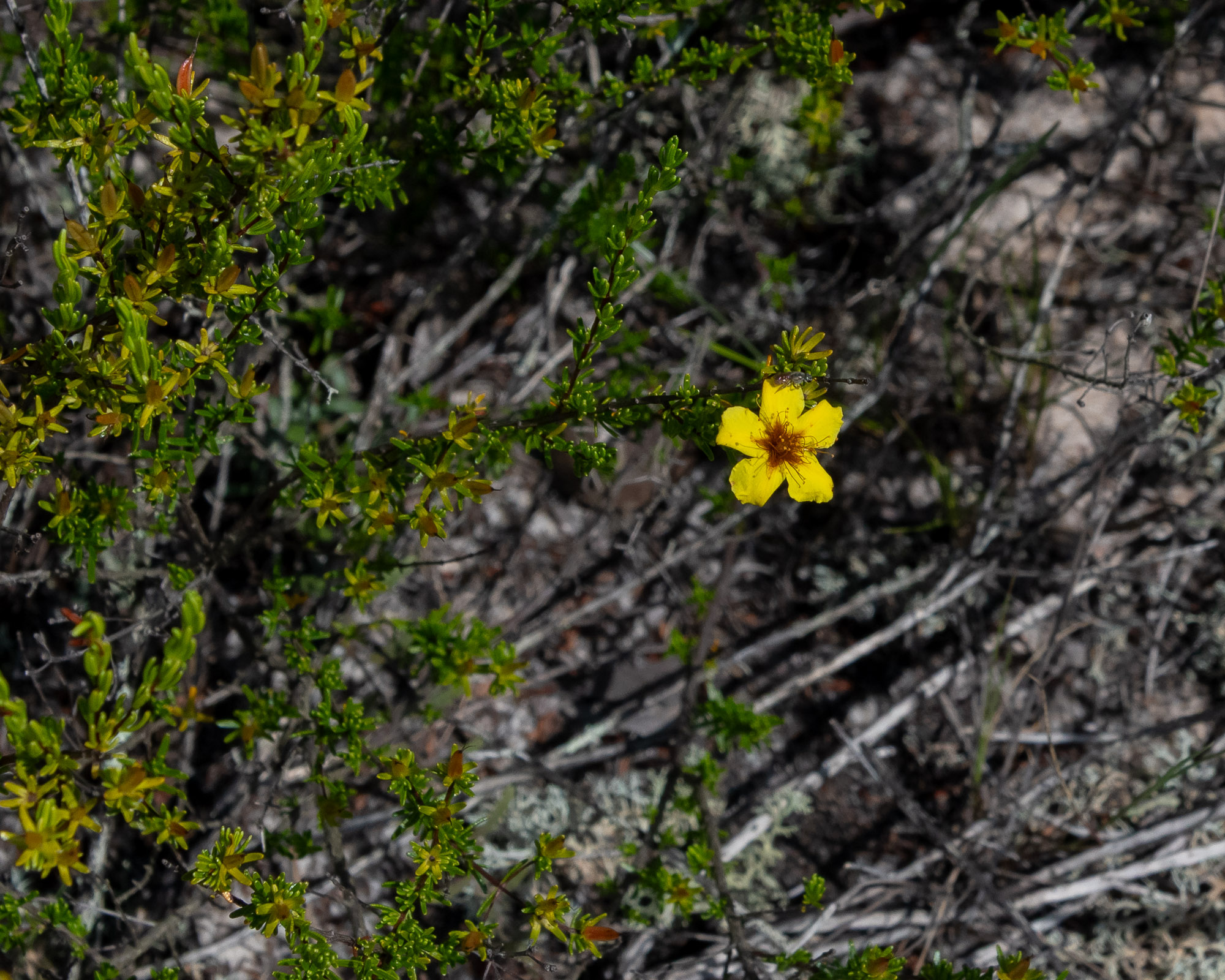
Shiny needle-like leaves and butter-colored flowers make the low-growing Sandhill St. John’s-Wort (Hypericum tenuifolium) extremely attractive and today the landscape was littered with the lovely plants. All sorts of pollinators are attracted to the blooms but they seem to be especially loved by bees.
With all the flowers here, more than a few butterflies were busily flitting to and fro. Here’s one now. A lovely Cloudless Sulphur (Phoebis sennae).

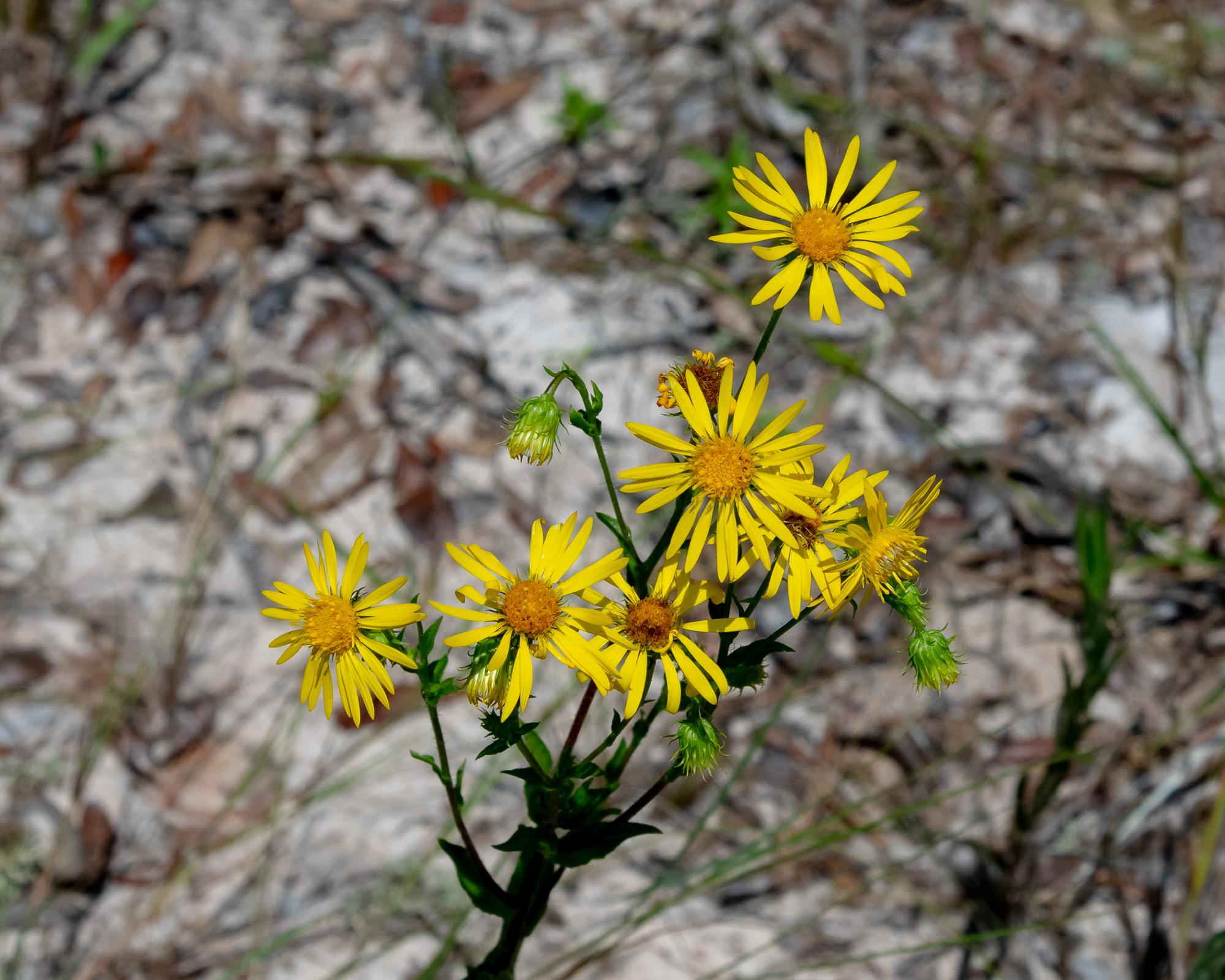
Found only in Florida, the Scrubland Goldenaster (Chrysopsis subulata) is prolific along the Lake Wales Ridge. More yellow. No complaints.

Small (1/2 inch) flowers with white petals and yellow stamens blooming from a cone-like head give Carolina Yellow-eyed Grass (Xyris caroliniana) the appearance of tiny butterflies flitting in the breeze.

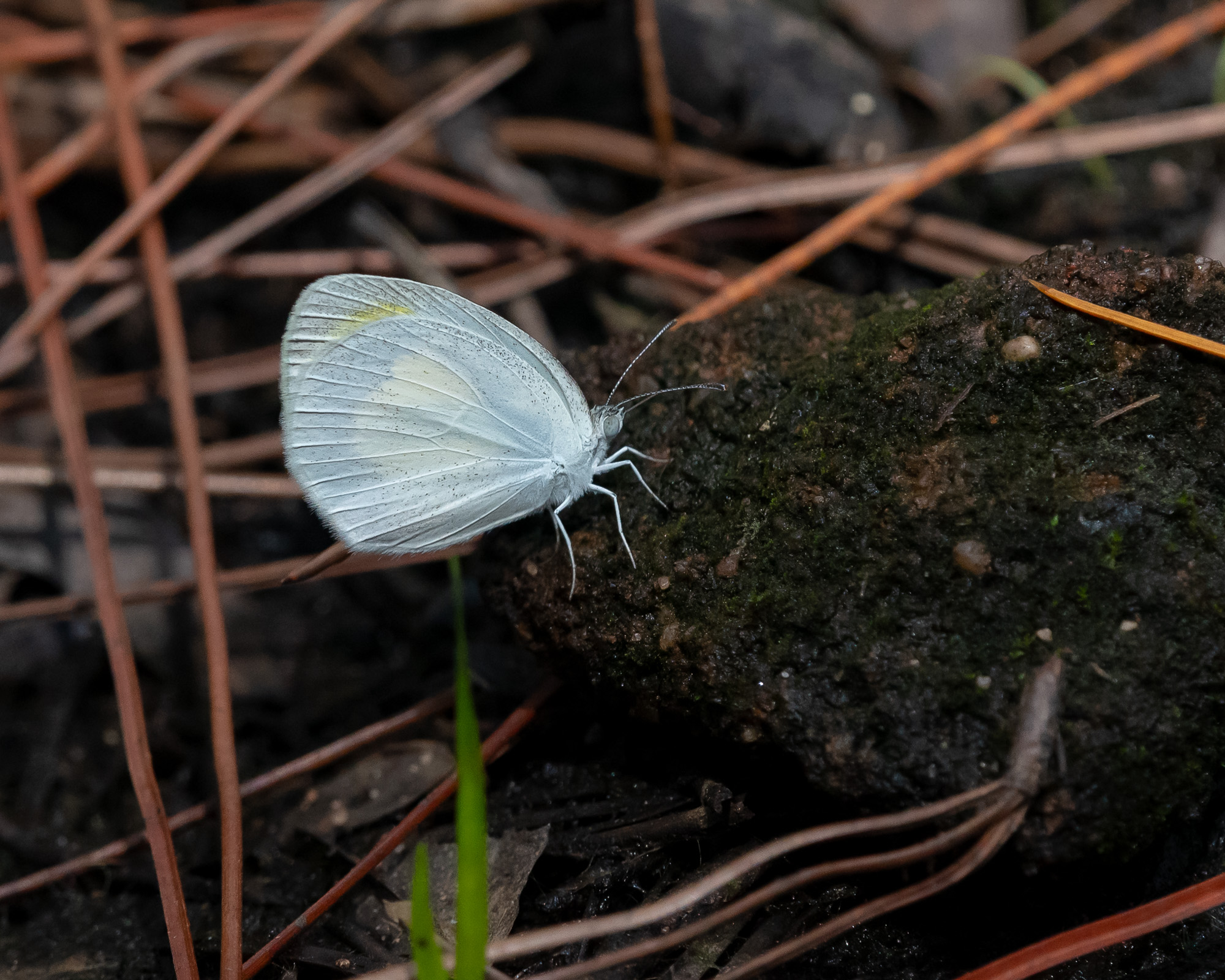
Speaking of small butterflies, the low-flying Barred Yellow (Eurema daira) was numerous today throughout the forest.
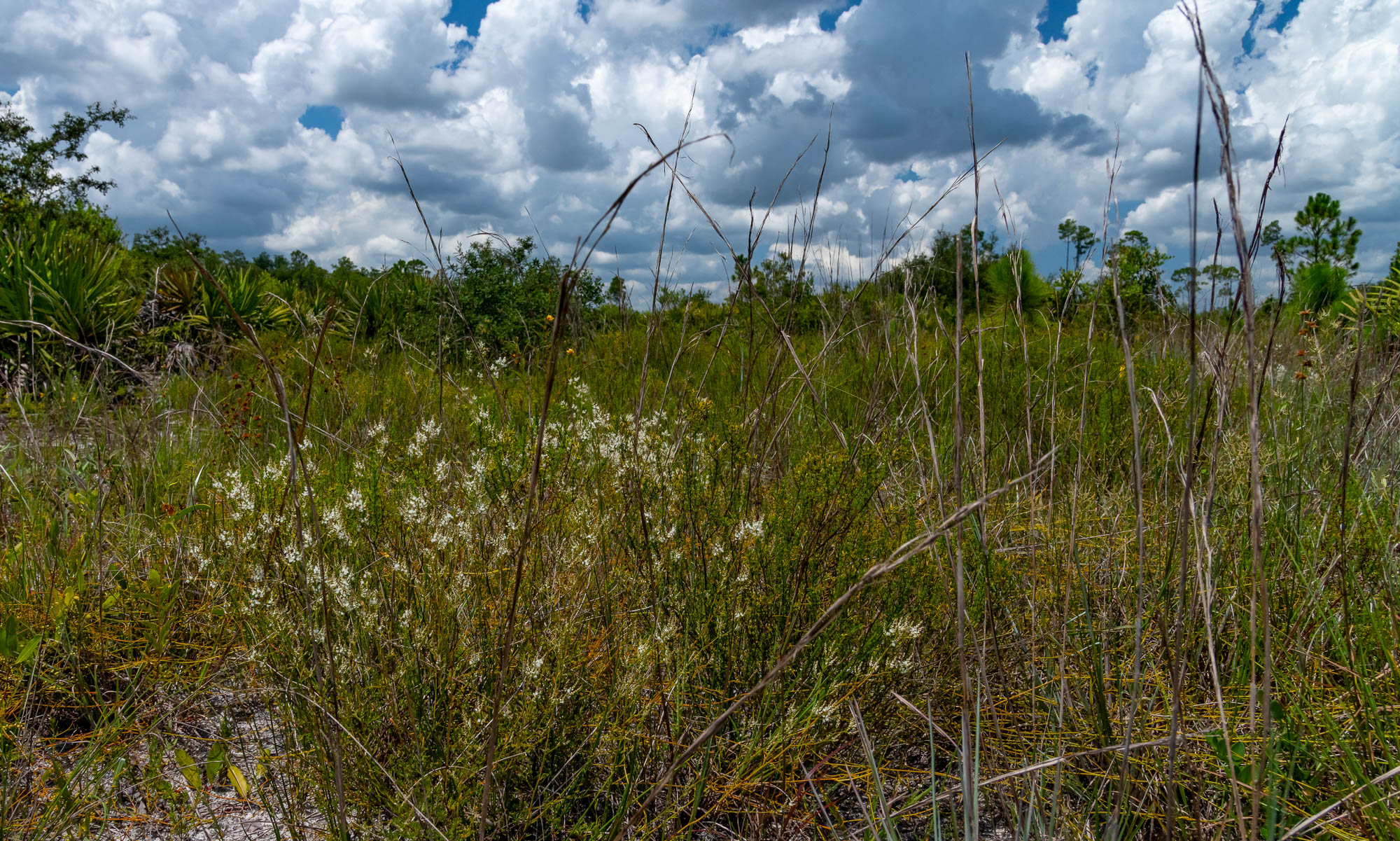
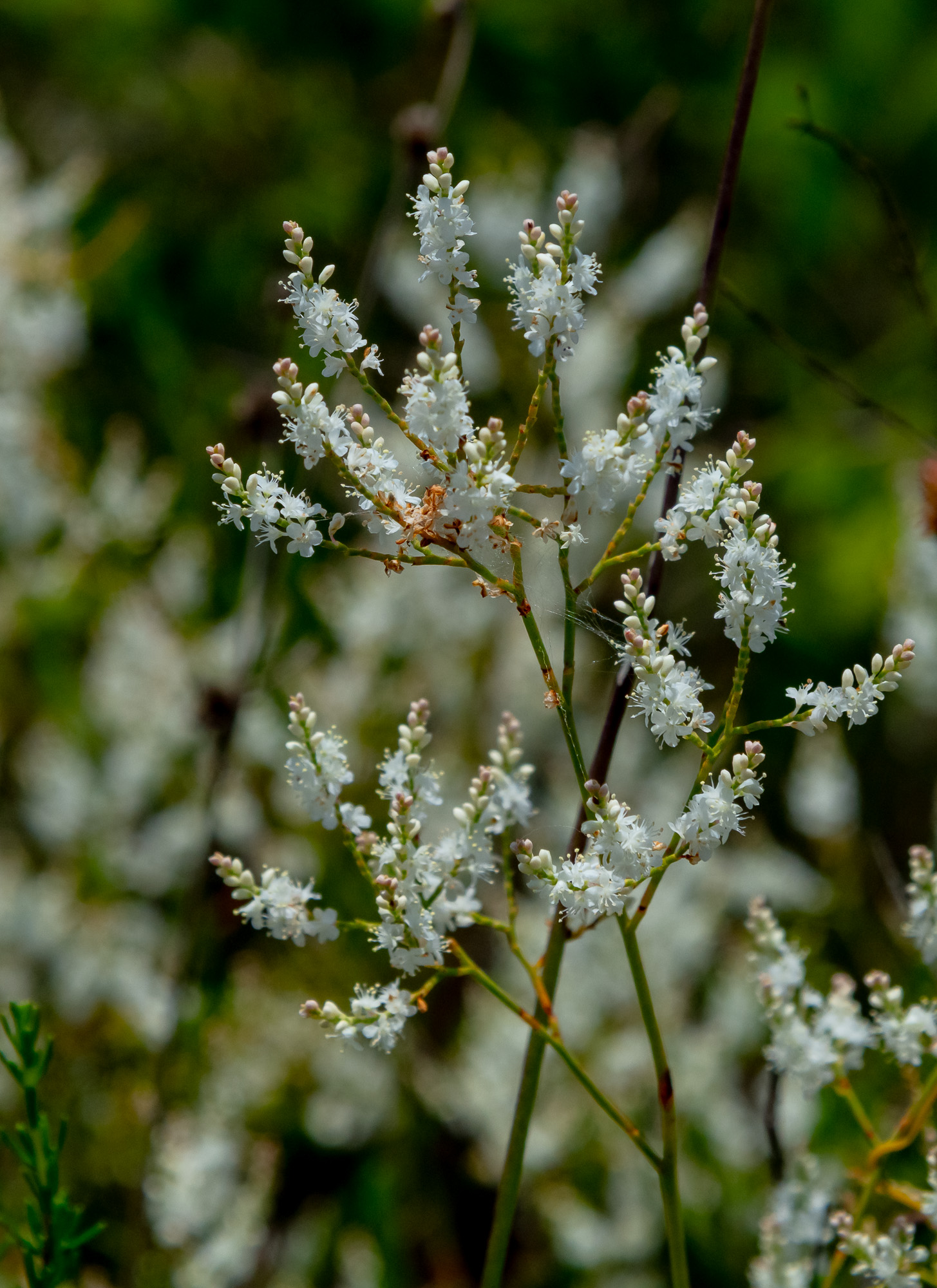
A member of the buckwheat family, this October Flower
(Polygonella polygama) is getting a jump on blooming by a couple of months. Called a “sub-shrub”, it is easily overlooked for most of the year. Then, it blooms. Wow!
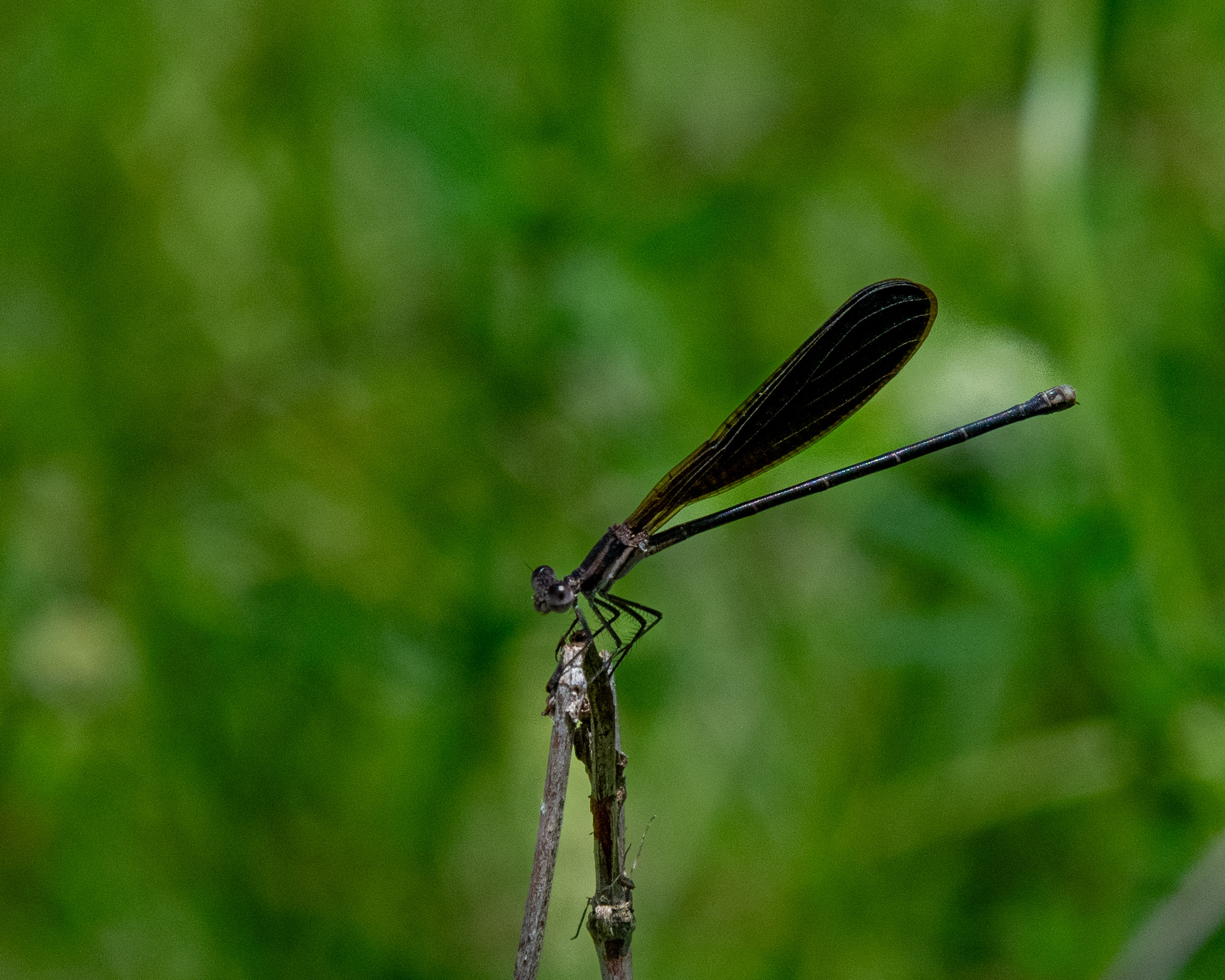
Primarily found in Florida, the Black Dancer (Argia fumipennis ssp. atra) is a subspecies of the more common Variable Dancer. This unique damselfly is fairly abundant in the state forest.
One of our favorite trees is the Loblolly Bay (Gordonia lasianthus). It likes the swampy soil adjacent to upland pine forests and the lovely flowers are similar to Magnolias.

Its common name may hint that it is common but we are elated anytime we spot a Common Buckeye (Junonia coenia). Common or not, it is uncommonly beautiful.

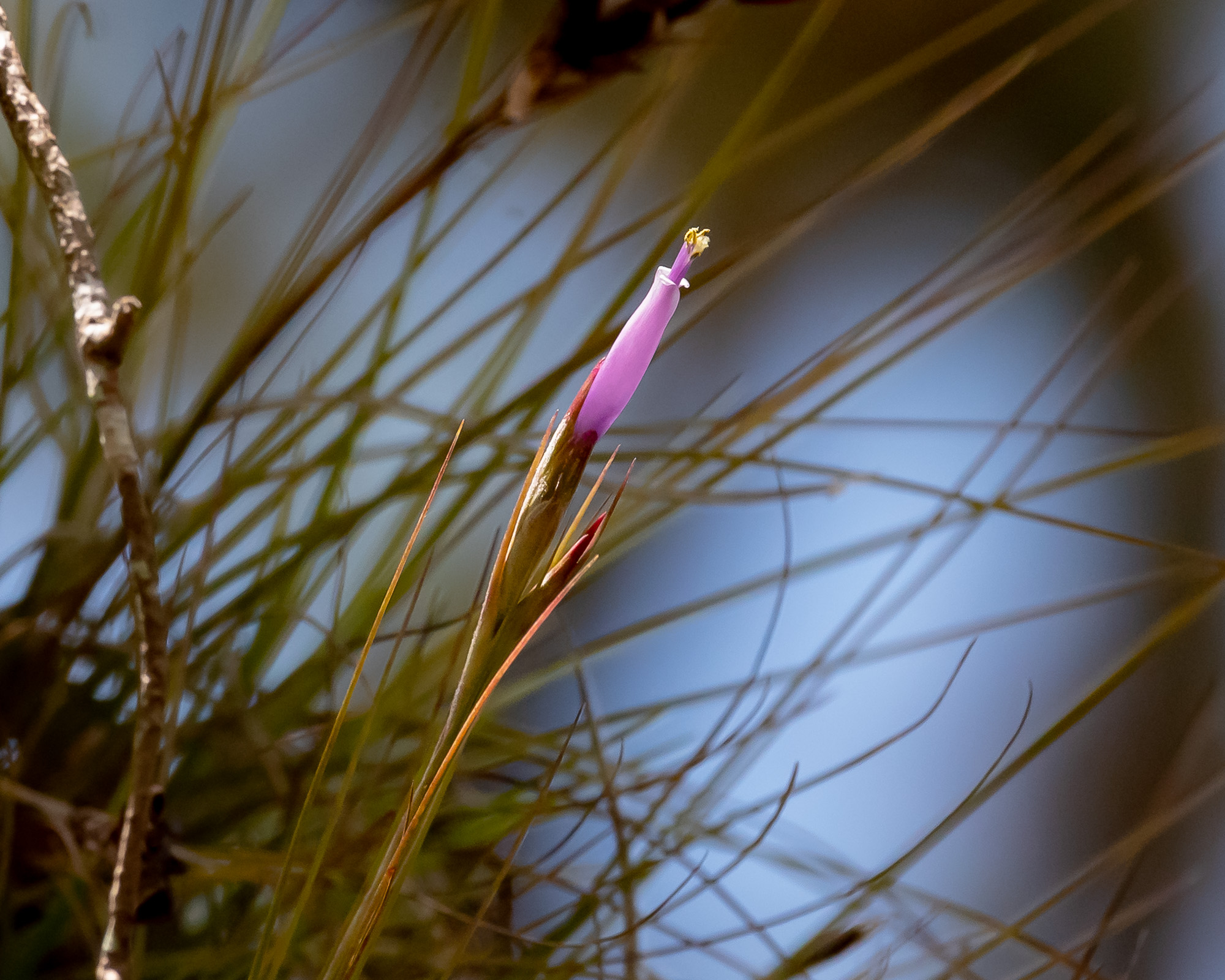
Related to our ubiquitous Spanish Moss, Southern Needleleaf (Tillandsia setacea) can seem to take over some of the oak tree branches around here. Some have called the spindly collection of leaves of this bromeliad the “trash basket of the trees”. When it offers a glimpse of its bloom, however, we simply call it gorgeous.
The Florida Scrub Jay is, happily, abundant to this section of central Florida. Typical of other members of the jay family, we are greeted by a gang of birds screeching at our intrusion as soon as we get near the forest entrance road. And that is okay with us.
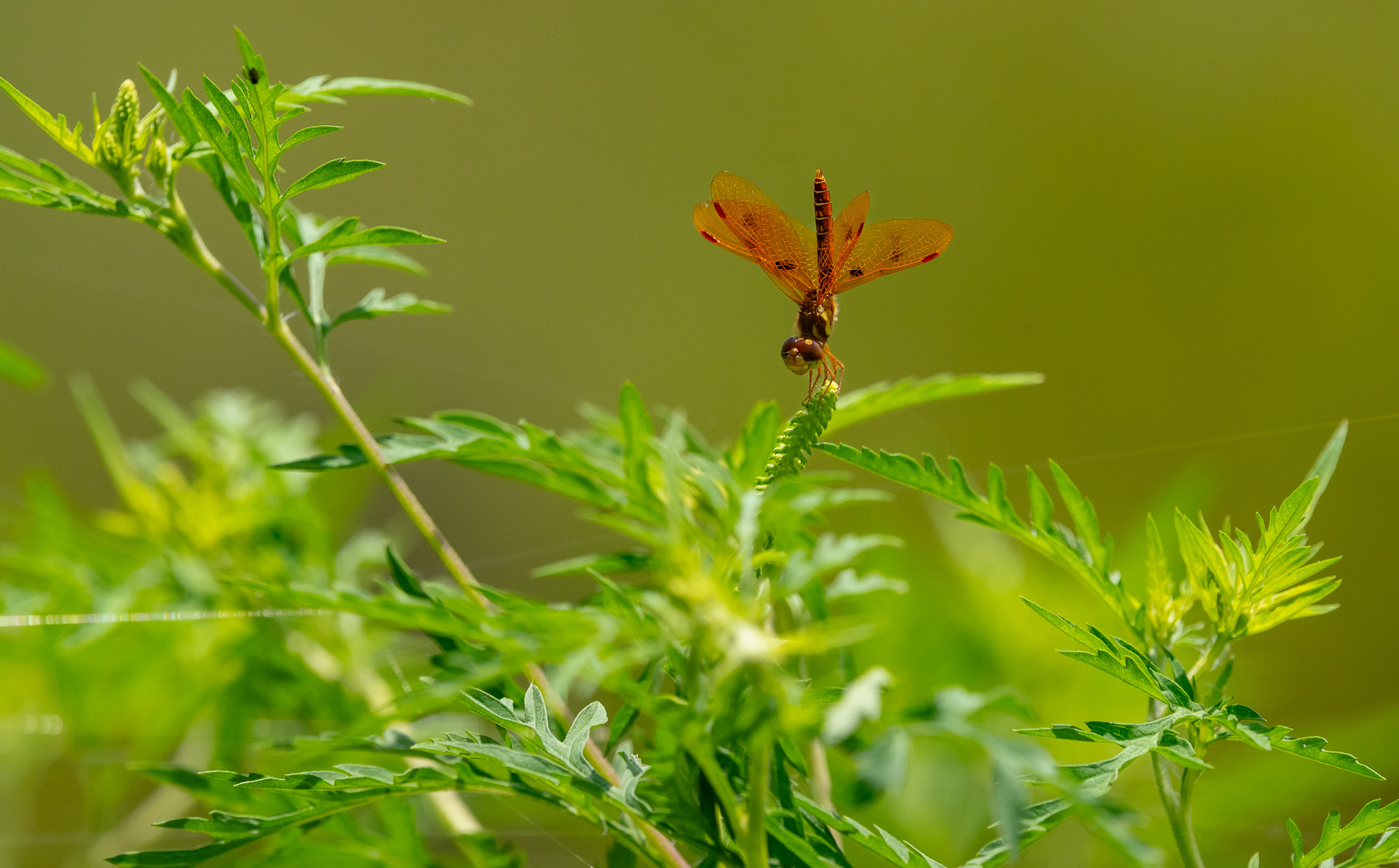
One of the smallest dragonflies in North America, the Eastern Amberwing (Perithemis tenera) resembles some rare golden ornament among the greenery of the forest understory.
Summer is but a memory. This year has been challenging but the outlook for us is bright. We’ve managed a few outings since August and will try to get back into the blog habit. Thanks for your patience!
Enjoy your search for a natural place and come back for a visit!
 Our Natural Places